Complete classic literature • Five-line readings • Clear US narration
VELMORA ACADEMY
Academy of Archival Languages & Memory Studies
Menu Close
Doctor Luke of the Labrador

Chapter X · Chapter 10

Chapter 10 of Doctor Luke of the Labrador is here in full — 433 sentences across 87 reading sections, with audio for every sentence and word.

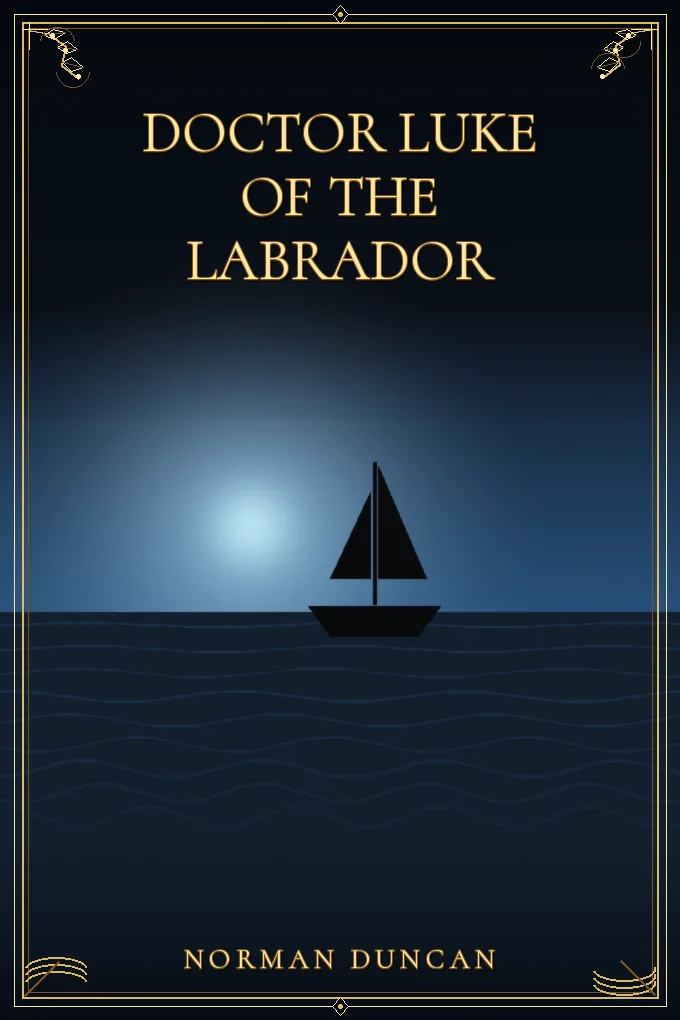
Cover illustration for Doctor Luke of the Labrador
Context Illustration Reading 1/86 · 5 lines
English subtitles · tap any word to listen 1 / 5
"'Docks,' says the skipper, 'what's the matter with they folk, anyhow?
We isn't draggin', is we?' says he, half cryin'.
'We isn't hurtin' _they_, is we?'
"An old man--'tis like he was skipper o' the craft--come runnin' for'ard, with half a dozen young fellows in his wake.

'Sheer off!' sings the old one.
0:00 / 0:00
Speed 0.75x
AI-generated narration by OpenAI · Slow US English
LEARNER DICTIONARY
Archivist
/ˈɑːrkɪvɪst/
Editorial verification pending

A keeper or guardian of historical records and memories.

Doctor Luke of the Labrador

Chapter X · Chapter 10

Chapter 10 of Doctor Luke of the Labrador is here in full — 433 sentences across 87 reading sections, with audio for every sentence and word.

Reading 1/86 · 5 reading units · Lines 1–5

Line 1
"'Docks,' says the skipper, 'what's the matter with they folk, anyhow?
Line 2
We isn't draggin', is we?' says he, half cryin'.
Line 3
'We isn't hurtin' _they_, is we?'
Line 4
"An old man--'tis like he was skipper o' the craft--come runnin' for'ard, with half a dozen young fellows in his wake.
Line 5
'Sheer off!' sings the old one.
/ʃɪr ɔːf sɪŋz ðə oʊld wʌn/

Learner Dictionary

These definitions explain words found in the current reading and keep every example grounded in its original sentence.

Oxford-style entry order: headword, part of speech, US IPA, concise definition, contextual example, and audio.

anyhow adverb US /ˈenihaʊ/

used to indicate that a statement explains or supports a previous statement

From this reading “"'Docks,' says the skipper, 'what's the matter with they folk, anyhow?”

craft noun US /kræft/

the skilled practice of a practical occupation

From this reading “"An old man--'tis like he was skipper o' the craft--come runnin' for'ard, with half a dozen young fellows in his wake.”

Docks noun US /dɑːks/

plural of “dock” — an enclosure in a court of law where the defendant sits during the trial

From this reading “"'Docks,' says the skipper, 'what's the matter with they folk, anyhow?”

folk noun US /foʊk/

people in general (often used in the plural)

From this reading “"'Docks,' says the skipper, 'what's the matter with they folk, anyhow?”

Sheer adjective US /ʃɪr/

complete and without restriction or qualification; sometimes used informally as intensifiers

From this reading “'Sheer off!' sings the old one.”

sings verb US /sɪŋz/

third-person singular of “sing” — deliver by singing

From this reading “'Sheer off!' sings the old one.”

skipper noun US /ˈskɪpər/

a student who fails to attend classes

From this reading “"'Docks,' says the skipper, 'what's the matter with they folk, anyhow?”

wake verb US /weɪk/

be awake, be alert, be there

From this reading “"An old man--'tis like he was skipper o' the craft--come runnin' for'ard, with half a dozen young fellows in his wake.”

All words in this reading · 40

Every word in these five lines is listed here, and every one of them can be played on its own.

Dictionary details are shown only when verified; these are not licensed Oxford entries.

adeterminerUS /ə/

used before a singular noun to mean one of a group, when it is not a particular one

From this reading "An old man--'tis like he was skipper o' the craft--come runnin' for'ard, with half a dozen young fellows in his wake.

AndeterminerUS /æn/

the form of “a” used before a word that begins with a vowel sound

From this reading "An old man--'tis like he was skipper o' the craft--come runnin' for'ard, with half a dozen young fellows in his wake.

anyhowadverbUS /ˈenihaʊ/

used to indicate that a statement explains or supports a previous statement

From this reading "'Docks,' says the skipper, 'what's the matter with they folk, anyhow?

comeverbUS /kʌm/

move toward, travel toward something or somebody or approach something or somebody

From this reading "An old man--'tis like he was skipper o' the craft--come runnin' for'ard, with half a dozen young fellows in his wake.

craftnounUS /kræft/

the skilled practice of a practical occupation

From this reading "An old man--'tis like he was skipper o' the craft--come runnin' for'ard, with half a dozen young fellows in his wake.

cryin

Dictionary entry pending editorial verification. Tap Listen to hear the word.

From this reading We isn't draggin', is we?' says he, half cryin'.

DocksnounUS /dɑːks/

plural of “dock” — an enclosure in a court of law where the defendant sits during the trial

From this reading "'Docks,' says the skipper, 'what's the matter with they folk, anyhow?

dozennounUS /ˈdʌzən/

the cardinal number that is the sum of eleven and one

From this reading "An old man--'tis like he was skipper o' the craft--come runnin' for'ard, with half a dozen young fellows in his wake.

draggin

Dictionary entry pending editorial verification. Tap Listen to hear the word.

From this reading We isn't draggin', is we?' says he, half cryin'.

fellowsnounUS /ˈfeloʊz/

plural of “fellow” — a boy or man

From this reading "An old man--'tis like he was skipper o' the craft--come runnin' for'ard, with half a dozen young fellows in his wake.

folknounUS /foʊk/

people in general (often used in the plural)

From this reading "'Docks,' says the skipper, 'what's the matter with they folk, anyhow?

for'ard

Dictionary entry pending editorial verification. Tap Listen to hear the word.

From this reading "An old man--'tis like he was skipper o' the craft--come runnin' for'ard, with half a dozen young fellows in his wake.

halfadjectiveUS /hæf/

consisting of one of two equivalent parts in value or quantity

From this reading We isn't draggin', is we?' says he, half cryin'.

hepronounUS /hiː/

a man, boy, or male animal already mentioned, as the subject

From this reading We isn't draggin', is we?' says he, half cryin'.

hisdeterminerUS /hɪz/

belonging to a man, boy, or male animal already mentioned

From this reading "An old man--'tis like he was skipper o' the craft--come runnin' for'ard, with half a dozen young fellows in his wake.

hurtin

Dictionary entry pending editorial verification. Tap Listen to hear the word.

From this reading 'We isn't hurtin' _they_, is we?'

inprepositionUS /ɪn/

inside something, or within a place, period, or state

From this reading "An old man--'tis like he was skipper o' the craft--come runnin' for'ard, with half a dozen young fellows in his wake.

isauxiliary verbUS /ɪz/

the form of “be” used with he, she, it, or a singular noun

From this reading We isn't draggin', is we?' says he, half cryin'.

isn't

Dictionary entry pending editorial verification. Tap Listen to hear the word.

From this reading We isn't draggin', is we?' says he, half cryin'.

likeverbUS /laɪk/

prefer or wish to do something

From this reading "An old man--'tis like he was skipper o' the craft--come runnin' for'ard, with half a dozen young fellows in his wake.

mannounUS /mæn/

an adult person who is male (as opposed to a woman)

From this reading "An old man--'tis like he was skipper o' the craft--come runnin' for'ard, with half a dozen young fellows in his wake.

matternounUS /ˈmætər/

a vaguely specified concern

From this reading "'Docks,' says the skipper, 'what's the matter with they folk, anyhow?

onounUS /oʊ/

a nonmetallic bivalent element that is normally a colorless odorless tasteless nonflammable diatomic gas; constitutes 21 percent of the atmosphere by volume; the most abundant element in the earth's crust

From this reading "An old man--'tis like he was skipper o' the craft--come runnin' for'ard, with half a dozen young fellows in his wake.

offadverbUS /ɔːf/

from a particular thing or place or position (“forth” is obsolete)

From this reading 'Sheer off!' sings the old one.

oldadjectiveUS /oʊld/

(used especially of persons) having lived for a relatively long time or attained a specific age

From this reading "An old man--'tis like he was skipper o' the craft--come runnin' for'ard, with half a dozen young fellows in his wake.

onepronounUS /wʌn/

used to mean any person in general, including the speaker

From this reading 'Sheer off!' sings the old one.

runnin

Dictionary entry pending editorial verification. Tap Listen to hear the word.

From this reading "An old man--'tis like he was skipper o' the craft--come runnin' for'ard, with half a dozen young fellows in his wake.

saysnounUS /sez/

plural of “say” — the chance to speak

From this reading "'Docks,' says the skipper, 'what's the matter with they folk, anyhow?

SheeradjectiveUS /ʃɪr/

complete and without restriction or qualification; sometimes used informally as intensifiers

From this reading 'Sheer off!' sings the old one.

singsverbUS /sɪŋz/

third-person singular of “sing” — deliver by singing

From this reading 'Sheer off!' sings the old one.

skippernounUS /ˈskɪpər/

a student who fails to attend classes

From this reading "'Docks,' says the skipper, 'what's the matter with they folk, anyhow?

thedeterminerUS /ðə/

used before a noun that is already known, already mentioned, or the only one of its kind

From this reading "'Docks,' says the skipper, 'what's the matter with they folk, anyhow?

theypronounUS /ðeɪ/

the people, animals, or things already mentioned, as the subject

From this reading "'Docks,' says the skipper, 'what's the matter with they folk, anyhow?

tisnounUS /tɪz/

plural of “ti” — a light strong grey lustrous corrosion-resistant metallic element used in strong lightweight alloys (as for airplane parts); the main sources are rutile and ilmenite

From this reading "An old man--'tis like he was skipper o' the craft--come runnin' for'ard, with half a dozen young fellows in his wake.

wakeverbUS /weɪk/

be awake, be alert, be there

From this reading "An old man--'tis like he was skipper o' the craft--come runnin' for'ard, with half a dozen young fellows in his wake.

wasauxiliary verbUS /wɑːz/

the past form of “be” used with I, he, she, it, or a singular noun

From this reading "An old man--'tis like he was skipper o' the craft--come runnin' for'ard, with half a dozen young fellows in his wake.

WepronounUS /wiː/

the speaker together with one or more other people

From this reading We isn't draggin', is we?' says he, half cryin'.

what's

Dictionary entry pending editorial verification. Tap Listen to hear the word.

From this reading "'Docks,' says the skipper, 'what's the matter with they folk, anyhow?

withprepositionUS /wɪð/

in the company of; together with

From this reading "'Docks,' says the skipper, 'what's the matter with they folk, anyhow?

youngadjectiveUS /jʌŋ/

(used of living things especially persons) in an early period of life or development or growth

From this reading "An old man--'tis like he was skipper o' the craft--come runnin' for'ard, with half a dozen young fellows in his wake.

Chapter 10 of Doctor Luke of the Labrador by Norman Duncan holds 433 sentences, grouped into 87 reading sections of at most 5 sentences. The text is the source edition, unabridged, and the chapter records which sentences cover which part of the work so that nothing is dropped. Every word can be tapped for its pronunciation and dictionary entry.

What does chapter 10 of Doctor Luke of the Labrador contain?

Chapter 10 holds 433 sentences of Doctor Luke of the Labrador, unabridged, divided into 87 reading sections.

This page carries chapter 10 of Doctor Luke of the Labrador by Norman Duncan exactly as it stands in the source edition, without abridgement. It runs to 433 sentences, grouped into 87 sections of at most 5 sentences so that a reader can take the chapter in steady, finishable pieces. The chapter also stores a coverage record mapping every one of its sentences to a part of the work, which is how the edition demonstrates that no line was dropped.

How do I study chapter 10 of Doctor Luke of the Labrador?

Work through the 87 sections in order, replaying any sentence and tapping unfamiliar words for their entries.

Each of the 87 sections in this chapter is short enough to read once, hear once, and then re-read with the vocabulary in view. Tapping a word plays it alone and opens its dictionary entry with IPA, part of speech and meaning, so the reader is never forced to guess a pronunciation from spelling. Working section by section keeps a long chapter from becoming an undifferentiated wall of text, which is the usual reason a reader abandons a work of this period.

Can chapter 10 be read aloud to me?

Yes — every sentence and every individual word in chapter 10 can be played aloud in United States English.

Audio covers the whole chapter: any sentence can be played, and any single word within it can be played on its own. The voice uses United States English. For a work of this period that matters, because spelling is an unreliable guide to pronunciation for vocabulary that has fallen out of daily use, and a learner who guesses wrong tends to keep the error. Hearing the word in its own sentence, and then alone, settles it.

Questions about reading Doctor Luke of the Labrador

Common questions about reading Doctor Luke of the Labrador by Norman Duncan on this page, its source edition and its audio.

Is this the complete text of Doctor Luke of the Labrador?

Yes. All 4624 sentences of Project Gutenberg eBook #19981 are kept, with a record of which sentences cover which part.

Which edition of Doctor Luke of the Labrador is used?

Project Gutenberg eBook #19981, unabridged. The Project Gutenberg header, footer and licence are removed.

How long does Doctor Luke of the Labrador take to read?

About 385 minutes of reading across 925 sections of 5 sentences each, at an unhurried pace.

How to read Doctor Luke of the Labrador section by section

How to work through Doctor Luke of the Labrador section by section, using the audio and the tap-to-define vocabulary.

  1. Open a chapter

    Choose one of the 11 chapters of Doctor Luke of the Labrador to begin.

  2. Read one section

    Each section holds 5 sentences; read it once through.

  3. Listen and tap

    Play the section aloud, then tap any unfamiliar word for its entry.

Vocabulary met early in Doctor Luke of the Labrador

Words and structures a reader meets early in Doctor Luke of the Labrador, each tappable for pronunciation and meaning.

Fifth
A word that appears in the opening chapter of Doctor Luke of the Labrador; the reader can tap it to hear it and see its dictionary entry.
Avenue
A word that appears in the opening chapter of Doctor Luke of the Labrador; the reader can tap it to hear it and see its dictionary entry.
Chicago
A word that appears in the opening chapter of Doctor Luke of the Labrador; the reader can tap it to hear it and see its dictionary entry.
Washington
A word that appears in the opening chapter of Doctor Luke of the Labrador; the reader can tap it to hear it and see its dictionary entry.