Complete classic literature • Five-line readings • Clear US narration
VELMORA ACADEMY
Academy of Archival Languages & Memory Studies
Menu Close
Ester Ried Yet Speaking

Chapter I · Chapter 1

Chapter 1 of Ester Ried Yet Speaking is here in full — 148 sentences across 30 reading sections, with audio for every sentence and word.

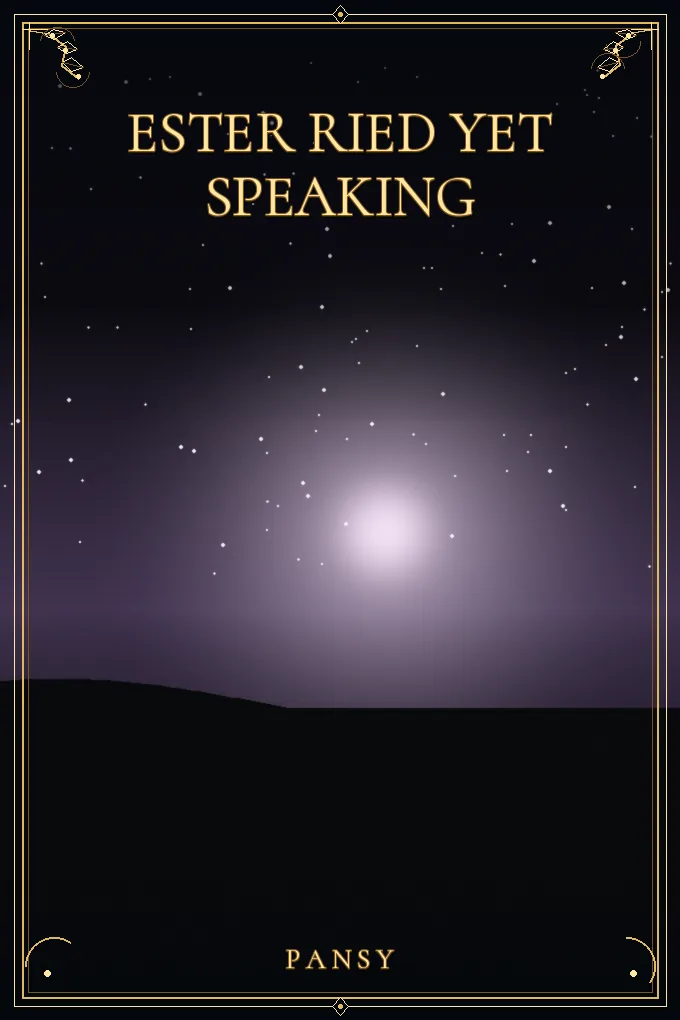
Cover illustration for Ester Ried Yet Speaking
Context Illustration Reading 1/29 · 5 lines
English subtitles · tap any word to listen 1 / 5
WHAT DID IT ALL AMOUNT TO, ANYHOW?”
Settled, that is, so far as the class of boys in the corner would permit the use of that term.
_They_ had not settled in the least.
Two of them indulged in a louder burst of laughter than before, just as Mrs. Roberts took her seat.
Yet her face was in no wise ruffled.
0:00 / 0:00
Speed 0.75x
AI-generated narration by OpenAI · Slow US English
LEARNER DICTIONARY
Archivist
/ˈɑːrkɪvɪst/
Editorial verification pending

A keeper or guardian of historical records and memories.

Ester Ried Yet Speaking

Chapter I · Chapter 1

Chapter 1 of Ester Ried Yet Speaking is here in full — 148 sentences across 30 reading sections, with audio for every sentence and word.

Reading 1/29 · 5 reading units · Lines 1–5

Line 1
WHAT DID IT ALL AMOUNT TO, ANYHOW?”
/wʌt dɪd ɪt ɔːl əˈmaʊnt tuː ˈenihaʊ/
Line 2
Settled, that is, so far as the class of boys in the corner would permit the use of that term.
/ˈsetəld ðæt ɪz soʊ fɑːr æz ðə klæs ʌv bɔɪz ɪn ðə ˈkɔːrnər wʊd pərˈmɪt ðə juːs ʌv ðæt tɜːrm/
Line 3
_They_ had not settled in the least.
/ðeɪ hæd nɑːt ˈsetəld ɪn ðə liːst/
Line 4
Two of them indulged in a louder burst of laughter than before, just as Mrs. Roberts took her seat.
/tuː ʌv ðem ˌɪnˈdʌldʒd ɪn ə ˈlaʊdər bɜːrst ʌv ˈlæftər ðæn bɪˈfɔːr dʒʌst æz ˈmɪsɪz ˈrɑːbərts tʊk hɜːr siːt/
Line 5
Yet her face was in no wise ruffled.
/jet hɜːr feɪs wɑːz ɪn noʊ waɪz ˈrʌfəld/

Learner Dictionary

These definitions explain words found in the current reading and keep every example grounded in its original sentence.

Oxford-style entry order: headword, part of speech, US IPA, concise definition, contextual example, and audio.

amount noun US /əˈmaʊnt/

a quantity of money

From this reading ““WHAT DID IT ALL AMOUNT TO, ANYHOW?””

anyhow adverb US /ˈenihaʊ/

used to indicate that a statement explains or supports a previous statement

From this reading ““WHAT DID IT ALL AMOUNT TO, ANYHOW?””

indulged verb US /ˌɪnˈdʌldʒd/

past form of “indulge” — give free rein to

From this reading “Two of them indulged in a louder burst of laughter than before, just as Mrs. Roberts took her seat.”

louder adjective US /ˈlaʊdər/

comparative of “loud” — characterized by or producing sound of great volume or intensity

From this reading “Two of them indulged in a louder burst of laughter than before, just as Mrs. Roberts took her seat.”

permit noun US /pərˈmɪt/

a legal document giving official permission to do something

From this reading “Settled, that is, so far as the class of boys in the corner would permit the use of that term.”

Roberts noun US /ˈrɑːbərts/

United States biochemist (born in England) honored for his discovery that some genes contain introns (born in 1943)

From this reading “Two of them indulged in a louder burst of laughter than before, just as Mrs. Roberts took her seat.”

ruffled adjective US /ˈrʌfəld/

shaken into waves or undulations as by wind

From this reading “Yet her face was in no wise ruffled.”

term noun US /tɜːrm/

a word or expression used for some particular thing

From this reading “Settled, that is, so far as the class of boys in the corner would permit the use of that term.”

All words in this reading · 48

Every word in these five lines is listed here, and every one of them can be played on its own.

Dictionary details are shown only when verified; these are not licensed Oxford entries.

adeterminerUS /ə/

used before a singular noun to mean one of a group, when it is not a particular one

From this reading Two of them indulged in a louder burst of laughter than before, just as Mrs. Roberts took her seat.

ALLadjectiveUS /ɔːl/

(quantifier) used with either mass or count nouns to indicate the whole number or amount of or every one of a class

From this reading “WHAT DID IT ALL AMOUNT TO, ANYHOW?”

AMOUNTnounUS /əˈmaʊnt/

a quantity of money

From this reading “WHAT DID IT ALL AMOUNT TO, ANYHOW?”

ANYHOWadverbUS /ˈenihaʊ/

used to indicate that a statement explains or supports a previous statement

From this reading “WHAT DID IT ALL AMOUNT TO, ANYHOW?”

asconjunctionUS /æz/

at the same time that; because; in the way that

From this reading Settled, that is, so far as the class of boys in the corner would permit the use of that term.

beforeprepositionUS /bɪˈfɔːr/

earlier than; in front of

From this reading Two of them indulged in a louder burst of laughter than before, just as Mrs. Roberts took her seat.

boysnounUS /bɔɪz/

plural of “boy” — a youthful male person

From this reading Settled, that is, so far as the class of boys in the corner would permit the use of that term.

burstverbUS /bɜːrst/

come open suddenly and violently, as if from internal pressure

From this reading Two of them indulged in a louder burst of laughter than before, just as Mrs. Roberts took her seat.

classnounUS /klæs/

a collection of things sharing a common attribute

From this reading Settled, that is, so far as the class of boys in the corner would permit the use of that term.

cornernounUS /ˈkɔːrnər/

a place off to the side of an area

From this reading Settled, that is, so far as the class of boys in the corner would permit the use of that term.

DIDauxiliary verbUS /dɪd/

the past form of “do”, used in questions and negatives

From this reading “WHAT DID IT ALL AMOUNT TO, ANYHOW?”

facenounUS /feɪs/

the front of the human head from the forehead to the chin and ear to ear

From this reading Yet her face was in no wise ruffled.

faradverbUS /fɑːr/

to a considerable degree; very much

From this reading Settled, that is, so far as the class of boys in the corner would permit the use of that term.

hadauxiliary verbUS /hæd/

the past form of “have”, used to form the past perfect

From this reading _They_ had not settled in the least.

herdeterminerUS /hɜːr/

belonging to a woman, girl, or female animal already mentioned

From this reading Two of them indulged in a louder burst of laughter than before, just as Mrs. Roberts took her seat.

inprepositionUS /ɪn/

inside something, or within a place, period, or state

From this reading Settled, that is, so far as the class of boys in the corner would permit the use of that term.

indulgedverbUS /ˌɪnˈdʌldʒd/

past form of “indulge” — give free rein to

From this reading Two of them indulged in a louder burst of laughter than before, just as Mrs. Roberts took her seat.

isauxiliary verbUS /ɪz/

the form of “be” used with he, she, it, or a singular noun

From this reading Settled, that is, so far as the class of boys in the corner would permit the use of that term.

ITpronounUS /ɪt/

a thing, animal, or idea already mentioned

From this reading “WHAT DID IT ALL AMOUNT TO, ANYHOW?”

justadverbUS /dʒʌst/

and nothing more

From this reading Two of them indulged in a louder burst of laughter than before, just as Mrs. Roberts took her seat.

laughternounUS /ˈlæftər/

the sound of laughing

From this reading Two of them indulged in a louder burst of laughter than before, just as Mrs. Roberts took her seat.

leastadjectiveUS /liːst/

the superlative of “little” that can be used with mass nouns and is usually preceded by “the”; a quantifier meaning smallest in amount or extent or degree

From this reading _They_ had not settled in the least.

louderadjectiveUS /ˈlaʊdər/

comparative of “loud” — characterized by or producing sound of great volume or intensity

From this reading Two of them indulged in a louder burst of laughter than before, just as Mrs. Roberts took her seat.

MrsnounUS /ˈmɪsɪz/

a form of address for a married woman

From this reading Two of them indulged in a louder burst of laughter than before, just as Mrs. Roberts took her seat.

nodeterminerUS /noʊ/

not any; not one

From this reading Yet her face was in no wise ruffled.
notadverbUS /nɑːt/

used to make a word, phrase, or sentence negative

From this reading _They_ had not settled in the least.

ofprepositionUS /ʌv/

belonging to, or connected with, somebody or something

From this reading Settled, that is, so far as the class of boys in the corner would permit the use of that term.

permitnounUS /pərˈmɪt/

a legal document giving official permission to do something

From this reading Settled, that is, so far as the class of boys in the corner would permit the use of that term.

RobertsnounUS /ˈrɑːbərts/

United States biochemist (born in England) honored for his discovery that some genes contain introns (born in 1943)

From this reading Two of them indulged in a louder burst of laughter than before, just as Mrs. Roberts took her seat.

ruffledadjectiveUS /ˈrʌfəld/

shaken into waves or undulations as by wind

From this reading Yet her face was in no wise ruffled.

seatnounUS /siːt/

a space reserved for sitting (as in a theater or on a train or airplane)

From this reading Two of them indulged in a louder burst of laughter than before, just as Mrs. Roberts took her seat.

SettledadjectiveUS /ˈsetəld/

established or decided beyond dispute or doubt

From this reading Settled, that is, so far as the class of boys in the corner would permit the use of that term.

soconjunctionUS /soʊ/

for that reason; with the result that

From this reading Settled, that is, so far as the class of boys in the corner would permit the use of that term.

termnounUS /tɜːrm/

a word or expression used for some particular thing

From this reading Settled, that is, so far as the class of boys in the corner would permit the use of that term.

thanconjunctionUS /ðæn/

used to introduce the second part of a comparison

From this reading Two of them indulged in a louder burst of laughter than before, just as Mrs. Roberts took her seat.

thatconjunctionUS /ðæt/

used to introduce what somebody said, thought, or felt

From this reading Settled, that is, so far as the class of boys in the corner would permit the use of that term.

thedeterminerUS /ðə/

used before a noun that is already known, already mentioned, or the only one of its kind

From this reading Settled, that is, so far as the class of boys in the corner would permit the use of that term.

thempronounUS /ðem/

the people or things already mentioned, as the object

From this reading Two of them indulged in a louder burst of laughter than before, just as Mrs. Roberts took her seat.

TheypronounUS /ðeɪ/

the people, animals, or things already mentioned, as the subject

From this reading _They_ had not settled in the least.

TOparticleUS /tuː/

used before the base form of a verb to make the infinitive

From this reading “WHAT DID IT ALL AMOUNT TO, ANYHOW?”

tookverbUS /tʊk/

inflected form of “take” — carry out

From this reading Two of them indulged in a louder burst of laughter than before, just as Mrs. Roberts took her seat.

TwonounUS /tuː/

the cardinal number that is the sum of one and one or a numeral representing this number

From this reading Two of them indulged in a louder burst of laughter than before, just as Mrs. Roberts took her seat.

usenounUS /juːs/

the act of using

From this reading Settled, that is, so far as the class of boys in the corner would permit the use of that term.

wasauxiliary verbUS /wɑːz/

the past form of “be” used with I, he, she, it, or a singular noun

From this reading Yet her face was in no wise ruffled.

WHATpronounUS /wʌt/

used to ask for information about something

From this reading “WHAT DID IT ALL AMOUNT TO, ANYHOW?”

wiseadjectiveUS /waɪz/

having or prompted by wisdom or discernment

From this reading Yet her face was in no wise ruffled.

wouldmodal verbUS /wʊd/

used for something imagined, polite, or habitual in the past

From this reading Settled, that is, so far as the class of boys in the corner would permit the use of that term.

YetconjunctionUS /jet/

but in spite of that

From this reading Yet her face was in no wise ruffled.

Chapter 1 of Ester Ried Yet Speaking by Pansy holds 148 sentences, grouped into 30 reading sections of at most 5 sentences. The text is the source edition, unabridged, and the chapter records which sentences cover which part of the work so that nothing is dropped. Every word can be tapped for its pronunciation and dictionary entry.

What does chapter 1 of Ester Ried Yet Speaking contain?

Chapter 1 holds 148 sentences of Ester Ried Yet Speaking, unabridged, divided into 30 reading sections.

This page carries chapter 1 of Ester Ried Yet Speaking by Pansy exactly as it stands in the source edition, without abridgement. It runs to 148 sentences, grouped into 30 sections of at most 5 sentences so that a reader can take the chapter in steady, finishable pieces. The chapter also stores a coverage record mapping every one of its sentences to a part of the work, which is how the edition demonstrates that no line was dropped.

How do I study chapter 1 of Ester Ried Yet Speaking?

Work through the 30 sections in order, replaying any sentence and tapping unfamiliar words for their entries.

Each of the 30 sections in this chapter is short enough to read once, hear once, and then re-read with the vocabulary in view. Tapping a word plays it alone and opens its dictionary entry with IPA, part of speech and meaning, so the reader is never forced to guess a pronunciation from spelling. Working section by section keeps a long chapter from becoming an undifferentiated wall of text, which is the usual reason a reader abandons a work of this period.

Can chapter 1 be read aloud to me?

Yes — every sentence and every individual word in chapter 1 can be played aloud in United States English.

Audio covers the whole chapter: any sentence can be played, and any single word within it can be played on its own. The voice uses United States English. For a work of this period that matters, because spelling is an unreliable guide to pronunciation for vocabulary that has fallen out of daily use, and a learner who guesses wrong tends to keep the error. Hearing the word in its own sentence, and then alone, settles it.

Questions about reading Ester Ried Yet Speaking

Common questions about reading Ester Ried Yet Speaking by Pansy on this page, its source edition and its audio.

Is this the complete text of Ester Ried Yet Speaking?

Yes. All 4249 sentences of Project Gutenberg eBook #9091 are kept, with a record of which sentences cover which part.

Which edition of Ester Ried Yet Speaking is used?

Project Gutenberg eBook #9091, unabridged. The Project Gutenberg header, footer and licence are removed.

How long does Ester Ried Yet Speaking take to read?

About 354 minutes of reading across 850 sections of 5 sentences each, at an unhurried pace.

How to read Ester Ried Yet Speaking section by section

How to work through Ester Ried Yet Speaking section by section, using the audio and the tap-to-define vocabulary.

  1. Open a chapter

    Choose one of the 30 chapters of Ester Ried Yet Speaking to begin.

  2. Read one section

    Each section holds 5 sentences; read it once through.

  3. Listen and tap

    Play the section aloud, then tap any unfamiliar word for its entry.

Vocabulary met early in Ester Ried Yet Speaking

Words and structures a reader meets early in Ester Ried Yet Speaking, each tappable for pronunciation and meaning.

Amount
A word that appears in the opening chapter of Ester Ried Yet Speaking; the reader can tap it to hear it and see its dictionary entry.
Anyhow
A word that appears in the opening chapter of Ester Ried Yet Speaking; the reader can tap it to hear it and see its dictionary entry.
Settled
A word that appears in the opening chapter of Ester Ried Yet Speaking; the reader can tap it to hear it and see its dictionary entry.
Class
A word that appears in the opening chapter of Ester Ried Yet Speaking; the reader can tap it to hear it and see its dictionary entry.