Complete classic literature • Five-line readings • Clear US narration
VELMORA ACADEMY
Academy of Archival Languages & Memory Studies
Menu Close
Hazel Squirrel and Other Stories

Chapter XI · Chapter 11

Chapter 11 of Hazel Squirrel and Other Stories is here in full — 50 sentences across 10 reading sections, with audio for every sentence and word.

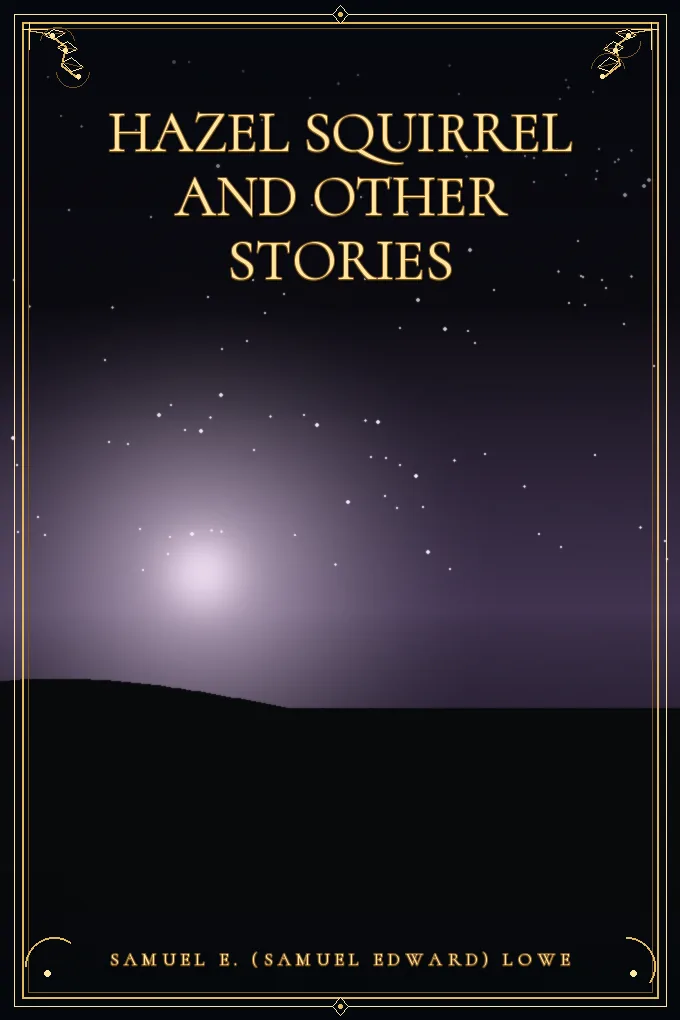
Cover illustration for Hazel Squirrel and Other Stories
Context Illustration Reading 1/10 · 5 lines
English subtitles · tap any word to listen 1 / 5
After the first shock, Father Frog became very angry with Pinkie Whiskers.
His legs began to move once more and he made long hops and jumps until he stood beside Pinkie Whiskers.
He puffed out his white throat and croaked:
"Chug-e-rum! chug-e-rum!
What are you doing with my son and why did you pull him out of the water?"
0:00 / 0:00
Speed 0.75x
AI-generated narration by OpenAI · Slow US English
LEARNER DICTIONARY
Archivist
/ˈɑːrkɪvɪst/
Editorial verification pending

A keeper or guardian of historical records and memories.

Hazel Squirrel and Other Stories

Chapter XI · Chapter 11

Chapter 11 of Hazel Squirrel and Other Stories is here in full — 50 sentences across 10 reading sections, with audio for every sentence and word.

Reading 1/10 · 5 reading units · Lines 1–5

Line 1
After the first shock, Father Frog became very angry with Pinkie Whiskers.
/ˈæftər ðə fɜːrst ʃɑːk ˈfɑːðər frɑːɡ bɪˈkeɪm ˈveri ˈæŋɡri wɪð ˈpɪŋki ˈwɪskərz/
Line 2
His legs began to move once more and he made long hops and jumps until he stood beside Pinkie Whiskers.
/hɪz leɡz bɪˈɡæn tuː muːv wʌns mɔːr ənd hiː meɪd lɔːŋ hɑːps ənd dʒʌmps ənˈtɪl hiː stʊd bɪˈsaɪd ˈpɪŋki ˈwɪskərz/
Line 3
He puffed out his white throat and croaked:
Line 4
"Chug-e-rum! chug-e-rum!
Line 5
What are you doing with my son and why did you pull him out of the water?"
/wʌt ɑːr juː ˈduːɪŋ wɪð maɪ sʌn ənd waɪ dɪd juː pʊl hɪm aʊt ʌv ðə ˈwɔːtər/

Learner Dictionary

These definitions explain words found in the current reading and keep every example grounded in its original sentence.

Oxford-style entry order: headword, part of speech, US IPA, concise definition, contextual example, and audio.

Frog noun US /frɑːɡ/

any of various tailless stout-bodied amphibians with long hind limbs for leaping; semiaquatic and terrestrial species

From this reading “After the first shock, Father Frog became very angry with Pinkie Whiskers.”

hops noun US /hɑːps/

twining perennials having cordate leaves and flowers arranged in conelike spikes; the dried flowers of this plant are used in brewing to add the characteristic bitter taste to beer

From this reading “His legs began to move once more and he made long hops and jumps until he stood beside Pinkie Whiskers.”

jumps noun US /dʒʌmps/

plural of “jump” — a sudden and decisive increase

From this reading “His legs began to move once more and he made long hops and jumps until he stood beside Pinkie Whiskers.”

Pinkie noun US /ˈpɪŋki/

the finger farthest from the thumb

From this reading “After the first shock, Father Frog became very angry with Pinkie Whiskers.”

puffed adjective US /pʌft/

gathered for protruding fullness

From this reading “He puffed out his white throat and croaked:”

pull verb US /pʊl/

cause to move by pulling

From this reading “What are you doing with my son and why did you pull him out of the water?"”

shock noun US /ʃɑːk/

the feeling of distress and disbelief that you have when something bad happens accidentally

From this reading “After the first shock, Father Frog became very angry with Pinkie Whiskers.”

Whiskers noun US /ˈwɪskərz/

the hair growing on the lower part of a man's face

From this reading “After the first shock, Father Frog became very angry with Pinkie Whiskers.”

All words in this reading · 46

Every word in these five lines is listed here, and every one of them can be played on its own.

Dictionary details are shown only when verified; these are not licensed Oxford entries.

AfterprepositionUS /ˈæftər/

later than; following

From this reading After the first shock, Father Frog became very angry with Pinkie Whiskers.

andconjunctionUS /ənd/

used to join words or parts of a sentence that go together

From this reading His legs began to move once more and he made long hops and jumps until he stood beside Pinkie Whiskers.

angryadjectiveUS /ˈæŋɡri/

feeling or showing anger

From this reading After the first shock, Father Frog became very angry with Pinkie Whiskers.

areauxiliary verbUS /ɑːr/

the form of “be” used with you, we, they, or a plural noun

From this reading What are you doing with my son and why did you pull him out of the water?"

becameverbUS /bɪˈkeɪm/

inflected form of “become” — enter or assume a certain state or condition

From this reading After the first shock, Father Frog became very angry with Pinkie Whiskers.

beganverbUS /bɪˈɡæn/

inflected form of “begin” — take the first step or steps in carrying out an action

From this reading His legs began to move once more and he made long hops and jumps until he stood beside Pinkie Whiskers.

besideprepositionUS /bɪˈsaɪd/

next to; at the side of

From this reading His legs began to move once more and he made long hops and jumps until he stood beside Pinkie Whiskers.

Chug-e-rum

Dictionary entry pending editorial verification. Tap Listen to hear the word.

From this reading "Chug-e-rum! chug-e-rum!

croaked

Dictionary entry pending editorial verification. Tap Listen to hear the word.

From this reading He puffed out his white throat and croaked:

didauxiliary verbUS /dɪd/

the past form of “do”, used in questions and negatives

From this reading What are you doing with my son and why did you pull him out of the water?"

doingverbUS /ˈduːɪŋ/

-ing form of “do” — engage in

From this reading What are you doing with my son and why did you pull him out of the water?"

FathernounUS /ˈfɑːðər/

a male parent (also used as a term of address to your father)

From this reading After the first shock, Father Frog became very angry with Pinkie Whiskers.

firstadjectiveUS /fɜːrst/

preceding all others in time or space or degree

From this reading After the first shock, Father Frog became very angry with Pinkie Whiskers.

FrognounUS /frɑːɡ/

any of various tailless stout-bodied amphibians with long hind limbs for leaping; semiaquatic and terrestrial species

From this reading After the first shock, Father Frog became very angry with Pinkie Whiskers.

hepronounUS /hiː/

a man, boy, or male animal already mentioned, as the subject

From this reading His legs began to move once more and he made long hops and jumps until he stood beside Pinkie Whiskers.

himpronounUS /hɪm/

the male already mentioned, as the object of a verb or preposition

From this reading What are you doing with my son and why did you pull him out of the water?"

HisdeterminerUS /hɪz/

belonging to a man, boy, or male animal already mentioned

From this reading His legs began to move once more and he made long hops and jumps until he stood beside Pinkie Whiskers.

hopsnounUS /hɑːps/

twining perennials having cordate leaves and flowers arranged in conelike spikes; the dried flowers of this plant are used in brewing to add the characteristic bitter taste to beer

From this reading His legs began to move once more and he made long hops and jumps until he stood beside Pinkie Whiskers.

jumpsnounUS /dʒʌmps/

plural of “jump” — a sudden and decisive increase

From this reading His legs began to move once more and he made long hops and jumps until he stood beside Pinkie Whiskers.

legsnounUS /leɡz/

staying power

From this reading His legs began to move once more and he made long hops and jumps until he stood beside Pinkie Whiskers.

longadjectiveUS /lɔːŋ/

primarily temporal sense; being or indicating a relatively great or greater than average duration or passage of time or a duration as specified

From this reading His legs began to move once more and he made long hops and jumps until he stood beside Pinkie Whiskers.

madeadjectiveUS /meɪd/

produced by a manufacturing process

From this reading His legs began to move once more and he made long hops and jumps until he stood beside Pinkie Whiskers.

moreadjectiveUS /mɔːr/

(comparative of “much” used with mass nouns) a quantifier meaning greater in size or amount or extent or degree

From this reading His legs began to move once more and he made long hops and jumps until he stood beside Pinkie Whiskers.

moveverbUS /muːv/

change location; move, travel, or proceed, also metaphorically

From this reading His legs began to move once more and he made long hops and jumps until he stood beside Pinkie Whiskers.

mydeterminerUS /maɪ/

belonging to the person speaking

From this reading What are you doing with my son and why did you pull him out of the water?"

ofprepositionUS /ʌv/

belonging to, or connected with, somebody or something

From this reading What are you doing with my son and why did you pull him out of the water?"

onceadverbUS /wʌns/

on one occasion

From this reading His legs began to move once more and he made long hops and jumps until he stood beside Pinkie Whiskers.

outadjectiveUS /aʊt/

not allowed to continue to bat or run

From this reading He puffed out his white throat and croaked:

PinkienounUS /ˈpɪŋki/

the finger farthest from the thumb

From this reading After the first shock, Father Frog became very angry with Pinkie Whiskers.

puffedadjectiveUS /pʌft/

gathered for protruding fullness

From this reading He puffed out his white throat and croaked:

pullverbUS /pʊl/

cause to move by pulling

From this reading What are you doing with my son and why did you pull him out of the water?"

shocknounUS /ʃɑːk/

the feeling of distress and disbelief that you have when something bad happens accidentally

From this reading After the first shock, Father Frog became very angry with Pinkie Whiskers.

sonnounUS /sʌn/

a male human offspring

From this reading What are you doing with my son and why did you pull him out of the water?"

stoodverbUS /stʊd/

Maintained an upright posture.

From this reading His legs began to move once more and he made long hops and jumps until he stood beside Pinkie Whiskers.

thedeterminerUS /ðə/

used before a noun that is already known, already mentioned, or the only one of its kind

From this reading After the first shock, Father Frog became very angry with Pinkie Whiskers.

throatnounUS /θroʊt/

The passage at the back of the mouth.

From this reading He puffed out his white throat and croaked:

toparticleUS /tuː/

used before the base form of a verb to make the infinitive

From this reading His legs began to move once more and he made long hops and jumps until he stood beside Pinkie Whiskers.

untilprepositionUS /ənˈtɪl/

up to a particular time

From this reading His legs began to move once more and he made long hops and jumps until he stood beside Pinkie Whiskers.

veryadjectiveUS /ˈveri/

precisely as stated

From this reading After the first shock, Father Frog became very angry with Pinkie Whiskers.

waternounUS /ˈwɔːtər/

binary compound that occurs at room temperature as a clear colorless odorless tasteless liquid; freezes into ice below 0 degrees centigrade and boils above 100 degrees centigrade; widely used as a solvent

From this reading What are you doing with my son and why did you pull him out of the water?"

WhatpronounUS /wʌt/

used to ask for information about something

From this reading What are you doing with my son and why did you pull him out of the water?"

WhiskersnounUS /ˈwɪskərz/

the hair growing on the lower part of a man's face

From this reading After the first shock, Father Frog became very angry with Pinkie Whiskers.

whitenounUS /waɪt/

a Caucasian

From this reading He puffed out his white throat and croaked:

whynounUS /waɪ/

the cause or intention underlying an action or situation, especially in the phrase “the whys and wherefores”

From this reading What are you doing with my son and why did you pull him out of the water?"

withprepositionUS /wɪð/

in the company of; together with

From this reading After the first shock, Father Frog became very angry with Pinkie Whiskers.

youpronounUS /juː/

the person or people being spoken to

From this reading What are you doing with my son and why did you pull him out of the water?"

Chapter 11 of Hazel Squirrel and Other Stories by Samuel E. (Samuel Edward) Lowe holds 50 sentences, grouped into 10 reading sections of at most 5 sentences. The text is the source edition, unabridged, and the chapter records which sentences cover which part of the work so that nothing is dropped. Every word can be tapped for its pronunciation and dictionary entry.

What does chapter 11 of Hazel Squirrel and Other Stories contain?

Chapter 11 holds 50 sentences of Hazel Squirrel and Other Stories, unabridged, divided into 10 reading sections.

This page carries chapter 11 of Hazel Squirrel and Other Stories by Samuel E. (Samuel Edward) Lowe exactly as it stands in the source edition, without abridgement. It runs to 50 sentences, grouped into 10 sections of at most 5 sentences so that a reader can take the chapter in steady, finishable pieces. The chapter also stores a coverage record mapping every one of its sentences to a part of the work, which is how the edition demonstrates that no line was dropped.

How do I study chapter 11 of Hazel Squirrel and Other Stories?

Work through the 10 sections in order, replaying any sentence and tapping unfamiliar words for their entries.

Each of the 10 sections in this chapter is short enough to read once, hear once, and then re-read with the vocabulary in view. Tapping a word plays it alone and opens its dictionary entry with IPA, part of speech and meaning, so the reader is never forced to guess a pronunciation from spelling. Working section by section keeps a long chapter from becoming an undifferentiated wall of text, which is the usual reason a reader abandons a work of this period.

Can chapter 11 be read aloud to me?

Yes — every sentence and every individual word in chapter 11 can be played aloud in United States English.

Audio covers the whole chapter: any sentence can be played, and any single word within it can be played on its own. The voice uses United States English. For a work of this period that matters, because spelling is an unreliable guide to pronunciation for vocabulary that has fallen out of daily use, and a learner who guesses wrong tends to keep the error. Hearing the word in its own sentence, and then alone, settles it.

Questions about reading Hazel Squirrel and Other Stories

Common questions about reading Hazel Squirrel and Other Stories by Samuel E. (Samuel Edward) Lowe on this page, its source edition and its audio.

Is this the complete text of Hazel Squirrel and Other Stories?

Yes. All 0 sentences of Project Gutenberg eBook #? are kept, with a record of which sentences cover which part.

Which edition of Hazel Squirrel and Other Stories is used?

Project Gutenberg eBook #?, unabridged. The Project Gutenberg header, footer and licence are removed.

How long does Hazel Squirrel and Other Stories take to read?

About 5 minutes of reading across 0 sections of 5 sentences each, at an unhurried pace.

How to read Hazel Squirrel and Other Stories section by section

How to work through Hazel Squirrel and Other Stories section by section, using the audio and the tap-to-define vocabulary.

  1. Open a chapter

    Choose one of the 0 chapters of Hazel Squirrel and Other Stories to begin.

  2. Read one section

    Each section holds 5 sentences; read it once through.

  3. Listen and tap

    Play the section aloud, then tap any unfamiliar word for its entry.

Vocabulary met early in Hazel Squirrel and Other Stories

Words and structures a reader meets early in Hazel Squirrel and Other Stories, each tappable for pronunciation and meaning.

Chapter 1
One of the 0 chapters of Hazel Squirrel and Other Stories, divided into 5-sentence reading sections.
Chapter 2
One of the 0 chapters of Hazel Squirrel and Other Stories, divided into 5-sentence reading sections.
Chapter 3
One of the 0 chapters of Hazel Squirrel and Other Stories, divided into 5-sentence reading sections.