Complete classic literature • Five-line readings • Clear US narration
VELMORA ACADEMY
Academy of Archival Languages & Memory Studies
Menu Close
Helen Ford
Helen Ford

Chapter XIII · The Opposite Lodger

Chapter XIII of Helen Ford, “The Opposite Lodger,” is here in full — 126 sentences across 26 reading sections, with audio for every sentence and word.

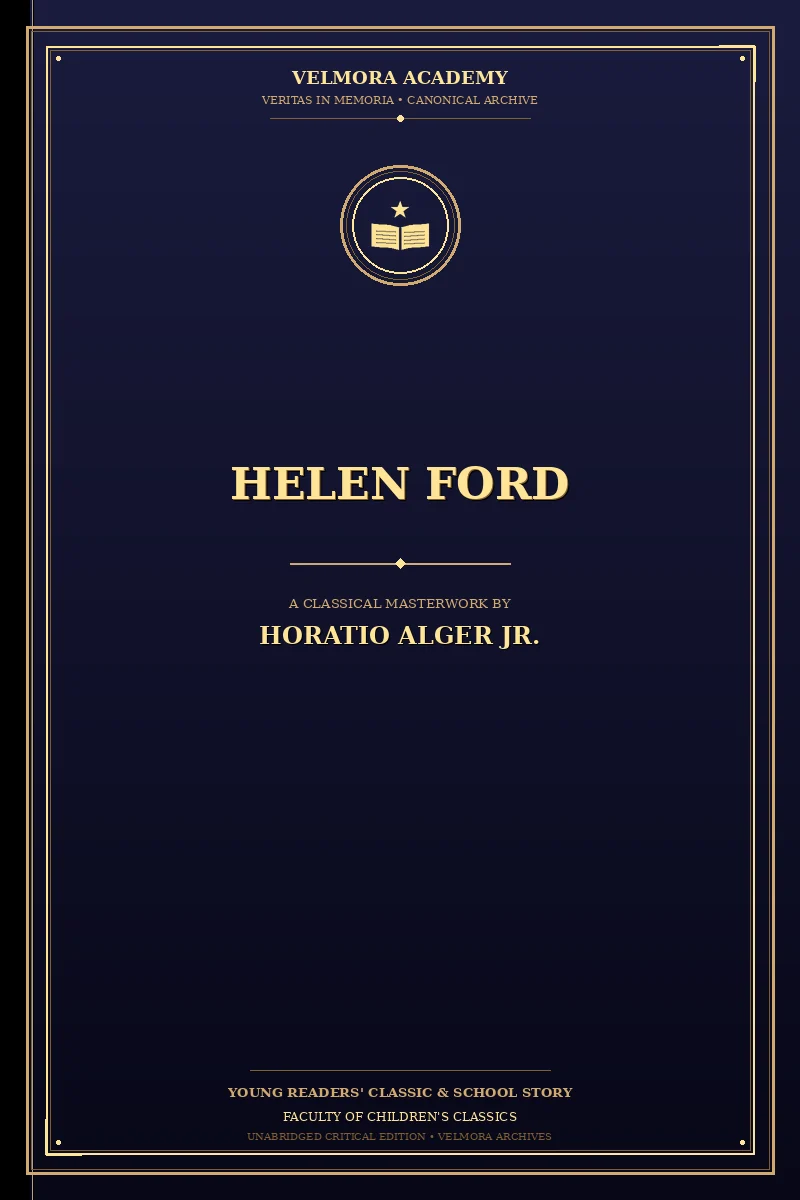
Cover illustration for Helen Ford
Context Illustration Reading 1/25 · 5 lines
English subtitles · tap any word to listen 1 / 5
During the day Helen, in ascending the stairs, encountered M’lle Fanchette.
“So you have become quite a public character, Miss Ford,” said the _modiste_, superciliously.
Helen looked up, but did not speak.
“I heard you sing at the theatre, last evening.”
“Yes, madam.”
0:00 / 0:00
Speed 0.75x
AI-generated narration by OpenAI · Slow US English
LEARNER DICTIONARY
Archivist
/ˈɑːrkɪvɪst/
Editorial verification pending

A keeper or guardian of historical records and memories.

Helen Ford

Chapter XIII · The Opposite Lodger

Chapter XIII of Helen Ford, “The Opposite Lodger,” is here in full — 126 sentences across 26 reading sections, with audio for every sentence and word.

Reading 1/25 · 5 reading units · Lines 1–5

Line 1
During the day Helen, in ascending the stairs, encountered M’lle Fanchette.
Line 2
“So you have become quite a public character, Miss Ford,” said the _modiste_, superciliously.
Line 3
Helen looked up, but did not speak.
/ˈhelən lʊkt ʌp bʌt dɪd nɑːt spiːk/
Line 4
“I heard you sing at the theatre, last evening.”
/aɪ hɜːrd juː sɪŋ æt ðə ˈθiːətər læst ˈiːvnɪŋ/
Line 5
“Yes, madam.”
/jes ˈmædəm/

Learner Dictionary

These definitions explain words found in the current reading and keep every example grounded in its original sentence.

Oxford-style entry order: headword, part of speech, US IPA, concise definition, contextual example, and audio.

ascending adjective US /əˈsendɪŋ/

moving or going or growing upward

From this reading “During the day Helen, in ascending the stairs, encountered M’lle Fanchette.”

encountered verb US /ɪnˈkaʊntərd/

past form of “encounter” — come together

From this reading “During the day Helen, in ascending the stairs, encountered M’lle Fanchette.”

Ford noun US /fɔːrd/

United States film maker (1896-1973)

From this reading ““So you have become quite a public character, Miss Ford,” said the _modiste_, superciliously.”

Helen noun US /ˈhelən/

(Greek mythology) the beautiful daughter of Zeus and Leda who was abducted by Paris; the Greek army sailed to Troy to get her back which resulted in the Trojan War

From this reading “During the day Helen, in ascending the stairs, encountered M’lle Fanchette.”

madam noun US /ˈmædəm/

a woman of refinement

From this reading ““Yes, madam.””

sing verb US /sɪŋ/

deliver by singing

From this reading ““I heard you sing at the theatre, last evening.””

stairs noun US /sterz/

a flight of stairs or a flight of steps

From this reading “During the day Helen, in ascending the stairs, encountered M’lle Fanchette.”

theatre noun US /ˈθiːətər/

a building where theatrical performances or motion-picture shows can be presented

From this reading ““I heard you sing at the theatre, last evening.””

Word partnerships in these lines

English keeps certain words together, and knowing the pair is worth more than knowing each word alone. Every partnership below was counted across our whole published library, and earns its place by appearing far more often than two unrelated words of the same frequency would.

Shown as this reading writes them, with the form the library counts, what kind of pairing it is, and how often it occurs.

During the day preposition + article + noun counted as “during … day”

In this reading “During the day Helen, in ascending the stairs, encountered M’lle Fanchette.”

public character noun + noun

In this reading ““So you have become quite a public character, Miss Ford,” said the _modiste_, superciliously.”

looked up verb + adjective counted as “look up”

seek information from

In this reading “Helen looked up, but did not speak.”

become quite verb + particle

In this reading ““So you have become quite a public character, Miss Ford,” said the _modiste_, superciliously.”

last evening adjective + noun

In this reading ““I heard you sing at the theatre, last evening.””

at the theatre preposition + article + noun counted as “at … theatre”

In this reading ““I heard you sing at the theatre, last evening.””

All words in this reading · 38

Every word in these five lines is listed here, and every one of them can be played on its own.

Dictionary details are shown only when verified; these are not licensed Oxford entries.

adeterminerUS /ə/

used before a singular noun to mean one of a group, when it is not a particular one

From this reading “So you have become quite a public character, Miss Ford,” said the _modiste_, superciliously.

ascendingadjectiveUS /əˈsendɪŋ/

moving or going or growing upward

From this reading During the day Helen, in ascending the stairs, encountered M’lle Fanchette.

atprepositionUS /æt/

in or near a particular place or position

From this reading “I heard you sing at the theatre, last evening.”

becomeverbUS /bɪˈkʌm/

enter or assume a certain state or condition

From this reading “So you have become quite a public character, Miss Ford,” said the _modiste_, superciliously.

butconjunctionUS /bʌt/

used to introduce something that contrasts with what came before

From this reading Helen looked up, but did not speak.

characternounUS /ˈkerɪktər/

an imaginary person represented in a work of fiction (play or film or story)

From this reading “So you have become quite a public character, Miss Ford,” said the _modiste_, superciliously.

daynounUS /deɪ/

time for Earth to make a complete rotation on its axis

From this reading During the day Helen, in ascending the stairs, encountered M’lle Fanchette.

didauxiliary verbUS /dɪd/

the past form of “do”, used in questions and negatives

From this reading Helen looked up, but did not speak.

DuringprepositionUS /ˈdʊrɪŋ/

all through a period, or at some point within it

From this reading During the day Helen, in ascending the stairs, encountered M’lle Fanchette.

encounteredverbUS /ɪnˈkaʊntərd/

past form of “encounter” — come together

From this reading During the day Helen, in ascending the stairs, encountered M’lle Fanchette.

eveningnounUS /ˈiːvnɪŋ/

the latter part of the day (the period of decreasing daylight from late afternoon until nightfall)

From this reading “I heard you sing at the theatre, last evening.”

Fanchette

Dictionary entry pending editorial verification. Tap Listen to hear the word.

From this reading During the day Helen, in ascending the stairs, encountered M’lle Fanchette.

FordnounUS /fɔːrd/

United States film maker (1896-1973)

From this reading “So you have become quite a public character, Miss Ford,” said the _modiste_, superciliously.

haveauxiliary verbUS /hæv/

used with a past participle to form the perfect tenses

From this reading “So you have become quite a public character, Miss Ford,” said the _modiste_, superciliously.

heardadjectiveUS /hɜːrd/

detected or perceived by the sense of hearing

From this reading “I heard you sing at the theatre, last evening.”

HelennounUS /ˈhelən/

(Greek mythology) the beautiful daughter of Zeus and Leda who was abducted by Paris; the Greek army sailed to Troy to get her back which resulted in the Trojan War

From this reading During the day Helen, in ascending the stairs, encountered M’lle Fanchette.

IpronounUS /aɪ/

the person speaking or writing, as the subject of the verb

From this reading “I heard you sing at the theatre, last evening.”

inprepositionUS /ɪn/

inside something, or within a place, period, or state

From this reading During the day Helen, in ascending the stairs, encountered M’lle Fanchette.

lastadjectiveUS /læst/

immediately past

From this reading “I heard you sing at the theatre, last evening.”

lookedverbUS /lʊkt/

past form of “look” — perceive with attention; direct one's gaze towards

From this reading Helen looked up, but did not speak.

M'lle

Dictionary entry pending editorial verification. Tap Listen to hear the word.

From this reading During the day Helen, in ascending the stairs, encountered M’lle Fanchette.

madamnounUS /ˈmædəm/

a woman of refinement

From this reading “Yes, madam.”

MissverbUS /mɪs/

fail to perceive or to catch with the senses or the mind

From this reading “So you have become quite a public character, Miss Ford,” said the _modiste_, superciliously.

modistenoun

someone who makes and sells hats

From this reading “So you have become quite a public character, Miss Ford,” said the _modiste_, superciliously.

notadverbUS /nɑːt/

used to make a word, phrase, or sentence negative

From this reading Helen looked up, but did not speak.

publicnounUS /ˈpʌblɪk/

people in general considered as a whole

From this reading “So you have become quite a public character, Miss Ford,” said the _modiste_, superciliously.

quiteadverbUS /kwaɪt/

to a degree (not used with a negative)

From this reading “So you have become quite a public character, Miss Ford,” said the _modiste_, superciliously.

saidadjectiveUS /sed/

being the one previously mentioned or spoken of

From this reading “So you have become quite a public character, Miss Ford,” said the _modiste_, superciliously.

singverbUS /sɪŋ/

deliver by singing

From this reading “I heard you sing at the theatre, last evening.”

SoconjunctionUS /soʊ/

for that reason; with the result that

From this reading “So you have become quite a public character, Miss Ford,” said the _modiste_, superciliously.

speakverbUS /spiːk/

express in speech

From this reading Helen looked up, but did not speak.

stairsnounUS /sterz/

a flight of stairs or a flight of steps

From this reading During the day Helen, in ascending the stairs, encountered M’lle Fanchette.

superciliouslyadverb

with a sneer; in an uncomplimentary sneering manner

From this reading “So you have become quite a public character, Miss Ford,” said the _modiste_, superciliously.

thedeterminerUS /ðə/

used before a noun that is already known, already mentioned, or the only one of its kind

From this reading During the day Helen, in ascending the stairs, encountered M’lle Fanchette.

theatrenounUS /ˈθiːətər/

a building where theatrical performances or motion-picture shows can be presented

From this reading “I heard you sing at the theatre, last evening.”

upadjectiveUS /ʌp/

being or moving higher in position or greater in some value; being above a former position or level

From this reading Helen looked up, but did not speak.

YesnounUS /jes/

an affirmative

From this reading “Yes, madam.”

youpronounUS /juː/

the person or people being spoken to

From this reading “So you have become quite a public character, Miss Ford,” said the _modiste_, superciliously.

Chapter 13 of Helen Ford by Horatio, Jr. Alger holds 126 sentences, grouped into 26 reading sections of at most 5 sentences. The text is the source edition, unabridged, and the chapter records which sentences cover which part of the work so that nothing is dropped. Every word can be tapped for its pronunciation and dictionary entry.

What does chapter 13 of Helen Ford contain?

Chapter 13 holds 126 sentences of Helen Ford, unabridged, divided into 26 reading sections.

This page carries chapter 13 of Helen Ford by Horatio, Jr. Alger exactly as it stands in the source edition, without abridgement. It runs to 126 sentences, grouped into 26 sections of at most 5 sentences so that a reader can take the chapter in steady, finishable pieces. The chapter also stores a coverage record mapping every one of its sentences to a part of the work, which is how the edition demonstrates that no line was dropped.

How do I study chapter 13 of Helen Ford?

Work through the 26 sections in order, replaying any sentence and tapping unfamiliar words for their entries.

Each of the 26 sections in this chapter is short enough to read once, hear once, and then re-read with the vocabulary in view. Tapping a word plays it alone and opens its dictionary entry with IPA, part of speech and meaning, so the reader is never forced to guess a pronunciation from spelling. Working section by section keeps a long chapter from becoming an undifferentiated wall of text, which is the usual reason a reader abandons a work of this period.

Can chapter 13 be read aloud to me?

Yes — every sentence and every individual word in chapter 13 can be played aloud in United States English.

Audio covers the whole chapter: any sentence can be played, and any single word within it can be played on its own. The voice uses United States English. For a work of this period that matters, because spelling is an unreliable guide to pronunciation for vocabulary that has fallen out of daily use, and a learner who guesses wrong tends to keep the error. Hearing the word in its own sentence, and then alone, settles it.

Questions about reading Helen Ford

Common questions about reading Helen Ford by Horatio, Jr. Alger on this page, its source edition and its audio.

Is this the complete text of Helen Ford?

Yes. All 5561 sentences of Project Gutenberg eBook #53868 are kept, with a record of which sentences cover which part.

Which edition of Helen Ford is used?

Project Gutenberg eBook #53868, unabridged. The Project Gutenberg header, footer and licence are removed.

How long does Helen Ford take to read?

About 463 minutes of reading across 1113 sections of 5 sentences each, at an unhurried pace.

How to read Helen Ford section by section

How to work through Helen Ford section by section, using the audio and the tap-to-define vocabulary.

  1. Open a chapter

    Choose one of the 39 chapters of Helen Ford to begin.

  2. Read one section

    Each section holds 5 sentences; read it once through.

  3. Listen and tap

    Play the section aloud, then tap any unfamiliar word for its entry.

Vocabulary met early in Helen Ford

Words and structures a reader meets early in Helen Ford, each tappable for pronunciation and meaning.

Search
A word that appears in the opening chapter of Helen Ford; the reader can tap it to hear it and see its dictionary entry.
Lodgings
A word that appears in the opening chapter of Helen Ford; the reader can tap it to hear it and see its dictionary entry.
Minutes
A word that appears in the opening chapter of Helen Ford; the reader can tap it to hear it and see its dictionary entry.
Broadway
A word that appears in the opening chapter of Helen Ford; the reader can tap it to hear it and see its dictionary entry.