Complete classic literature • Five-line readings • Clear US narration
VELMORA ACADEMY
Academy of Archival Languages & Memory Studies
Menu Close
In the Roaring Fifties

Chapter IV · Chapter 4

Chapter 4 of In the Roaring Fifties is here in full — 398 sentences across 80 reading sections, with audio for every sentence and word.

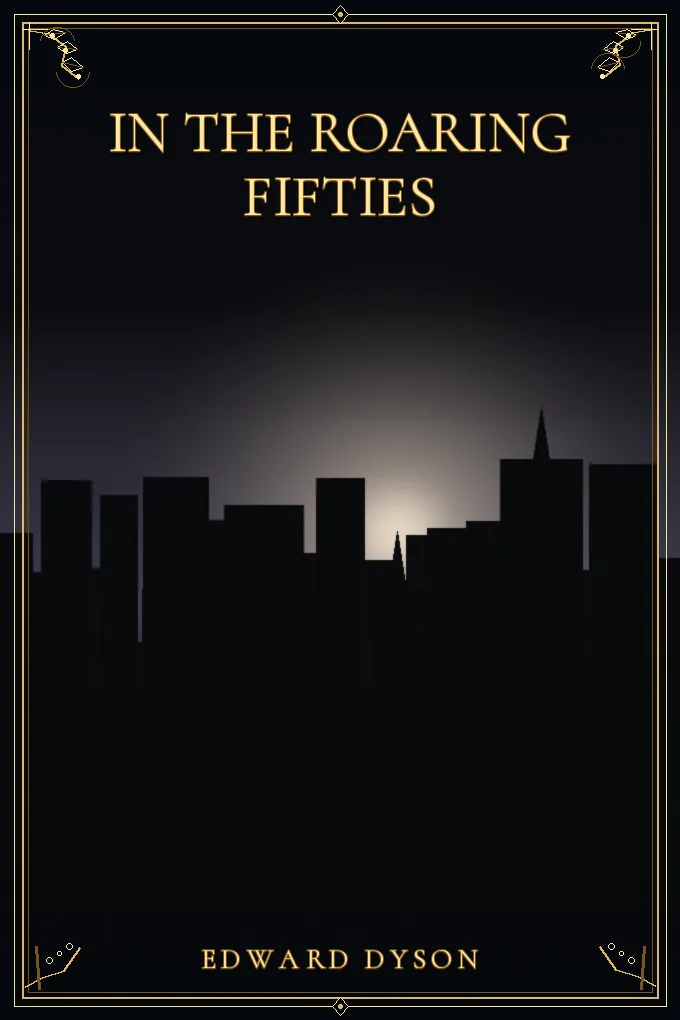
Cover illustration for In the Roaring Fifties
Context Illustration Reading 1/79 · 5 lines
English subtitles · tap any word to listen 1 / 5
'You're a curious kind of devil, Jim,' said Mike, who had been watching Done closely during the last few minutes.

'How's that?'
'You don't talk.
Worse still, you don't smoke.'
'No; in England I had neither mates nor friends, and smoking's a convivial disease--a kid catches it from his companions.'
0:00 / 0:00
Speed 0.75x
AI-generated narration by OpenAI · Slow US English
LEARNER DICTIONARY
Archivist
/ˈɑːrkɪvɪst/
Editorial verification pending

A keeper or guardian of historical records and memories.

In the Roaring Fifties

Chapter IV · Chapter 4

Chapter 4 of In the Roaring Fifties is here in full — 398 sentences across 80 reading sections, with audio for every sentence and word.

Reading 1/79 · 5 reading units · Lines 1–5

Line 1
'You're a curious kind of devil, Jim,' said Mike, who had been watching Done closely during the last few minutes.
Line 2
'How's that?'
Line 3
'You don't talk.
Line 4
Worse still, you don't smoke.'
Line 5
'No; in England I had neither mates nor friends, and smoking's a convivial disease--a kid catches it from his companions.'

Learner Dictionary

These definitions explain words found in the current reading and keep every example grounded in its original sentence.

Oxford-style entry order: headword, part of speech, US IPA, concise definition, contextual example, and audio.

catches noun US /ˈkætʃəz/

plural of “catch” — a drawback or difficulty that is not readily evident

From this reading “'No; in England I had neither mates nor friends, and smoking's a convivial disease--a kid catches it from his companions.'”

closely adverb US /ˈkloʊsli/

in a close relation or position in time or space

From this reading “'You're a curious kind of devil, Jim,' said Mike, who had been watching Done closely during the last few minutes.”

convivial adjective US /kənˈvɪviəl/

occupied with or fond of the pleasures of good company

From this reading “'No; in England I had neither mates nor friends, and smoking's a convivial disease--a kid catches it from his companions.'”

disease noun US /dɪˈziːz/

an impairment of health or a condition of abnormal functioning

From this reading “'No; in England I had neither mates nor friends, and smoking's a convivial disease--a kid catches it from his companions.'”

kid verb US /kɪd/

tell false information to for fun

From this reading “'No; in England I had neither mates nor friends, and smoking's a convivial disease--a kid catches it from his companions.'”

mates noun US /meɪts/

a pair of people who live together

From this reading “'No; in England I had neither mates nor friends, and smoking's a convivial disease--a kid catches it from his companions.'”

Mike noun US /maɪk/

device for converting sound waves into electrical energy

From this reading “'You're a curious kind of devil, Jim,' said Mike, who had been watching Done closely during the last few minutes.”

smoking's noun US /ˈsmoʊkɪŋz/

possessive form of “smoking” — the act of smoking tobacco or other substances

From this reading “'No; in England I had neither mates nor friends, and smoking's a convivial disease--a kid catches it from his companions.'”

All words in this reading · 46

Every word in these five lines is listed here, and every one of them can be played on its own.

Dictionary details are shown only when verified; these are not licensed Oxford entries.

adeterminerUS /ə/

used before a singular noun to mean one of a group, when it is not a particular one

From this reading 'You're a curious kind of devil, Jim,' said Mike, who had been watching Done closely during the last few minutes.

andconjunctionUS /ənd/

used to join words or parts of a sentence that go together

From this reading 'No; in England I had neither mates nor friends, and smoking's a convivial disease--a kid catches it from his companions.'

beenauxiliary verbUS /bɪn/

the past participle of “be”

From this reading 'You're a curious kind of devil, Jim,' said Mike, who had been watching Done closely during the last few minutes.

catchesnounUS /ˈkætʃəz/

plural of “catch” — a drawback or difficulty that is not readily evident

From this reading 'No; in England I had neither mates nor friends, and smoking's a convivial disease--a kid catches it from his companions.'

closelyadverbUS /ˈkloʊsli/

in a close relation or position in time or space

From this reading 'You're a curious kind of devil, Jim,' said Mike, who had been watching Done closely during the last few minutes.

companionsnounUS /kəmˈpænjənz/

plural of “companion” — a friend who is frequently in the company of another

From this reading 'No; in England I had neither mates nor friends, and smoking's a convivial disease--a kid catches it from his companions.'

convivialadjectiveUS /kənˈvɪviəl/

occupied with or fond of the pleasures of good company

From this reading 'No; in England I had neither mates nor friends, and smoking's a convivial disease--a kid catches it from his companions.'

curiousadjectiveUS /ˈkjʊriəs/

beyond or deviating from the usual or expected

From this reading 'You're a curious kind of devil, Jim,' said Mike, who had been watching Done closely during the last few minutes.

devilnounUS /ˈdevəl/

(Judeo-Christian and Islamic religions) chief spirit of evil and adversary of God; tempter of mankind; master of Hell

From this reading 'You're a curious kind of devil, Jim,' said Mike, who had been watching Done closely during the last few minutes.

diseasenounUS /dɪˈziːz/

an impairment of health or a condition of abnormal functioning

From this reading 'No; in England I had neither mates nor friends, and smoking's a convivial disease--a kid catches it from his companions.'

don't

Dictionary entry pending editorial verification. Tap Listen to hear the word.

From this reading 'You don't talk.

DoneadjectiveUS /dʌn/

having finished or arrived at completion

From this reading 'You're a curious kind of devil, Jim,' said Mike, who had been watching Done closely during the last few minutes.

duringprepositionUS /ˈdʊrɪŋ/

all through a period, or at some point within it

From this reading 'You're a curious kind of devil, Jim,' said Mike, who had been watching Done closely during the last few minutes.

EnglandnounUS /ˈɪŋɡlənd/

a division of the United Kingdom

From this reading 'No; in England I had neither mates nor friends, and smoking's a convivial disease--a kid catches it from his companions.'

fewadjectiveUS /fjuː/

a quantifier that can be used with count nouns and is often preceded by “a”; a small but indefinite number

From this reading 'You're a curious kind of devil, Jim,' said Mike, who had been watching Done closely during the last few minutes.

friendsnounUS /frendz/

plural of “friend” — a person you know well and regard with affection and trust

From this reading 'No; in England I had neither mates nor friends, and smoking's a convivial disease--a kid catches it from his companions.'

fromprepositionUS /frʌm/

showing where something starts, or who sent it

From this reading 'No; in England I had neither mates nor friends, and smoking's a convivial disease--a kid catches it from his companions.'

hadauxiliary verbUS /hæd/

the past form of “have”, used to form the past perfect

From this reading 'You're a curious kind of devil, Jim,' said Mike, who had been watching Done closely during the last few minutes.

hisdeterminerUS /hɪz/

belonging to a man, boy, or male animal already mentioned

From this reading 'No; in England I had neither mates nor friends, and smoking's a convivial disease--a kid catches it from his companions.'

How's

Dictionary entry pending editorial verification. Tap Listen to hear the word.

From this reading 'How's that?'

IpronounUS /aɪ/

the person speaking or writing, as the subject of the verb

From this reading 'No; in England I had neither mates nor friends, and smoking's a convivial disease--a kid catches it from his companions.'

inprepositionUS /ɪn/

inside something, or within a place, period, or state

From this reading 'No; in England I had neither mates nor friends, and smoking's a convivial disease--a kid catches it from his companions.'

itpronounUS /ɪt/

a thing, animal, or idea already mentioned

From this reading 'No; in England I had neither mates nor friends, and smoking's a convivial disease--a kid catches it from his companions.'

Jim

Dictionary entry pending editorial verification. Tap Listen to hear the word.

From this reading 'You're a curious kind of devil, Jim,' said Mike, who had been watching Done closely during the last few minutes.

kidverbUS /kɪd/

tell false information to for fun

From this reading 'No; in England I had neither mates nor friends, and smoking's a convivial disease--a kid catches it from his companions.'

kindadjectiveUS /kaɪnd/

having or showing a tender and considerate and helpful nature; used especially of persons and their behavior

From this reading 'You're a curious kind of devil, Jim,' said Mike, who had been watching Done closely during the last few minutes.

lastadjectiveUS /læst/

immediately past

From this reading 'You're a curious kind of devil, Jim,' said Mike, who had been watching Done closely during the last few minutes.

matesnounUS /meɪts/

a pair of people who live together

From this reading 'No; in England I had neither mates nor friends, and smoking's a convivial disease--a kid catches it from his companions.'

MikenounUS /maɪk/

device for converting sound waves into electrical energy

From this reading 'You're a curious kind of devil, Jim,' said Mike, who had been watching Done closely during the last few minutes.

minutesnounUS /ˈmɪnəts/

a written account of what transpired at a meeting

From this reading 'You're a curious kind of devil, Jim,' said Mike, who had been watching Done closely during the last few minutes.

neitherdeterminerUS /ˈniːðər/

not one and not the other of two

From this reading 'No; in England I had neither mates nor friends, and smoking's a convivial disease--a kid catches it from his companions.'

NodeterminerUS /noʊ/

not any; not one

From this reading 'No; in England I had neither mates nor friends, and smoking's a convivial disease--a kid catches it from his companions.'

norconjunctionUS /nɔːr/

and not; used after a negative to add a second negative

From this reading 'No; in England I had neither mates nor friends, and smoking's a convivial disease--a kid catches it from his companions.'

ofprepositionUS /ʌv/

belonging to, or connected with, somebody or something

From this reading 'You're a curious kind of devil, Jim,' said Mike, who had been watching Done closely during the last few minutes.

saidadjectiveUS /sed/

being the one previously mentioned or spoken of

From this reading 'You're a curious kind of devil, Jim,' said Mike, who had been watching Done closely during the last few minutes.

smokenounUS /smoʊk/

a cloud of fine particles suspended in a gas

From this reading Worse still, you don't smoke.'

smoking'snounUS /ˈsmoʊkɪŋz/

possessive form of “smoking” — the act of smoking tobacco or other substances

From this reading 'No; in England I had neither mates nor friends, and smoking's a convivial disease--a kid catches it from his companions.'

stilladjectiveUS /stɪl/

not in physical motion

From this reading Worse still, you don't smoke.'

talkverbUS /tɔːk/

exchange thoughts; talk with

From this reading 'You don't talk.

thatconjunctionUS /ðæt/

used to introduce what somebody said, thought, or felt

From this reading 'How's that?'

thedeterminerUS /ðə/

used before a noun that is already known, already mentioned, or the only one of its kind

From this reading 'You're a curious kind of devil, Jim,' said Mike, who had been watching Done closely during the last few minutes.

watchingnounUS /ˈwɑːtʃɪŋ/

the act of observing; taking a patient look

From this reading 'You're a curious kind of devil, Jim,' said Mike, who had been watching Done closely during the last few minutes.

whopronounUS /huː/

which person or people

From this reading 'You're a curious kind of devil, Jim,' said Mike, who had been watching Done closely during the last few minutes.

WorseadjectiveUS /wɜːrs/

(comparative of “bad”) inferior to another in quality or condition or desirability

From this reading Worse still, you don't smoke.'

YoupronounUS /juː/

the person or people being spoken to

From this reading 'You don't talk.

You're

Dictionary entry pending editorial verification. Tap Listen to hear the word.

From this reading 'You're a curious kind of devil, Jim,' said Mike, who had been watching Done closely during the last few minutes.

Chapter 4 of In the Roaring Fifties by Edward Dyson holds 398 sentences, grouped into 80 reading sections of at most 5 sentences. The text is the source edition, unabridged, and the chapter records which sentences cover which part of the work so that nothing is dropped. Every word can be tapped for its pronunciation and dictionary entry.

What does chapter 4 of In the Roaring Fifties contain?

Chapter 4 holds 398 sentences of In the Roaring Fifties, unabridged, divided into 80 reading sections.

This page carries chapter 4 of In the Roaring Fifties by Edward Dyson exactly as it stands in the source edition, without abridgement. It runs to 398 sentences, grouped into 80 sections of at most 5 sentences so that a reader can take the chapter in steady, finishable pieces. The chapter also stores a coverage record mapping every one of its sentences to a part of the work, which is how the edition demonstrates that no line was dropped.

How do I study chapter 4 of In the Roaring Fifties?

Work through the 80 sections in order, replaying any sentence and tapping unfamiliar words for their entries.

Each of the 80 sections in this chapter is short enough to read once, hear once, and then re-read with the vocabulary in view. Tapping a word plays it alone and opens its dictionary entry with IPA, part of speech and meaning, so the reader is never forced to guess a pronunciation from spelling. Working section by section keeps a long chapter from becoming an undifferentiated wall of text, which is the usual reason a reader abandons a work of this period.

Can chapter 4 be read aloud to me?

Yes — every sentence and every individual word in chapter 4 can be played aloud in United States English.

Audio covers the whole chapter: any sentence can be played, and any single word within it can be played on its own. The voice uses United States English. For a work of this period that matters, because spelling is an unreliable guide to pronunciation for vocabulary that has fallen out of daily use, and a learner who guesses wrong tends to keep the error. Hearing the word in its own sentence, and then alone, settles it.

Questions about reading In the Roaring Fifties

Common questions about reading In the Roaring Fifties by Edward Dyson on this page, its source edition and its audio.

Is this the complete text of In the Roaring Fifties?

Yes. All 5284 sentences of Project Gutenberg eBook #17045 are kept, with a record of which sentences cover which part.

Which edition of In the Roaring Fifties is used?

Project Gutenberg eBook #17045, unabridged. The Project Gutenberg header, footer and licence are removed.

How long does In the Roaring Fifties take to read?

About 440 minutes of reading across 1057 sections of 5 sentences each, at an unhurried pace.

How to read In the Roaring Fifties section by section

How to work through In the Roaring Fifties section by section, using the audio and the tap-to-define vocabulary.

  1. Open a chapter

    Choose one of the 13 chapters of In the Roaring Fifties to begin.

  2. Read one section

    Each section holds 5 sentences; read it once through.

  3. Listen and tap

    Play the section aloud, then tap any unfamiliar word for its entry.

Vocabulary met early in In the Roaring Fifties

Words and structures a reader meets early in In the Roaring Fifties, each tappable for pronunciation and meaning.

Night
A word that appears in the opening chapter of In the Roaring Fifties; the reader can tap it to hear it and see its dictionary entry.
Bright
A word that appears in the opening chapter of In the Roaring Fifties; the reader can tap it to hear it and see its dictionary entry.
Indiaman
A word that appears in the opening chapter of In the Roaring Fifties; the reader can tap it to hear it and see its dictionary entry.
Moved
A word that appears in the opening chapter of In the Roaring Fifties; the reader can tap it to hear it and see its dictionary entry.