adeterminerUS /ə/
used before a singular noun to mean one of a group, when it is not a particular one
From this reading "WE are never too old to learn;" is a truism that cannot be repeated too often, if, in the repetition, we do not lose the force of the sentiment.
ALLadjectiveUS /ɔːl/
(quantifier) used with either mass or count nouns to indicate the whole number or amount of or every one of a class
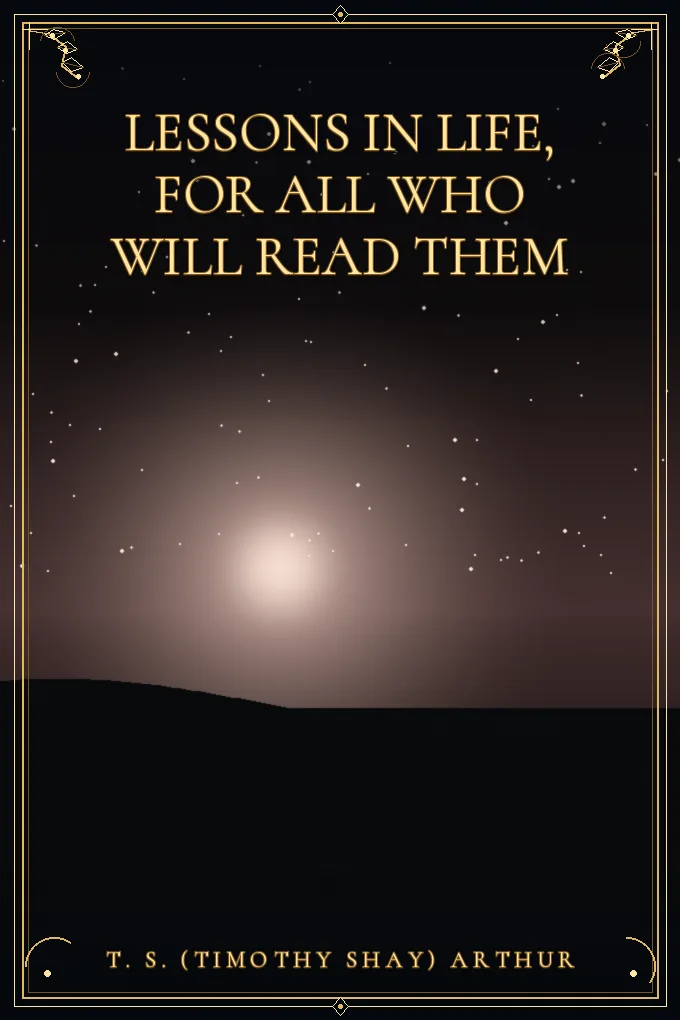
From this reading LESSONS IN LIFE, FOR ALL WHO WILL READ THEM.
andconjunctionUS /ənd/
used to join words or parts of a sentence that go together
From this reading In fact, at every stage of existence we are learners; and, if we (sic) con the lessons well that are written in the great Book of Human Life, wide open before us, we will be wiser and happier.
areauxiliary verbUS /ɑːr/
the form of “be” used with you, we, they, or a plural noun
From this reading "WE are never too old to learn;" is a truism that cannot be repeated too often, if, in the repetition, we do not lose the force of the sentiment.
ARTHURnounUS /ˈɑːrθər/
elected vice president and became 21st President of the United States when Garfield was assassinated (1830-1886)
From this reading T. S. ARTHUR.
atprepositionUS /æt/
in or near a particular place or position
From this reading In fact, at every stage of existence we are learners; and, if we (sic) con the lessons well that are written in the great Book of Human Life, wide open before us, we will be wiser and happier.
beauxiliary verbUS /biː/
used with a past participle to form the passive, or with -ing for continuous tenses
From this reading "WE are never too old to learn;" is a truism that cannot be repeated too often, if, in the repetition, we do not lose the force of the sentiment.
beforeprepositionUS /bɪˈfɔːr/
earlier than; in front of
From this reading In fact, at every stage of existence we are learners; and, if we (sic) con the lessons well that are written in the great Book of Human Life, wide open before us, we will be wiser and happier.
BooknounUS /bʊk/
a written work or composition that has been published (printed on pages bound together)
From this reading In fact, at every stage of existence we are learners; and, if we (sic) con the lessons well that are written in the great Book of Human Life, wide open before us, we will be wiser and happier.
cannot
Dictionary entry pending editorial verification. Tap Listen to hear the word.
From this reading "WE are never too old to learn;" is a truism that cannot be repeated too often, if, in the repetition, we do not lose the force of the sentiment.
connounUS /kɑːn/
an argument opposed to a proposal
From this reading In fact, at every stage of existence we are learners; and, if we (sic) con the lessons well that are written in the great Book of Human Life, wide open before us, we will be wiser and happier.
doauxiliary verbUS /duː/
used to form questions and negatives, and to give emphasis
From this reading "WE are never too old to learn;" is a truism that cannot be repeated too often, if, in the repetition, we do not lose the force of the sentiment.
everydeterminerUS /ˈevəri/
all the members of a group, with none left out
From this reading In fact, at every stage of existence we are learners; and, if we (sic) con the lessons well that are written in the great Book of Human Life, wide open before us, we will be wiser and happier.
existencenounUS /eɡˈzɪstəns/
the state or fact of existing
From this reading In fact, at every stage of existence we are learners; and, if we (sic) con the lessons well that are written in the great Book of Human Life, wide open before us, we will be wiser and happier.
factnounUS /fækt/
a piece of information about circumstances that exist or events that have occurred
From this reading In fact, at every stage of existence we are learners; and, if we (sic) con the lessons well that are written in the great Book of Human Life, wide open before us, we will be wiser and happier.
FORprepositionUS /fɔːr/
intended to be given to, or used by, somebody
From this reading LESSONS IN LIFE, FOR ALL WHO WILL READ THEM.
forcenounUS /fɔːrs/
a powerful effect or influence
From this reading "WE are never too old to learn;" is a truism that cannot be repeated too often, if, in the repetition, we do not lose the force of the sentiment.
greatadjectiveUS /ɡreɪt/
relatively large in size or number or extent; larger than others of its kind
From this reading In fact, at every stage of existence we are learners; and, if we (sic) con the lessons well that are written in the great Book of Human Life, wide open before us, we will be wiser and happier.
happieradjectiveUS /ˈhæpiər/
comparative of “happy” — enjoying or showing or marked by joy or pleasure
From this reading In fact, at every stage of existence we are learners; and, if we (sic) con the lessons well that are written in the great Book of Human Life, wide open before us, we will be wiser and happier.
HumanadjectiveUS /ˈhjuːmən/
characteristic of humanity
From this reading In fact, at every stage of existence we are learners; and, if we (sic) con the lessons well that are written in the great Book of Human Life, wide open before us, we will be wiser and happier.
ifconjunctionUS /ɪf/
on condition that; in the event that
From this reading "WE are never too old to learn;" is a truism that cannot be repeated too often, if, in the repetition, we do not lose the force of the sentiment.
INprepositionUS /ɪn/
inside something, or within a place, period, or state
From this reading LESSONS IN LIFE, FOR ALL WHO WILL READ THEM.
isauxiliary verbUS /ɪz/
the form of “be” used with he, she, it, or a singular noun
From this reading "WE are never too old to learn;" is a truism that cannot be repeated too often, if, in the repetition, we do not lose the force of the sentiment.
learnverbUS /lɜːrn/
gain knowledge or skills
From this reading "WE are never too old to learn;" is a truism that cannot be repeated too often, if, in the repetition, we do not lose the force of the sentiment.
learnersnounUS /ˈlɜːrnərz/
plural of “learner” — someone (especially a child) who learns (as from a teacher) or takes up knowledge or beliefs
From this reading In fact, at every stage of existence we are learners; and, if we (sic) con the lessons well that are written in the great Book of Human Life, wide open before us, we will be wiser and happier.
LESSONSnounUS /ˈlesənz/
plural of “lesson” — a unit of instruction
From this reading LESSONS IN LIFE, FOR ALL WHO WILL READ THEM.
LIFEnounUS /laɪf/
a characteristic state or mode of living
From this reading LESSONS IN LIFE, FOR ALL WHO WILL READ THEM.
loseverbUS /luːz/
fail to keep or to maintain; cease to have, either physically or in an abstract sense
From this reading "WE are never too old to learn;" is a truism that cannot be repeated too often, if, in the repetition, we do not lose the force of the sentiment.
neveradverbUS /ˈnevər/
not ever; at no time in the past or future
From this reading "WE are never too old to learn;" is a truism that cannot be repeated too often, if, in the repetition, we do not lose the force of the sentiment.
notadverbUS /nɑːt/
used to make a word, phrase, or sentence negative
From this reading "WE are never too old to learn;" is a truism that cannot be repeated too often, if, in the repetition, we do not lose the force of the sentiment.
ofprepositionUS /ʌv/
belonging to, or connected with, somebody or something
From this reading "WE are never too old to learn;" is a truism that cannot be repeated too often, if, in the repetition, we do not lose the force of the sentiment.
oftenadverbUS /ˈɔːfən/
many times at short intervals
From this reading "WE are never too old to learn;" is a truism that cannot be repeated too often, if, in the repetition, we do not lose the force of the sentiment.
oldadjectiveUS /oʊld/
(used especially of persons) having lived for a relatively long time or attained a specific age
From this reading "WE are never too old to learn;" is a truism that cannot be repeated too often, if, in the repetition, we do not lose the force of the sentiment.
openverbUS /ˈoʊ.pən/
To move from a closed position.
From this reading In fact, at every stage of existence we are learners; and, if we (sic) con the lessons well that are written in the great Book of Human Life, wide open before us, we will be wiser and happier.
PREFACEnounUS /ˈprefəs/
a short introductory essay preceding the text of a book
From this reading PREFACE.
READverbUS /red/
interpret something that is written or printed
From this reading LESSONS IN LIFE, FOR ALL WHO WILL READ THEM.
repeatedadjectiveUS /rɪˈpiːtɪd/
recurring again and again
From this reading "WE are never too old to learn;" is a truism that cannot be repeated too often, if, in the repetition, we do not lose the force of the sentiment.
repetitionnounUS /ˌrepəˈtɪʃən/
an event that repeats
From this reading "WE are never too old to learn;" is a truism that cannot be repeated too often, if, in the repetition, we do not lose the force of the sentiment.
SnounUS /es/
1/60 of a minute; the basic unit of time adopted under the Systeme International d'Unites
From this reading T. S. ARTHUR.
sentimentnounUS /ˈsentəmənt/
tender, romantic, or nostalgic feeling or emotion
From this reading "WE are never too old to learn;" is a truism that cannot be repeated too often, if, in the repetition, we do not lose the force of the sentiment.
sicadverbUS /sɪk/
intentionally so written (used after a printed word or phrase)
From this reading In fact, at every stage of existence we are learners; and, if we (sic) con the lessons well that are written in the great Book of Human Life, wide open before us, we will be wiser and happier.
stagenounUS /steɪdʒ/
any distinct time period in a sequence of events
From this reading In fact, at every stage of existence we are learners; and, if we (sic) con the lessons well that are written in the great Book of Human Life, wide open before us, we will be wiser and happier.
TnounUS /tiː/
a base found in DNA (but not in RNA) and derived from pyrimidine; pairs with adenine
From this reading T. S. ARTHUR.
thatconjunctionUS /ðæt/
used to introduce what somebody said, thought, or felt
From this reading "WE are never too old to learn;" is a truism that cannot be repeated too often, if, in the repetition, we do not lose the force of the sentiment.
thedeterminerUS /ðə/
used before a noun that is already known, already mentioned, or the only one of its kind
From this reading "WE are never too old to learn;" is a truism that cannot be repeated too often, if, in the repetition, we do not lose the force of the sentiment.
THEMpronounUS /ðem/
the people or things already mentioned, as the object
From this reading LESSONS IN LIFE, FOR ALL WHO WILL READ THEM.
toparticleUS /tuː/
used before the base form of a verb to make the infinitive
From this reading "WE are never too old to learn;" is a truism that cannot be repeated too often, if, in the repetition, we do not lose the force of the sentiment.
tooadverbUS /tuː/
to a degree exceeding normal or proper limits
From this reading "WE are never too old to learn;" is a truism that cannot be repeated too often, if, in the repetition, we do not lose the force of the sentiment.
truismnounUS /ˈtruːɪzəm/
an obvious truth
From this reading "WE are never too old to learn;" is a truism that cannot be repeated too often, if, in the repetition, we do not lose the force of the sentiment.
uspronounUS /ʌs/
the speaker and others, as the object of a verb or preposition
From this reading In fact, at every stage of existence we are learners; and, if we (sic) con the lessons well that are written in the great Book of Human Life, wide open before us, we will be wiser and happier.
WEpronounUS /wiː/
the speaker together with one or more other people
From this reading "WE are never too old to learn;" is a truism that cannot be repeated too often, if, in the repetition, we do not lose the force of the sentiment.
welladverbUS /wel/
(often used as a combining form) in a good or proper or satisfactory manner or to a high standard (“good” is a nonstandard dialectal variant for “well”)
From this reading In fact, at every stage of existence we are learners; and, if we (sic) con the lessons well that are written in the great Book of Human Life, wide open before us, we will be wiser and happier.
WHOpronounUS /huː/
which person or people
From this reading LESSONS IN LIFE, FOR ALL WHO WILL READ THEM.
wideadjectiveUS /waɪd/
having great (or a certain) extent from one side to the other
From this reading In fact, at every stage of existence we are learners; and, if we (sic) con the lessons well that are written in the great Book of Human Life, wide open before us, we will be wiser and happier.
WILLmodal verbUS /wɪl/
used to talk about the future, or about willingness
From this reading LESSONS IN LIFE, FOR ALL WHO WILL READ THEM.
wiseradjectiveUS /ˈwaɪzər/
comparative of “wise” — having or prompted by wisdom or discernment
From this reading In fact, at every stage of existence we are learners; and, if we (sic) con the lessons well that are written in the great Book of Human Life, wide open before us, we will be wiser and happier.
writtenadjectiveUS /ˈrɪtən/
set down in writing in any of various ways
From this reading In fact, at every stage of existence we are learners; and, if we (sic) con the lessons well that are written in the great Book of Human Life, wide open before us, we will be wiser and happier.