Complete classic literature • Five-line readings • Clear US narration
VELMORA ACADEMY
Academy of Archival Languages & Memory Studies
Menu Close
Mimi at Sheridan School

Chapter XVII

Chapter 17 of Mimi at Sheridan School is here in full — 226 sentences across 46 reading sections, with audio for every sentence and word.

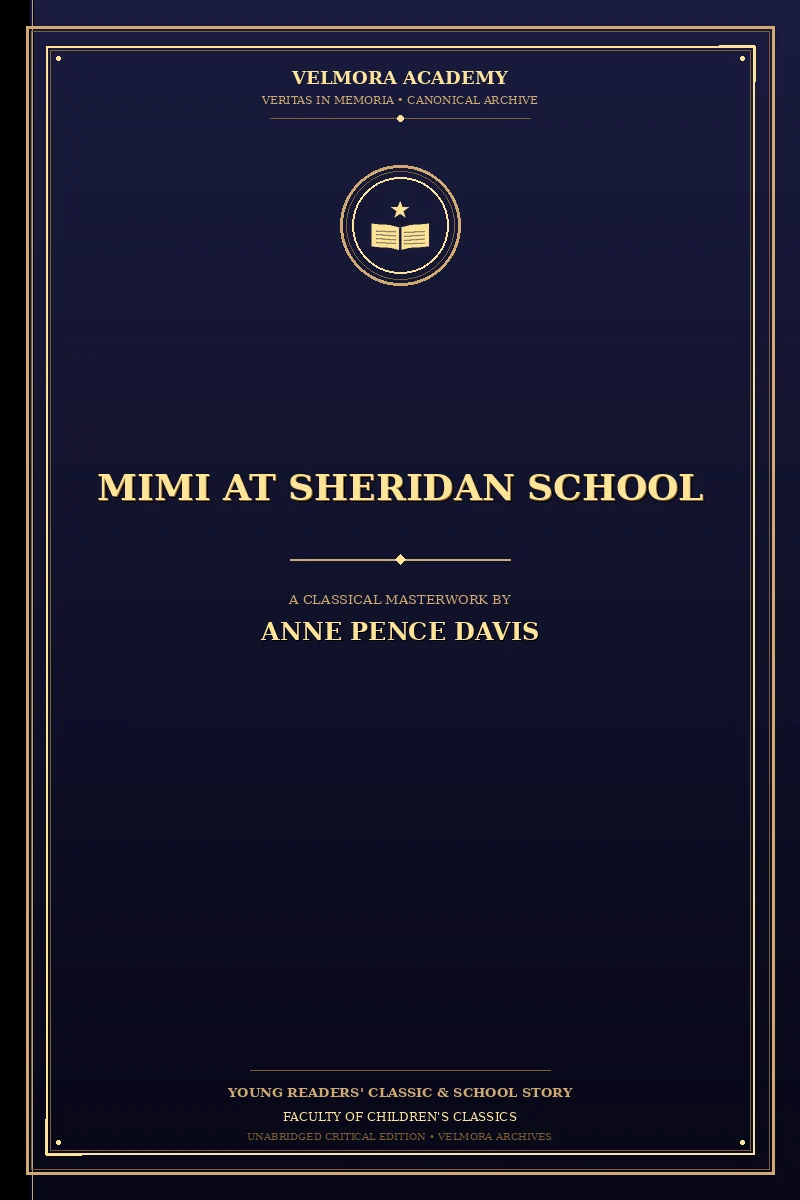
Cover illustration for Mimi at Sheridan School
Context Illustration Reading 1/45 · 5 lines
English subtitles · tap any word to listen 1 / 5
SATURDAY ESCAPADE For Mimi, the next few days rolled slowly into a week.
There was constant fear that Madge would yet develop flu or pneumonia.
Frail appearing people were not always delicate, Mimi concluded when a week passed and Madge had not so much as sneezed.
Mimi, in her concern, had hovered near for days.
Just like an old hen with one chicken, Mimi told herself.
0:00 / 0:00
Speed 0.75x
AI-generated narration by OpenAI · Slow US English
LEARNER DICTIONARY
Archivist
/ˈɑːrkɪvɪst/
Editorial verification pending

A keeper or guardian of historical records and memories.

Mimi at Sheridan School

Chapter XVII

Chapter 17 of Mimi at Sheridan School is here in full — 226 sentences across 46 reading sections, with audio for every sentence and word.

Reading 1/45 · 5 reading units · Lines 1–5

Line 1
SATURDAY ESCAPADE For Mimi, the next few days rolled slowly into a week.
Line 2
There was constant fear that Madge would yet develop flu or pneumonia.
Line 3
Frail appearing people were not always delicate, Mimi concluded when a week passed and Madge had not so much as sneezed.
Line 4
Mimi, in her concern, had hovered near for days.
Line 5
Just like an old hen with one chicken, Mimi told herself.

Learner Dictionary

These definitions explain words found in the current reading and keep every example grounded in its original sentence.

Oxford-style entry order: headword, part of speech, US IPA, concise definition, contextual example, and audio.

chicken noun US /ˈtʃɪkən/

the flesh of a chicken used for food

From this reading “Just like an old hen with one chicken, Mimi told herself.”

develop verb US /dɪˈveləp/

make something new, such as a product or a mental or artistic creation

From this reading “There was constant fear that Madge would yet develop flu or pneumonia.”

escapade noun US /ˈeskəpeɪd/

a wild and exciting undertaking (not necessarily lawful)

From this reading “SATURDAY ESCAPADE For Mimi, the next few days rolled slowly into a week.”

flu noun US /fluː/

an acute febrile highly contagious viral disease

From this reading “There was constant fear that Madge would yet develop flu or pneumonia.”

Frail adjective US /freɪl/

physically weak

From this reading “Frail appearing people were not always delicate, Mimi concluded when a week passed and Madge had not so much as sneezed.”

hovered verb US /ˈhʌvərd/

past form of “hover” — be undecided about something; waver between conflicting positions or courses of action

From this reading “Mimi, in her concern, had hovered near for days.”

pneumonia noun US /nuːˈmoʊnjə/

respiratory disease characterized by inflammation of the lung parenchyma (excluding the bronchi) with congestion caused by viruses or bacteria or irritants

From this reading “There was constant fear that Madge would yet develop flu or pneumonia.”

sneezed verb US /sniːzd/

past form of “sneeze” — exhale spasmodically, as when an irritant entered one's nose

From this reading “Frail appearing people were not always delicate, Mimi concluded when a week passed and Madge had not so much as sneezed.”

Word partnerships in these lines

English keeps certain words together, and knowing the pair is worth more than knowing each word alone. Every partnership below was counted across our whole published library, and earns its place by appearing far more often than two unrelated words of the same frequency would.

Shown as this reading writes them, with the form the library counts, what kind of pairing it is, and how often it occurs.

few days adjective + noun

In this reading “SATURDAY ESCAPADE For Mimi, the next few days rolled slowly into a week.”

hovered near verb + particle counted as “hover near”

In this reading “Mimi, in her concern, had hovered near for days.”

old hen adjective + noun

In this reading “Just like an old hen with one chicken, Mimi told herself.”

All words in this reading · 56

Every word in these five lines is listed here, and every one of them can be played on its own.

Dictionary details are shown only when verified; these are not licensed Oxford entries.

adeterminerUS /ə/

used before a singular noun to mean one of a group, when it is not a particular one

From this reading SATURDAY ESCAPADE For Mimi, the next few days rolled slowly into a week.

alwaysadverbUS /ˈɔːlweɪz/

at all times; all the time and on every occasion

From this reading Frail appearing people were not always delicate, Mimi concluded when a week passed and Madge had not so much as sneezed.

andeterminerUS /æn/

the form of “a” used before a word that begins with a vowel sound

From this reading Just like an old hen with one chicken, Mimi told herself.

andconjunctionUS /ənd/

used to join words or parts of a sentence that go together

From this reading Frail appearing people were not always delicate, Mimi concluded when a week passed and Madge had not so much as sneezed.

appearingnounUS /əˈpɪrɪŋ/

formal attendance (in court or at a hearing) of a party in an action

From this reading Frail appearing people were not always delicate, Mimi concluded when a week passed and Madge had not so much as sneezed.

asconjunctionUS /æz/

at the same time that; because; in the way that

From this reading Frail appearing people were not always delicate, Mimi concluded when a week passed and Madge had not so much as sneezed.

chickennounUS /ˈtʃɪkən/

the flesh of a chicken used for food

From this reading Just like an old hen with one chicken, Mimi told herself.

concernnounUS /kənˈsɜːrn/

something that interests you because it is important or affects you

From this reading Mimi, in her concern, had hovered near for days.

concludedadjectiveUS /kənˈkluːdəd/

having come or been brought to a conclusion

From this reading Frail appearing people were not always delicate, Mimi concluded when a week passed and Madge had not so much as sneezed.

constantadjectiveUS /ˈkɑːnstənt/

unvarying in nature

From this reading There was constant fear that Madge would yet develop flu or pneumonia.

daysnounUS /deɪz/

the time during which someone's life continues

From this reading SATURDAY ESCAPADE For Mimi, the next few days rolled slowly into a week.

delicateadjectiveUS /ˈdeləkət/

exquisitely fine and subtle and pleasing; susceptible to injury

From this reading Frail appearing people were not always delicate, Mimi concluded when a week passed and Madge had not so much as sneezed.

developverbUS /dɪˈveləp/

make something new, such as a product or a mental or artistic creation

From this reading There was constant fear that Madge would yet develop flu or pneumonia.

ESCAPADEnounUS /ˈeskəpeɪd/

a wild and exciting undertaking (not necessarily lawful)

From this reading SATURDAY ESCAPADE For Mimi, the next few days rolled slowly into a week.

fearverbUS /fɪr/

be afraid or feel anxious or apprehensive about a possible or probable situation or event

From this reading There was constant fear that Madge would yet develop flu or pneumonia.

fewadjectiveUS /fjuː/

a quantifier that can be used with count nouns and is often preceded by “a”; a small but indefinite number

From this reading SATURDAY ESCAPADE For Mimi, the next few days rolled slowly into a week.

flunounUS /fluː/

an acute febrile highly contagious viral disease

From this reading There was constant fear that Madge would yet develop flu or pneumonia.

ForprepositionUS /fɔːr/

intended to be given to, or used by, somebody

From this reading SATURDAY ESCAPADE For Mimi, the next few days rolled slowly into a week.

FrailadjectiveUS /freɪl/

physically weak

From this reading Frail appearing people were not always delicate, Mimi concluded when a week passed and Madge had not so much as sneezed.

hadauxiliary verbUS /hæd/

the past form of “have”, used to form the past perfect

From this reading Frail appearing people were not always delicate, Mimi concluded when a week passed and Madge had not so much as sneezed.

hennounUS /hen/

adult female chicken

From this reading Just like an old hen with one chicken, Mimi told herself.

herdeterminerUS /hɜːr/

belonging to a woman, girl, or female animal already mentioned

From this reading Mimi, in her concern, had hovered near for days.

herselfpronounUS /hərˈself/

used when the woman or girl doing the action is also its object

From this reading Just like an old hen with one chicken, Mimi told herself.

hoveredverbUS /ˈhʌvərd/

past form of “hover” — be undecided about something; waver between conflicting positions or courses of action

From this reading Mimi, in her concern, had hovered near for days.

inprepositionUS /ɪn/

inside something, or within a place, period, or state

From this reading Mimi, in her concern, had hovered near for days.

intoprepositionUS /ˈɪntuː/

moving to the inside of something

From this reading SATURDAY ESCAPADE For Mimi, the next few days rolled slowly into a week.

JustadverbUS /dʒʌst/

and nothing more

From this reading Just like an old hen with one chicken, Mimi told herself.

likeverbUS /laɪk/

prefer or wish to do something

From this reading Just like an old hen with one chicken, Mimi told herself.

Madge

Dictionary entry pending editorial verification. Tap Listen to hear the word.

From this reading There was constant fear that Madge would yet develop flu or pneumonia.

Mimi

Dictionary entry pending editorial verification. Tap Listen to hear the word.

From this reading SATURDAY ESCAPADE For Mimi, the next few days rolled slowly into a week.

muchadverbUS /mʌtʃ/

to a great degree or extent

From this reading Frail appearing people were not always delicate, Mimi concluded when a week passed and Madge had not so much as sneezed.

nearadverbUS /nɪr/

near in time or place or relationship

From this reading Mimi, in her concern, had hovered near for days.

nextadjectiveUS /nekst/

immediately following in time or order

From this reading SATURDAY ESCAPADE For Mimi, the next few days rolled slowly into a week.

notadverbUS /nɑːt/

used to make a word, phrase, or sentence negative

From this reading Frail appearing people were not always delicate, Mimi concluded when a week passed and Madge had not so much as sneezed.

oldadjectiveUS /oʊld/

(used especially of persons) having lived for a relatively long time or attained a specific age

From this reading Just like an old hen with one chicken, Mimi told herself.

onepronounUS /wʌn/

used to mean any person in general, including the speaker

From this reading Just like an old hen with one chicken, Mimi told herself.

orconjunctionUS /ɔːr/

used to join alternatives or possibilities

From this reading There was constant fear that Madge would yet develop flu or pneumonia.

passedverbUS /pæst/

past form of “pass” — go across or through

From this reading Frail appearing people were not always delicate, Mimi concluded when a week passed and Madge had not so much as sneezed.

peoplenounUS /ˈpiːpəl/

(plural) any group of human beings (men or women or children) collectively

From this reading Frail appearing people were not always delicate, Mimi concluded when a week passed and Madge had not so much as sneezed.

pneumonianounUS /nuːˈmoʊnjə/

respiratory disease characterized by inflammation of the lung parenchyma (excluding the bronchi) with congestion caused by viruses or bacteria or irritants

From this reading There was constant fear that Madge would yet develop flu or pneumonia.

rolledadjectiveUS /roʊld/

especially of petals or leaves in bud; having margins rolled inward

From this reading SATURDAY ESCAPADE For Mimi, the next few days rolled slowly into a week.

SATURDAYnounUS /ˈsætərdi/

the seventh and last day of the week; observed as the Sabbath by Jews and some Christians

From this reading SATURDAY ESCAPADE For Mimi, the next few days rolled slowly into a week.

slowlyadverbUS /ˈsloʊli/

without speed (“slow” is sometimes used informally for “slowly”)

From this reading SATURDAY ESCAPADE For Mimi, the next few days rolled slowly into a week.

sneezedverbUS /sniːzd/

past form of “sneeze” — exhale spasmodically, as when an irritant entered one's nose

From this reading Frail appearing people were not always delicate, Mimi concluded when a week passed and Madge had not so much as sneezed.

soconjunctionUS /soʊ/

for that reason; with the result that

From this reading Frail appearing people were not always delicate, Mimi concluded when a week passed and Madge had not so much as sneezed.

thatconjunctionUS /ðæt/

used to introduce what somebody said, thought, or felt

From this reading There was constant fear that Madge would yet develop flu or pneumonia.

thedeterminerUS /ðə/

used before a noun that is already known, already mentioned, or the only one of its kind

From this reading SATURDAY ESCAPADE For Mimi, the next few days rolled slowly into a week.

ThereadverbUS /ðer/

in or at that place or location

From this reading There was constant fear that Madge would yet develop flu or pneumonia.

toldverbUS /toʊld/

inflected form of “tell” — express in words

From this reading Just like an old hen with one chicken, Mimi told herself.

wasauxiliary verbUS /wɑːz/

the past form of “be” used with I, he, she, it, or a singular noun

From this reading There was constant fear that Madge would yet develop flu or pneumonia.

weeknounUS /wiːk/

any period of seven consecutive days

From this reading SATURDAY ESCAPADE For Mimi, the next few days rolled slowly into a week.

wereauxiliary verbUS /wɜːr/

the past form of “be” used with you, we, they, or a plural noun

From this reading Frail appearing people were not always delicate, Mimi concluded when a week passed and Madge had not so much as sneezed.

whenconjunctionUS /wen/

at the time that

From this reading Frail appearing people were not always delicate, Mimi concluded when a week passed and Madge had not so much as sneezed.

withprepositionUS /wɪð/

in the company of; together with

From this reading Just like an old hen with one chicken, Mimi told herself.

wouldmodal verbUS /wʊd/

used for something imagined, polite, or habitual in the past

From this reading There was constant fear that Madge would yet develop flu or pneumonia.

yetconjunctionUS /jet/

but in spite of that

From this reading There was constant fear that Madge would yet develop flu or pneumonia.

Chapter 17 of Mimi at Sheridan School by Anne Pence Davis holds 226 sentences, grouped into 46 reading sections of at most 5 sentences. The text is the source edition, unabridged, and the chapter records which sentences cover which part of the work so that nothing is dropped. Every word can be tapped for its pronunciation and dictionary entry.

What does chapter 17 of Mimi at Sheridan School contain?

Chapter 17 holds 226 sentences of Mimi at Sheridan School, unabridged, divided into 46 reading sections.

This page carries chapter 17 of Mimi at Sheridan School by Anne Pence Davis exactly as it stands in the source edition, without abridgement. It runs to 226 sentences, grouped into 46 sections of at most 5 sentences so that a reader can take the chapter in steady, finishable pieces. The chapter also stores a coverage record mapping every one of its sentences to a part of the work, which is how the edition demonstrates that no line was dropped.

How do I study chapter 17 of Mimi at Sheridan School?

Work through the 46 sections in order, replaying any sentence and tapping unfamiliar words for their entries.

Each of the 46 sections in this chapter is short enough to read once, hear once, and then re-read with the vocabulary in view. Tapping a word plays it alone and opens its dictionary entry with IPA, part of speech and meaning, so the reader is never forced to guess a pronunciation from spelling. Working section by section keeps a long chapter from becoming an undifferentiated wall of text, which is the usual reason a reader abandons a work of this period.

Can chapter 17 be read aloud to me?

Yes — every sentence and every individual word in chapter 17 can be played aloud in United States English.

Audio covers the whole chapter: any sentence can be played, and any single word within it can be played on its own. The voice uses United States English. For a work of this period that matters, because spelling is an unreliable guide to pronunciation for vocabulary that has fallen out of daily use, and a learner who guesses wrong tends to keep the error. Hearing the word in its own sentence, and then alone, settles it.

Questions about reading Mimi at Sheridan School

Common questions about reading Mimi at Sheridan School by Anne Pence Davis on this page, its source edition and its audio.

Is this the complete text of Mimi at Sheridan School?

Yes. All 4687 sentences of Project Gutenberg eBook #46404 are kept, with a record of which sentences cover which part.

Which edition of Mimi at Sheridan School is used?

Project Gutenberg eBook #46404, unabridged. The Project Gutenberg header, footer and licence are removed.

How long does Mimi at Sheridan School take to read?

About 390 minutes of reading across 938 sections of 5 sentences each, at an unhurried pace.

How to read Mimi at Sheridan School section by section

How to work through Mimi at Sheridan School section by section, using the audio and the tap-to-define vocabulary.

  1. Open a chapter

    Choose one of the 25 chapters of Mimi at Sheridan School to begin.

  2. Read one section

    Each section holds 5 sentences; read it once through.

  3. Listen and tap

    Play the section aloud, then tap any unfamiliar word for its entry.

Vocabulary met early in Mimi at Sheridan School

Words and structures a reader meets early in Mimi at Sheridan School, each tappable for pronunciation and meaning.

First
A word that appears in the opening chapter of Mimi at Sheridan School; the reader can tap it to hear it and see its dictionary entry.
Shoved
A word that appears in the opening chapter of Mimi at Sheridan School; the reader can tap it to hear it and see its dictionary entry.
Pushed
A word that appears in the opening chapter of Mimi at Sheridan School; the reader can tap it to hear it and see its dictionary entry.
Crowded
A word that appears in the opening chapter of Mimi at Sheridan School; the reader can tap it to hear it and see its dictionary entry.