used before a singular noun to mean one of a group, when it is not a particular one
From this reading They held their own for many centuries, bravely and well, but have succumbed to a changed order of things, and a new generation has arisen, who will not stop in the streets to listen to these ballads being sung, but prefer to have their music served up to them “piping hot,” with the accompaniment of warmth, light, beer, and tobacco (for which they duly have to pay) at the Music Halls; but whether the change be for the better, or not, may be a moot question.
accompanimentnounUS /əˈkʌmpnɪmənt/
an event or situation that happens at the same time as or in connection with another
From this reading They held their own for many centuries, bravely and well, but have succumbed to a changed order of things, and a new generation has arisen, who will not stop in the streets to listen to these ballads being sung, but prefer to have their music served up to them “piping hot,” with the accompaniment of warmth, light, beer, and tobacco (for which they duly have to pay) at the Music Halls; but whether the change be for the better, or not, may be a moot question.
at all times; all the time and on every occasion
From this reading These Street Ballads were produced within a very few hours of the publication of any event of the slightest public interest; and, failing that, the singers had always an unlimited store to fall back upon, on domestic, or humorous subjects, love, the sea, etc., etc. Of their variety we may learn something, not only from this book, but from the ballad of “Chaunting Benny” of which the following is a portion:--
the form of “a” used before a word that begins with a vowel sound
From this reading These Street Ballads were produced within a very few hours of the publication of any event of the slightest public interest; and, failing that, the singers had always an unlimited store to fall back upon, on domestic, or humorous subjects, love, the sea, etc., etc. Of their variety we may learn something, not only from this book, but from the ballad of “Chaunting Benny” of which the following is a portion:--
used to join words or parts of a sentence that go together
From this reading They held their own for many centuries, bravely and well, but have succumbed to a changed order of things, and a new generation has arisen, who will not stop in the streets to listen to these ballads being sung, but prefer to have their music served up to them “piping hot,” with the accompaniment of warmth, light, beer, and tobacco (for which they duly have to pay) at the Music Halls; but whether the change be for the better, or not, may be a moot question.
Queen of England and Scotland and Ireland; daughter if James II and the last of the Stuart monarchs; in 1707 she was the last English ruler to exercise the royal veto over parliament (1665-1714)
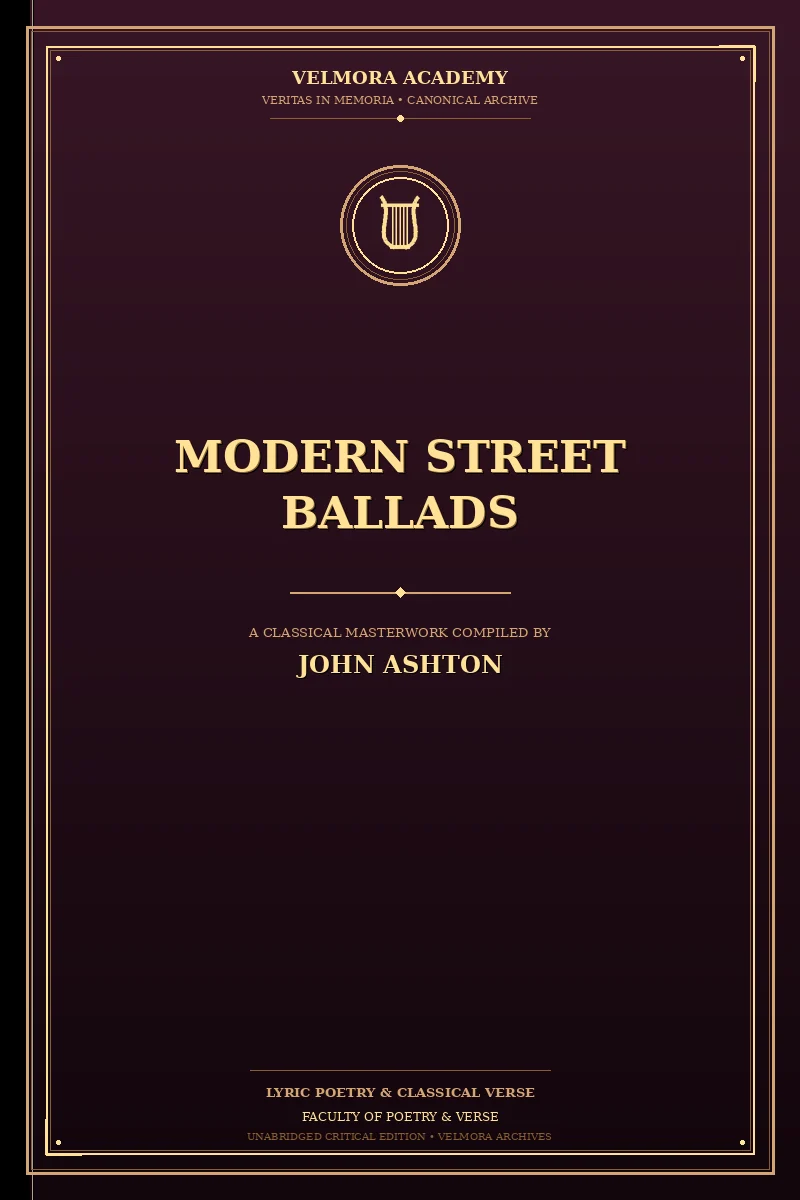
From this reading BY JOHN ASHTON AUTHOR OF “SOCIAL LIFE IN THE REIGN OF QUEEN ANNE,” ETC.
one or some or every or all without specification
From this reading These Street Ballads were produced within a very few hours of the publication of any event of the slightest public interest; and, failing that, the singers had always an unlimited store to fall back upon, on domestic, or humorous subjects, love, the sea, etc., etc. Of their variety we may learn something, not only from this book, but from the ballad of “Chaunting Benny” of which the following is a portion:--
arisenverbUS /ərˈɪzən/
inflected form of “arise” — come into existence; take on form or shape
From this reading They held their own for many centuries, bravely and well, but have succumbed to a changed order of things, and a new generation has arisen, who will not stop in the streets to listen to these ballads being sung, but prefer to have their music served up to them “piping hot,” with the accompaniment of warmth, light, beer, and tobacco (for which they duly have to pay) at the Music Halls; but whether the change be for the better, or not, may be a moot question.
ASHTONnounUS /ˈæʃtən/
British choreographer (1906-1988)
From this reading BY JOHN ASHTON AUTHOR OF “SOCIAL LIFE IN THE REIGN OF QUEEN ANNE,” ETC.
in or near a particular place or position
From this reading They held their own for many centuries, bravely and well, but have succumbed to a changed order of things, and a new generation has arisen, who will not stop in the streets to listen to these ballads being sung, but prefer to have their music served up to them “piping hot,” with the accompaniment of warmth, light, beer, and tobacco (for which they duly have to pay) at the Music Halls; but whether the change be for the better, or not, may be a moot question.
writes (books or stories or articles or the like) professionally (for pay)
From this reading BY JOHN ASHTON AUTHOR OF “SOCIAL LIFE IN THE REIGN OF QUEEN ANNE,” ETC.
in or to or toward a former location
From this reading These Street Ballads were produced within a very few hours of the publication of any event of the slightest public interest; and, failing that, the singers had always an unlimited store to fall back upon, on domestic, or humorous subjects, love, the sea, etc., etc. Of their variety we may learn something, not only from this book, but from the ballad of “Chaunting Benny” of which the following is a portion:--
balladnounUS /ˈbæləd/
a narrative song with a recurrent refrain
From this reading These Street Ballads were produced within a very few hours of the publication of any event of the slightest public interest; and, failing that, the singers had always an unlimited store to fall back upon, on domestic, or humorous subjects, love, the sea, etc., etc. Of their variety we may learn something, not only from this book, but from the ballad of “Chaunting Benny” of which the following is a portion:--
BalladsnounUS /ˈbælədz/
plural of “ballad” — a narrative song with a recurrent refrain
From this reading Over Street Ballads may be raised the wail of “Ichabod, Ichabod, their glory is departed.”
used with a past participle to form the passive, or with -ing for continuous tenses
From this reading Over Street Ballads may be raised the wail of “Ichabod, Ichabod, their glory is departed.”
beernounUS /bɪr/
a general name for alcoholic beverages made by fermenting a cereal (or mixture of cereals) flavored with hops
From this reading They held their own for many centuries, bravely and well, but have succumbed to a changed order of things, and a new generation has arisen, who will not stop in the streets to listen to these ballads being sung, but prefer to have their music served up to them “piping hot,” with the accompaniment of warmth, light, beer, and tobacco (for which they duly have to pay) at the Music Halls; but whether the change be for the better, or not, may be a moot question.
beingauxiliary verbUS /ˈbiːɪŋ/
the -ing form of “be”
From this reading They held their own for many centuries, bravely and well, but have succumbed to a changed order of things, and a new generation has arisen, who will not stop in the streets to listen to these ballads being sung, but prefer to have their music served up to them “piping hot,” with the accompaniment of warmth, light, beer, and tobacco (for which they duly have to pay) at the Music Halls; but whether the change be for the better, or not, may be a moot question.
BennynounUS /ˈbeni/
East Indian annual erect herb; source of sesame seed or benniseed and sesame oil
From this reading These Street Ballads were produced within a very few hours of the publication of any event of the slightest public interest; and, failing that, the singers had always an unlimited store to fall back upon, on domestic, or humorous subjects, love, the sea, etc., etc. Of their variety we may learn something, not only from this book, but from the ballad of “Chaunting Benny” of which the following is a portion:--
(comparative of “good”) superior to another (of the same class or set or kind) in excellence or quality or desirability or suitability; more highly skilled than another
From this reading They held their own for many centuries, bravely and well, but have succumbed to a changed order of things, and a new generation has arisen, who will not stop in the streets to listen to these ballads being sung, but prefer to have their music served up to them “piping hot,” with the accompaniment of warmth, light, beer, and tobacco (for which they duly have to pay) at the Music Halls; but whether the change be for the better, or not, may be a moot question.
a written work or composition that has been published (printed on pages bound together)
From this reading These Street Ballads were produced within a very few hours of the publication of any event of the slightest public interest; and, failing that, the singers had always an unlimited store to fall back upon, on domestic, or humorous subjects, love, the sea, etc., etc. Of their variety we may learn something, not only from this book, but from the ballad of “Chaunting Benny” of which the following is a portion:--
bravelyadverbUS /ˈbreɪvli/
in a courageous manner
From this reading They held their own for many centuries, bravely and well, but have succumbed to a changed order of things, and a new generation has arisen, who will not stop in the streets to listen to these ballads being sung, but prefer to have their music served up to them “piping hot,” with the accompaniment of warmth, light, beer, and tobacco (for which they duly have to pay) at the Music Halls; but whether the change be for the better, or not, may be a moot question.
used to introduce something that contrasts with what came before
From this reading They held their own for many centuries, bravely and well, but have succumbed to a changed order of things, and a new generation has arisen, who will not stop in the streets to listen to these ballads being sung, but prefer to have their music served up to them “piping hot,” with the accompaniment of warmth, light, beer, and tobacco (for which they duly have to pay) at the Music Halls; but whether the change be for the better, or not, may be a moot question.
showing who or what does the action
From this reading BY JOHN ASHTON AUTHOR OF “SOCIAL LIFE IN THE REIGN OF QUEEN ANNE,” ETC.
centuriesnounUS /ˈsentʃəriz/
plural of “century” — a period of 100 years
From this reading They held their own for many centuries, bravely and well, but have succumbed to a changed order of things, and a new generation has arisen, who will not stop in the streets to listen to these ballads being sung, but prefer to have their music served up to them “piping hot,” with the accompaniment of warmth, light, beer, and tobacco (for which they duly have to pay) at the Music Halls; but whether the change be for the better, or not, may be a moot question.
cause to change; make different; cause a transformation
From this reading They held their own for many centuries, bravely and well, but have succumbed to a changed order of things, and a new generation has arisen, who will not stop in the streets to listen to these ballads being sung, but prefer to have their music served up to them “piping hot,” with the accompaniment of warmth, light, beer, and tobacco (for which they duly have to pay) at the Music Halls; but whether the change be for the better, or not, may be a moot question.
made or become different in nature or form
From this reading They held their own for many centuries, bravely and well, but have succumbed to a changed order of things, and a new generation has arisen, who will not stop in the streets to listen to these ballads being sung, but prefer to have their music served up to them “piping hot,” with the accompaniment of warmth, light, beer, and tobacco (for which they duly have to pay) at the Music Halls; but whether the change be for the better, or not, may be a moot question.
Chaunting
Dictionary entry pending editorial verification. Tap Listen to hear the word.
From this reading These Street Ballads were produced within a very few hours of the publication of any event of the slightest public interest; and, failing that, the singers had always an unlimited store to fall back upon, on domestic, or humorous subjects, love, the sea, etc., etc. Of their variety we may learn something, not only from this book, but from the ballad of “Chaunting Benny” of which the following is a portion:--
well in the past; former
From this reading Over Street Ballads may be raised the wail of “Ichabod, Ichabod, their glory is departed.”
of concern to or concerning the internal affairs of a nation
From this reading These Street Ballads were produced within a very few hours of the publication of any event of the slightest public interest; and, failing that, the singers had always an unlimited store to fall back upon, on domestic, or humorous subjects, love, the sea, etc., etc. Of their variety we may learn something, not only from this book, but from the ballad of “Chaunting Benny” of which the following is a portion:--
dulyadverbUS /ˈduːli/
in accordance with what is appropriate or suitable for the circumstances
From this reading They held their own for many centuries, bravely and well, but have succumbed to a changed order of things, and a new generation has arisen, who will not stop in the streets to listen to these ballads being sung, but prefer to have their music served up to them “piping hot,” with the accompaniment of warmth, light, beer, and tobacco (for which they duly have to pay) at the Music Halls; but whether the change be for the better, or not, may be a moot question.
ETC
Dictionary entry pending editorial verification. Tap Listen to hear the word.
From this reading BY JOHN ASHTON AUTHOR OF “SOCIAL LIFE IN THE REIGN OF QUEEN ANNE,” ETC.
something that happens at a given place and time
From this reading These Street Ballads were produced within a very few hours of the publication of any event of the slightest public interest; and, failing that, the singers had always an unlimited store to fall back upon, on domestic, or humorous subjects, love, the sea, etc., etc. Of their variety we may learn something, not only from this book, but from the ballad of “Chaunting Benny” of which the following is a portion:--
failingnounUS /ˈfeɪlɪŋ/
a flaw or weak point
From this reading These Street Ballads were produced within a very few hours of the publication of any event of the slightest public interest; and, failing that, the singers had always an unlimited store to fall back upon, on domestic, or humorous subjects, love, the sea, etc., etc. Of their variety we may learn something, not only from this book, but from the ballad of “Chaunting Benny” of which the following is a portion:--
descend in free fall under the influence of gravity
From this reading These Street Ballads were produced within a very few hours of the publication of any event of the slightest public interest; and, failing that, the singers had always an unlimited store to fall back upon, on domestic, or humorous subjects, love, the sea, etc., etc. Of their variety we may learn something, not only from this book, but from the ballad of “Chaunting Benny” of which the following is a portion:--
a quantifier that can be used with count nouns and is often preceded by “a”; a small but indefinite number
From this reading These Street Ballads were produced within a very few hours of the publication of any event of the slightest public interest; and, failing that, the singers had always an unlimited store to fall back upon, on domestic, or humorous subjects, love, the sea, etc., etc. Of their variety we may learn something, not only from this book, but from the ballad of “Chaunting Benny” of which the following is a portion:--
about to be mentioned or specified
From this reading These Street Ballads were produced within a very few hours of the publication of any event of the slightest public interest; and, failing that, the singers had always an unlimited store to fall back upon, on domestic, or humorous subjects, love, the sea, etc., etc. Of their variety we may learn something, not only from this book, but from the ballad of “Chaunting Benny” of which the following is a portion:--
intended to be given to, or used by, somebody
From this reading They held their own for many centuries, bravely and well, but have succumbed to a changed order of things, and a new generation has arisen, who will not stop in the streets to listen to these ballads being sung, but prefer to have their music served up to them “piping hot,” with the accompaniment of warmth, light, beer, and tobacco (for which they duly have to pay) at the Music Halls; but whether the change be for the better, or not, may be a moot question.
showing where something starts, or who sent it
From this reading These Street Ballads were produced within a very few hours of the publication of any event of the slightest public interest; and, failing that, the singers had always an unlimited store to fall back upon, on domestic, or humorous subjects, love, the sea, etc., etc. Of their variety we may learn something, not only from this book, but from the ballad of “Chaunting Benny” of which the following is a portion:--
generationnounUS /ˌdʒenərˈeɪʃən/
all the people living at the same time or of approximately the same age
From this reading They held their own for many centuries, bravely and well, but have succumbed to a changed order of things, and a new generation has arisen, who will not stop in the streets to listen to these ballads being sung, but prefer to have their music served up to them “piping hot,” with the accompaniment of warmth, light, beer, and tobacco (for which they duly have to pay) at the Music Halls; but whether the change be for the better, or not, may be a moot question.
a state of high honor
From this reading Over Street Ballads may be raised the wail of “Ichabod, Ichabod, their glory is departed.”
hadauxiliary verbUS /hæd/
the past form of “have”, used to form the past perfect
From this reading These Street Ballads were produced within a very few hours of the publication of any event of the slightest public interest; and, failing that, the singers had always an unlimited store to fall back upon, on domestic, or humorous subjects, love, the sea, etc., etc. Of their variety we may learn something, not only from this book, but from the ballad of “Chaunting Benny” of which the following is a portion:--
HallsnounUS /hɔːlz/
plural of “hall” — an interior passage or corridor onto which rooms open
From this reading They held their own for many centuries, bravely and well, but have succumbed to a changed order of things, and a new generation has arisen, who will not stop in the streets to listen to these ballads being sung, but prefer to have their music served up to them “piping hot,” with the accompaniment of warmth, light, beer, and tobacco (for which they duly have to pay) at the Music Halls; but whether the change be for the better, or not, may be a moot question.
hasauxiliary verbUS /hæz/
the form of “have” used with he, she, it, or a singular noun
From this reading They held their own for many centuries, bravely and well, but have succumbed to a changed order of things, and a new generation has arisen, who will not stop in the streets to listen to these ballads being sung, but prefer to have their music served up to them “piping hot,” with the accompaniment of warmth, light, beer, and tobacco (for which they duly have to pay) at the Music Halls; but whether the change be for the better, or not, may be a moot question.
haveauxiliary verbUS /hæv/
used with a past participle to form the perfect tenses
From this reading They held their own for many centuries, bravely and well, but have succumbed to a changed order of things, and a new generation has arisen, who will not stop in the streets to listen to these ballads being sung, but prefer to have their music served up to them “piping hot,” with the accompaniment of warmth, light, beer, and tobacco (for which they duly have to pay) at the Music Halls; but whether the change be for the better, or not, may be a moot question.
occupied or in the control of; often used in combination
From this reading They held their own for many centuries, bravely and well, but have succumbed to a changed order of things, and a new generation has arisen, who will not stop in the streets to listen to these ballads being sung, but prefer to have their music served up to them “piping hot,” with the accompaniment of warmth, light, beer, and tobacco (for which they duly have to pay) at the Music Halls; but whether the change be for the better, or not, may be a moot question.
used of physical heat; having a high or higher than desirable temperature or giving off heat or feeling or causing a sensation of heat or burning
From this reading They held their own for many centuries, bravely and well, but have succumbed to a changed order of things, and a new generation has arisen, who will not stop in the streets to listen to these ballads being sung, but prefer to have their music served up to them “piping hot,” with the accompaniment of warmth, light, beer, and tobacco (for which they duly have to pay) at the Music Halls; but whether the change be for the better, or not, may be a moot question.
a period of time assigned for work
From this reading These Street Ballads were produced within a very few hours of the publication of any event of the slightest public interest; and, failing that, the singers had always an unlimited store to fall back upon, on domestic, or humorous subjects, love, the sea, etc., etc. Of their variety we may learn something, not only from this book, but from the ballad of “Chaunting Benny” of which the following is a portion:--
humorousadjectiveUS /ˈhjuːmərəs/
full of or characterized by humor
From this reading These Street Ballads were produced within a very few hours of the publication of any event of the slightest public interest; and, failing that, the singers had always an unlimited store to fall back upon, on domestic, or humorous subjects, love, the sea, etc., etc. Of their variety we may learn something, not only from this book, but from the ballad of “Chaunting Benny” of which the following is a portion:--
Ichabod
Dictionary entry pending editorial verification. Tap Listen to hear the word.
From this reading Over Street Ballads may be raised the wail of “Ichabod, Ichabod, their glory is departed.”
inside something, or within a place, period, or state
From this reading BY JOHN ASHTON AUTHOR OF “SOCIAL LIFE IN THE REIGN OF QUEEN ANNE,” ETC.
a sense of concern with and curiosity about someone or something
From this reading These Street Ballads were produced within a very few hours of the publication of any event of the slightest public interest; and, failing that, the singers had always an unlimited store to fall back upon, on domestic, or humorous subjects, love, the sea, etc., etc. Of their variety we may learn something, not only from this book, but from the ballad of “Chaunting Benny” of which the following is a portion:--
INTRODUCTIONnounUS /ˌɪntrəˈdʌkʃən/
the act of beginning something new
From this reading [_The right of translation is reserved_] INTRODUCTION.
the form of “be” used with he, she, it, or a singular noun
From this reading [_The right of translation is reserved_] INTRODUCTION.
a room or building equipped with one or more toilets
From this reading BY JOHN ASHTON AUTHOR OF “SOCIAL LIFE IN THE REIGN OF QUEEN ANNE,” ETC.
gain knowledge or skills
From this reading These Street Ballads were produced within a very few hours of the publication of any event of the slightest public interest; and, failing that, the singers had always an unlimited store to fall back upon, on domestic, or humorous subjects, love, the sea, etc., etc. Of their variety we may learn something, not only from this book, but from the ballad of “Chaunting Benny” of which the following is a portion:--
a characteristic state or mode of living
From this reading BY JOHN ASHTON AUTHOR OF “SOCIAL LIFE IN THE REIGN OF QUEEN ANNE,” ETC.
of comparatively little physical weight or density
From this reading They held their own for many centuries, bravely and well, but have succumbed to a changed order of things, and a new generation has arisen, who will not stop in the streets to listen to these ballads being sung, but prefer to have their music served up to them “piping hot,” with the accompaniment of warmth, light, beer, and tobacco (for which they duly have to pay) at the Music Halls; but whether the change be for the better, or not, may be a moot question.
hear with intention
From this reading They held their own for many centuries, bravely and well, but have succumbed to a changed order of things, and a new generation has arisen, who will not stop in the streets to listen to these ballads being sung, but prefer to have their music served up to them “piping hot,” with the accompaniment of warmth, light, beer, and tobacco (for which they duly have to pay) at the Music Halls; but whether the change be for the better, or not, may be a moot question.
a strong positive emotion of regard and affection
From this reading These Street Ballads were produced within a very few hours of the publication of any event of the slightest public interest; and, failing that, the singers had always an unlimited store to fall back upon, on domestic, or humorous subjects, love, the sea, etc., etc. Of their variety we may learn something, not only from this book, but from the ballad of “Chaunting Benny” of which the following is a portion:--
a quantifier that can be used with count nouns and is often preceded by “as” or “too” or “so” or “that”; amounting to a large but indefinite number
From this reading They held their own for many centuries, bravely and well, but have succumbed to a changed order of things, and a new generation has arisen, who will not stop in the streets to listen to these ballads being sung, but prefer to have their music served up to them “piping hot,” with the accompaniment of warmth, light, beer, and tobacco (for which they duly have to pay) at the Music Halls; but whether the change be for the better, or not, may be a moot question.
used to say something is possible, or to give permission
From this reading Over Street Ballads may be raised the wail of “Ichabod, Ichabod, their glory is departed.”
mootadjectiveUS /muːt/
of no legal significance (as having been previously decided)
From this reading They held their own for many centuries, bravely and well, but have succumbed to a changed order of things, and a new generation has arisen, who will not stop in the streets to listen to these ballads being sung, but prefer to have their music served up to them “piping hot,” with the accompaniment of warmth, light, beer, and tobacco (for which they duly have to pay) at the Music Halls; but whether the change be for the better, or not, may be a moot question.
an artistic form of auditory communication incorporating instrumental or vocal tones in a structured and continuous manner
From this reading They held their own for many centuries, bravely and well, but have succumbed to a changed order of things, and a new generation has arisen, who will not stop in the streets to listen to these ballads being sung, but prefer to have their music served up to them “piping hot,” with the accompaniment of warmth, light, beer, and tobacco (for which they duly have to pay) at the Music Halls; but whether the change be for the better, or not, may be a moot question.
not of long duration; having just (or relatively recently) come into being or been made or acquired or discovered
From this reading They held their own for many centuries, bravely and well, but have succumbed to a changed order of things, and a new generation has arisen, who will not stop in the streets to listen to these ballads being sung, but prefer to have their music served up to them “piping hot,” with the accompaniment of warmth, light, beer, and tobacco (for which they duly have to pay) at the Music Halls; but whether the change be for the better, or not, may be a moot question.
used to make a word, phrase, or sentence negative
From this reading They held their own for many centuries, bravely and well, but have succumbed to a changed order of things, and a new generation has arisen, who will not stop in the streets to listen to these ballads being sung, but prefer to have their music served up to them “piping hot,” with the accompaniment of warmth, light, beer, and tobacco (for which they duly have to pay) at the Music Halls; but whether the change be for the better, or not, may be a moot question.
belonging to, or connected with, somebody or something
From this reading BY JOHN ASHTON AUTHOR OF “SOCIAL LIFE IN THE REIGN OF QUEEN ANNE,” ETC.
touching and supported by a surface
From this reading These Street Ballads were produced within a very few hours of the publication of any event of the slightest public interest; and, failing that, the singers had always an unlimited store to fall back upon, on domestic, or humorous subjects, love, the sea, etc., etc. Of their variety we may learn something, not only from this book, but from the ballad of “Chaunting Benny” of which the following is a portion:--
and nothing more
From this reading These Street Ballads were produced within a very few hours of the publication of any event of the slightest public interest; and, failing that, the singers had always an unlimited store to fall back upon, on domestic, or humorous subjects, love, the sea, etc., etc. Of their variety we may learn something, not only from this book, but from the ballad of “Chaunting Benny” of which the following is a portion:--
used to join alternatives or possibilities
From this reading They held their own for many centuries, bravely and well, but have succumbed to a changed order of things, and a new generation has arisen, who will not stop in the streets to listen to these ballads being sung, but prefer to have their music served up to them “piping hot,” with the accompaniment of warmth, light, beer, and tobacco (for which they duly have to pay) at the Music Halls; but whether the change be for the better, or not, may be a moot question.
(often plural) a command given by a superior (e.g., a military or law enforcement officer) that must be obeyed
From this reading They held their own for many centuries, bravely and well, but have succumbed to a changed order of things, and a new generation has arisen, who will not stop in the streets to listen to these ballads being sung, but prefer to have their music served up to them “piping hot,” with the accompaniment of warmth, light, beer, and tobacco (for which they duly have to pay) at the Music Halls; but whether the change be for the better, or not, may be a moot question.
OverprepositionUS /ˈoʊvər/
above and across; more than
From this reading Over Street Ballads may be raised the wail of “Ichabod, Ichabod, their glory is departed.”
have ownership or possession of
From this reading They held their own for many centuries, bravely and well, but have succumbed to a changed order of things, and a new generation has arisen, who will not stop in the streets to listen to these ballads being sung, but prefer to have their music served up to them “piping hot,” with the accompaniment of warmth, light, beer, and tobacco (for which they duly have to pay) at the Music Halls; but whether the change be for the better, or not, may be a moot question.
give money, usually in exchange for goods or services
From this reading They held their own for many centuries, bravely and well, but have succumbed to a changed order of things, and a new generation has arisen, who will not stop in the streets to listen to these ballads being sung, but prefer to have their music served up to them “piping hot,” with the accompaniment of warmth, light, beer, and tobacco (for which they duly have to pay) at the Music Halls; but whether the change be for the better, or not, may be a moot question.
pipingnounUS /ˈpaɪpɪŋ/
a thin strip of covered cord used to edge hems
From this reading They held their own for many centuries, bravely and well, but have succumbed to a changed order of things, and a new generation has arisen, who will not stop in the streets to listen to these ballads being sung, but prefer to have their music served up to them “piping hot,” with the accompaniment of warmth, light, beer, and tobacco (for which they duly have to pay) at the Music Halls; but whether the change be for the better, or not, may be a moot question.
something determined in relation to something that includes it
From this reading These Street Ballads were produced within a very few hours of the publication of any event of the slightest public interest; and, failing that, the singers had always an unlimited store to fall back upon, on domestic, or humorous subjects, love, the sea, etc., etc. Of their variety we may learn something, not only from this book, but from the ballad of “Chaunting Benny” of which the following is a portion:--
like better; value more highly
From this reading They held their own for many centuries, bravely and well, but have succumbed to a changed order of things, and a new generation has arisen, who will not stop in the streets to listen to these ballads being sung, but prefer to have their music served up to them “piping hot,” with the accompaniment of warmth, light, beer, and tobacco (for which they duly have to pay) at the Music Halls; but whether the change be for the better, or not, may be a moot question.
past form of “produce” — bring forth or yield
From this reading These Street Ballads were produced within a very few hours of the publication of any event of the slightest public interest; and, failing that, the singers had always an unlimited store to fall back upon, on domestic, or humorous subjects, love, the sea, etc., etc. Of their variety we may learn something, not only from this book, but from the ballad of “Chaunting Benny” of which the following is a portion:--
people in general considered as a whole
From this reading These Street Ballads were produced within a very few hours of the publication of any event of the slightest public interest; and, failing that, the singers had always an unlimited store to fall back upon, on domestic, or humorous subjects, love, the sea, etc., etc. Of their variety we may learn something, not only from this book, but from the ballad of “Chaunting Benny” of which the following is a portion:--
publicationnounUS /ˌpʌblɪˈkeɪʃən/
a copy of a printed work offered for distribution
From this reading These Street Ballads were produced within a very few hours of the publication of any event of the slightest public interest; and, failing that, the singers had always an unlimited store to fall back upon, on domestic, or humorous subjects, love, the sea, etc., etc. Of their variety we may learn something, not only from this book, but from the ballad of “Chaunting Benny” of which the following is a portion:--
the only fertile female in a colony of social insects such as bees and ants and termites; its function is to lay eggs
From this reading BY JOHN ASHTON AUTHOR OF “SOCIAL LIFE IN THE REIGN OF QUEEN ANNE,” ETC.
challenge the accuracy, probity, or propriety of
From this reading They held their own for many centuries, bravely and well, but have succumbed to a changed order of things, and a new generation has arisen, who will not stop in the streets to listen to these ballads being sung, but prefer to have their music served up to them “piping hot,” with the accompaniment of warmth, light, beer, and tobacco (for which they duly have to pay) at the Music Halls; but whether the change be for the better, or not, may be a moot question.
located or moved above the surround or above the normal position
From this reading Over Street Ballads may be raised the wail of “Ichabod, Ichabod, their glory is departed.”
REIGNverbUS /reɪn/
have sovereign power
From this reading BY JOHN ASHTON AUTHOR OF “SOCIAL LIFE IN THE REIGN OF QUEEN ANNE,” ETC.
reservedadjectiveUS /rɪˈzɜːrvd/
set aside for the use of a particular person or party
From this reading [_The right of translation is reserved_] INTRODUCTION.
precisely, exactly
From this reading [_The right of translation is reserved_] INTRODUCTION.
a division of an ocean or a large body of salt water partially enclosed by land
From this reading These Street Ballads were produced within a very few hours of the publication of any event of the slightest public interest; and, failing that, the singers had always an unlimited store to fall back upon, on domestic, or humorous subjects, love, the sea, etc., etc. Of their variety we may learn something, not only from this book, but from the ballad of “Chaunting Benny” of which the following is a portion:--
past form of “serve” — serve a purpose, role, or function
From this reading They held their own for many centuries, bravely and well, but have succumbed to a changed order of things, and a new generation has arisen, who will not stop in the streets to listen to these ballads being sung, but prefer to have their music served up to them “piping hot,” with the accompaniment of warmth, light, beer, and tobacco (for which they duly have to pay) at the Music Halls; but whether the change be for the better, or not, may be a moot question.
singersnounUS /ˈsɪŋərz/
plural of “singer” — a person who sings
From this reading These Street Ballads were produced within a very few hours of the publication of any event of the slightest public interest; and, failing that, the singers had always an unlimited store to fall back upon, on domestic, or humorous subjects, love, the sea, etc., etc. Of their variety we may learn something, not only from this book, but from the ballad of “Chaunting Benny” of which the following is a portion:--
superlative of “slight” — (quantifier used with mass nouns) small in quantity or degree; not much or almost none or (with “a”) at least some
From this reading These Street Ballads were produced within a very few hours of the publication of any event of the slightest public interest; and, failing that, the singers had always an unlimited store to fall back upon, on domestic, or humorous subjects, love, the sea, etc., etc. Of their variety we may learn something, not only from this book, but from the ballad of “Chaunting Benny” of which the following is a portion:--
relating to human society and its members
From this reading BY JOHN ASHTON AUTHOR OF “SOCIAL LIFE IN THE REIGN OF QUEEN ANNE,” ETC.
a thing, without saying which
From this reading These Street Ballads were produced within a very few hours of the publication of any event of the slightest public interest; and, failing that, the singers had always an unlimited store to fall back upon, on domestic, or humorous subjects, love, the sea, etc., etc. Of their variety we may learn something, not only from this book, but from the ballad of “Chaunting Benny” of which the following is a portion:--
come to a halt, stop moving
From this reading They held their own for many centuries, bravely and well, but have succumbed to a changed order of things, and a new generation has arisen, who will not stop in the streets to listen to these ballads being sung, but prefer to have their music served up to them “piping hot,” with the accompaniment of warmth, light, beer, and tobacco (for which they duly have to pay) at the Music Halls; but whether the change be for the better, or not, may be a moot question.
a mercantile establishment for the retail sale of goods or services
From this reading These Street Ballads were produced within a very few hours of the publication of any event of the slightest public interest; and, failing that, the singers had always an unlimited store to fall back upon, on domestic, or humorous subjects, love, the sea, etc., etc. Of their variety we may learn something, not only from this book, but from the ballad of “Chaunting Benny” of which the following is a portion:--
a thoroughfare (usually including sidewalks) that is lined with buildings
From this reading Over Street Ballads may be raised the wail of “Ichabod, Ichabod, their glory is departed.”
plural of “street” — a thoroughfare (usually including sidewalks) that is lined with buildings
From this reading They held their own for many centuries, bravely and well, but have succumbed to a changed order of things, and a new generation has arisen, who will not stop in the streets to listen to these ballads being sung, but prefer to have their music served up to them “piping hot,” with the accompaniment of warmth, light, beer, and tobacco (for which they duly have to pay) at the Music Halls; but whether the change be for the better, or not, may be a moot question.
plural of “subject” — the subject matter of a conversation or discussion
From this reading These Street Ballads were produced within a very few hours of the publication of any event of the slightest public interest; and, failing that, the singers had always an unlimited store to fall back upon, on domestic, or humorous subjects, love, the sea, etc., etc. Of their variety we may learn something, not only from this book, but from the ballad of “Chaunting Benny” of which the following is a portion:--
succumbedverbUS /səˈkʌmd/
past form of “succumb” — consent reluctantly
From this reading They held their own for many centuries, bravely and well, but have succumbed to a changed order of things, and a new generation has arisen, who will not stop in the streets to listen to these ballads being sung, but prefer to have their music served up to them “piping hot,” with the accompaniment of warmth, light, beer, and tobacco (for which they duly have to pay) at the Music Halls; but whether the change be for the better, or not, may be a moot question.
sungnounUS /sʌŋ/
the imperial dynasty of China from 960 to 1279; noted for art and literature and philosophy
From this reading They held their own for many centuries, bravely and well, but have succumbed to a changed order of things, and a new generation has arisen, who will not stop in the streets to listen to these ballads being sung, but prefer to have their music served up to them “piping hot,” with the accompaniment of warmth, light, beer, and tobacco (for which they duly have to pay) at the Music Halls; but whether the change be for the better, or not, may be a moot question.
used to introduce what somebody said, thought, or felt
From this reading These Street Ballads were produced within a very few hours of the publication of any event of the slightest public interest; and, failing that, the singers had always an unlimited store to fall back upon, on domestic, or humorous subjects, love, the sea, etc., etc. Of their variety we may learn something, not only from this book, but from the ballad of “Chaunting Benny” of which the following is a portion:--
used before a noun that is already known, already mentioned, or the only one of its kind
From this reading BY JOHN ASHTON AUTHOR OF “SOCIAL LIFE IN THE REIGN OF QUEEN ANNE,” ETC.
belonging to the people or things already mentioned
From this reading Over Street Ballads may be raised the wail of “Ichabod, Ichabod, their glory is departed.”
the people or things already mentioned, as the object
From this reading They held their own for many centuries, bravely and well, but have succumbed to a changed order of things, and a new generation has arisen, who will not stop in the streets to listen to these ballads being sung, but prefer to have their music served up to them “piping hot,” with the accompaniment of warmth, light, beer, and tobacco (for which they duly have to pay) at the Music Halls; but whether the change be for the better, or not, may be a moot question.
the plural of “this”: the people or things near, or just mentioned
From this reading They held their own for many centuries, bravely and well, but have succumbed to a changed order of things, and a new generation has arisen, who will not stop in the streets to listen to these ballads being sung, but prefer to have their music served up to them “piping hot,” with the accompaniment of warmth, light, beer, and tobacco (for which they duly have to pay) at the Music Halls; but whether the change be for the better, or not, may be a moot question.
the people, animals, or things already mentioned, as the subject
From this reading They held their own for many centuries, bravely and well, but have succumbed to a changed order of things, and a new generation has arisen, who will not stop in the streets to listen to these ballads being sung, but prefer to have their music served up to them “piping hot,” with the accompaniment of warmth, light, beer, and tobacco (for which they duly have to pay) at the Music Halls; but whether the change be for the better, or not, may be a moot question.
any movable possession (especially articles of clothing)
From this reading They held their own for many centuries, bravely and well, but have succumbed to a changed order of things, and a new generation has arisen, who will not stop in the streets to listen to these ballads being sung, but prefer to have their music served up to them “piping hot,” with the accompaniment of warmth, light, beer, and tobacco (for which they duly have to pay) at the Music Halls; but whether the change be for the better, or not, may be a moot question.
used for a person or thing that is near, or that has just been mentioned
From this reading These Street Ballads were produced within a very few hours of the publication of any event of the slightest public interest; and, failing that, the singers had always an unlimited store to fall back upon, on domestic, or humorous subjects, love, the sea, etc., etc. Of their variety we may learn something, not only from this book, but from the ballad of “Chaunting Benny” of which the following is a portion:--
used before the base form of a verb to make the infinitive
From this reading They held their own for many centuries, bravely and well, but have succumbed to a changed order of things, and a new generation has arisen, who will not stop in the streets to listen to these ballads being sung, but prefer to have their music served up to them “piping hot,” with the accompaniment of warmth, light, beer, and tobacco (for which they duly have to pay) at the Music Halls; but whether the change be for the better, or not, may be a moot question.
tobacconounUS /təˈbækoʊ/
leaves of the tobacco plant dried and prepared for smoking or ingestion
From this reading They held their own for many centuries, bravely and well, but have succumbed to a changed order of things, and a new generation has arisen, who will not stop in the streets to listen to these ballads being sung, but prefer to have their music served up to them “piping hot,” with the accompaniment of warmth, light, beer, and tobacco (for which they duly have to pay) at the Music Halls; but whether the change be for the better, or not, may be a moot question.
translationnounUS /trænzˈleɪʃən/
a written communication in a second language having the same meaning as the written communication in a first language
From this reading [_The right of translation is reserved_] INTRODUCTION.
unlimitedadjectiveUS /ənˈlɪmətɪd/
having no limits in range or scope
From this reading These Street Ballads were produced within a very few hours of the publication of any event of the slightest public interest; and, failing that, the singers had always an unlimited store to fall back upon, on domestic, or humorous subjects, love, the sea, etc., etc. Of their variety we may learn something, not only from this book, but from the ballad of “Chaunting Benny” of which the following is a portion:--
being or moving higher in position or greater in some value; being above a former position or level
From this reading They held their own for many centuries, bravely and well, but have succumbed to a changed order of things, and a new generation has arisen, who will not stop in the streets to listen to these ballads being sung, but prefer to have their music served up to them “piping hot,” with the accompaniment of warmth, light, beer, and tobacco (for which they duly have to pay) at the Music Halls; but whether the change be for the better, or not, may be a moot question.
uponprepositionUS /əˈpɑːn/
a formal word for “on”
From this reading These Street Ballads were produced within a very few hours of the publication of any event of the slightest public interest; and, failing that, the singers had always an unlimited store to fall back upon, on domestic, or humorous subjects, love, the sea, etc., etc. Of their variety we may learn something, not only from this book, but from the ballad of “Chaunting Benny” of which the following is a portion:--
varietynounUS /vərˈaɪəti/
a collection containing a variety of sorts of things
From this reading These Street Ballads were produced within a very few hours of the publication of any event of the slightest public interest; and, failing that, the singers had always an unlimited store to fall back upon, on domestic, or humorous subjects, love, the sea, etc., etc. Of their variety we may learn something, not only from this book, but from the ballad of “Chaunting Benny” of which the following is a portion:--
precisely as stated
From this reading These Street Ballads were produced within a very few hours of the publication of any event of the slightest public interest; and, failing that, the singers had always an unlimited store to fall back upon, on domestic, or humorous subjects, love, the sea, etc., etc. Of their variety we may learn something, not only from this book, but from the ballad of “Chaunting Benny” of which the following is a portion:--
wailverbUS /weɪl/
emit long loud cries
From this reading Over Street Ballads may be raised the wail of “Ichabod, Ichabod, their glory is departed.”
warmthnounUS /wɔːrmθ/
the sensation caused by heat energy
From this reading They held their own for many centuries, bravely and well, but have succumbed to a changed order of things, and a new generation has arisen, who will not stop in the streets to listen to these ballads being sung, but prefer to have their music served up to them “piping hot,” with the accompaniment of warmth, light, beer, and tobacco (for which they duly have to pay) at the Music Halls; but whether the change be for the better, or not, may be a moot question.
the speaker together with one or more other people
From this reading These Street Ballads were produced within a very few hours of the publication of any event of the slightest public interest; and, failing that, the singers had always an unlimited store to fall back upon, on domestic, or humorous subjects, love, the sea, etc., etc. Of their variety we may learn something, not only from this book, but from the ballad of “Chaunting Benny” of which the following is a portion:--
(often used as a combining form) in a good or proper or satisfactory manner or to a high standard (“good” is a nonstandard dialectal variant for “well”)
From this reading They held their own for many centuries, bravely and well, but have succumbed to a changed order of things, and a new generation has arisen, who will not stop in the streets to listen to these ballads being sung, but prefer to have their music served up to them “piping hot,” with the accompaniment of warmth, light, beer, and tobacco (for which they duly have to pay) at the Music Halls; but whether the change be for the better, or not, may be a moot question.
wereauxiliary verbUS /wɜːr/
the past form of “be” used with you, we, they, or a plural noun
From this reading These Street Ballads were produced within a very few hours of the publication of any event of the slightest public interest; and, failing that, the singers had always an unlimited store to fall back upon, on domestic, or humorous subjects, love, the sea, etc., etc. Of their variety we may learn something, not only from this book, but from the ballad of “Chaunting Benny” of which the following is a portion:--
used to introduce two or more possibilities
From this reading They held their own for many centuries, bravely and well, but have succumbed to a changed order of things, and a new generation has arisen, who will not stop in the streets to listen to these ballads being sung, but prefer to have their music served up to them “piping hot,” with the accompaniment of warmth, light, beer, and tobacco (for which they duly have to pay) at the Music Halls; but whether the change be for the better, or not, may be a moot question.
used to introduce a clause giving more about a thing just mentioned
From this reading They held their own for many centuries, bravely and well, but have succumbed to a changed order of things, and a new generation has arisen, who will not stop in the streets to listen to these ballads being sung, but prefer to have their music served up to them “piping hot,” with the accompaniment of warmth, light, beer, and tobacco (for which they duly have to pay) at the Music Halls; but whether the change be for the better, or not, may be a moot question.
which person or people
From this reading They held their own for many centuries, bravely and well, but have succumbed to a changed order of things, and a new generation has arisen, who will not stop in the streets to listen to these ballads being sung, but prefer to have their music served up to them “piping hot,” with the accompaniment of warmth, light, beer, and tobacco (for which they duly have to pay) at the Music Halls; but whether the change be for the better, or not, may be a moot question.
used to talk about the future, or about willingness
From this reading They held their own for many centuries, bravely and well, but have succumbed to a changed order of things, and a new generation has arisen, who will not stop in the streets to listen to these ballads being sung, but prefer to have their music served up to them “piping hot,” with the accompaniment of warmth, light, beer, and tobacco (for which they duly have to pay) at the Music Halls; but whether the change be for the better, or not, may be a moot question.
in the company of; together with
From this reading They held their own for many centuries, bravely and well, but have succumbed to a changed order of things, and a new generation has arisen, who will not stop in the streets to listen to these ballads being sung, but prefer to have their music served up to them “piping hot,” with the accompaniment of warmth, light, beer, and tobacco (for which they duly have to pay) at the Music Halls; but whether the change be for the better, or not, may be a moot question.
inside; before a period of time has passed
From this reading These Street Ballads were produced within a very few hours of the publication of any event of the slightest public interest; and, failing that, the singers had always an unlimited store to fall back upon, on domestic, or humorous subjects, love, the sea, etc., etc. Of their variety we may learn something, not only from this book, but from the ballad of “Chaunting Benny” of which the following is a portion:--