Complete classic literature • Five-line readings • Clear US narration
VELMORA ACADEMY
Academy of Archival Languages & Memory Studies
Menu Close
Mohun
Mohun

Chapter I · Chapter 1

Chapter 1 of Mohun is here in full — 1498 sentences across 300 reading sections, with audio for every sentence and word.

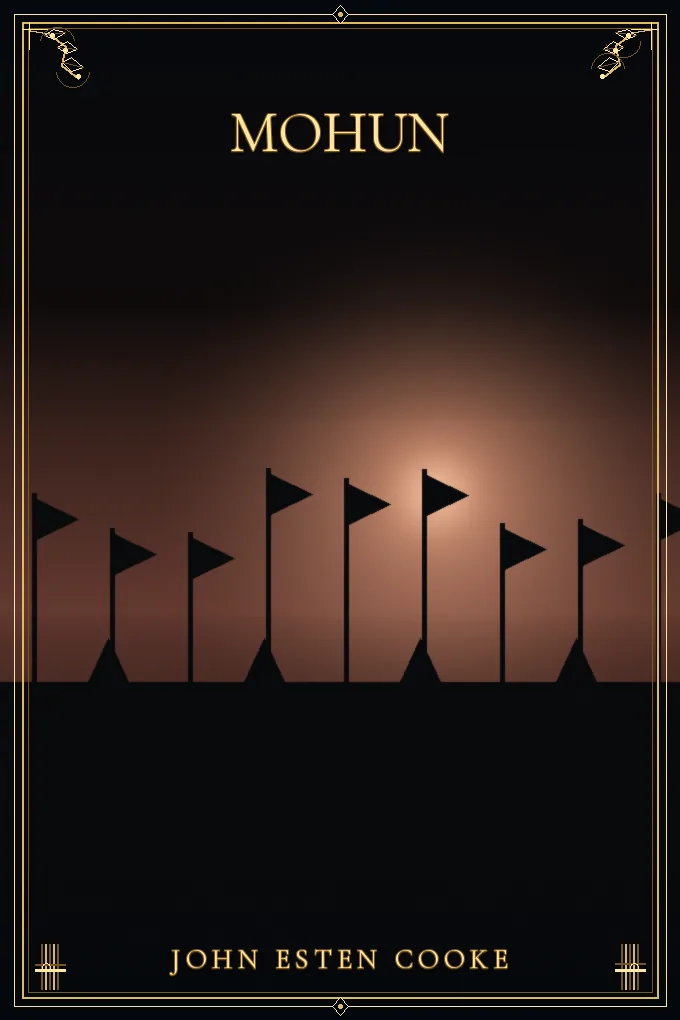
Cover illustration for Mohun
Context Illustration Reading 1/299 · 5 lines
English subtitles · tap any word to listen 1 / 5
GETTYSBURG.
THE CAVALRY REVIEW.
On a beautiful day of June, 1863, the plains of Culpeper, in Virginia, were the scene of an imposing pageant.
Stuart’s cavalry was passing in review before Lee, who was about to commence his march toward Gettysburg.
Those of my readers who were fortunate enough to be present, will not forget that scene.
0:00 / 0:00
Speed 0.75x
AI-generated narration by OpenAI · Slow US English
LEARNER DICTIONARY
Archivist
/ˈɑːrkɪvɪst/
Editorial verification pending

A keeper or guardian of historical records and memories.

Mohun

Chapter I · Chapter 1

Chapter 1 of Mohun is here in full — 1498 sentences across 300 reading sections, with audio for every sentence and word.

Reading 1/299 · 5 reading units · Lines 1–5

Line 1
GETTYSBURG.
/ˈɡetizbərɡ/
Line 2
THE CAVALRY REVIEW.
/ðə ˈkævəlri ˌriːˈvjuː/
Line 3
On a beautiful day of June, 1863, the plains of Culpeper, in Virginia, were the scene of an imposing pageant.
Line 4
Stuart’s cavalry was passing in review before Lee, who was about to commence his march toward Gettysburg.
/ˈstuːərts ˈkævəlri wɑːz ˈpæsɪŋ ɪn ˌriːˈvjuː bɪˈfɔːr liː huː wɑːz əˈbaʊt tuː kəˈmens hɪz mɑːrtʃ təˈwɔːrd ˈɡetizbərɡ/
Line 5
Those of my readers who were fortunate enough to be present, will not forget that scene.
/ðoʊz ʌv maɪ ˈriːdərz huː wɜːr ˈfɔːrtʃənət ɪˈnʌf tuː biː ˈprezənt wɪl nɑːt fərˈɡet ðæt siːn/

Learner Dictionary

These definitions explain words found in the current reading and keep every example grounded in its original sentence.

Oxford-style entry order: headword, part of speech, US IPA, concise definition, contextual example, and audio.

cavalry noun US /ˈkævəlri/

troops trained to fight on horseback

From this reading “THE CAVALRY REVIEW.”

commence verb US /kəˈmens/

take the first step or steps in carrying out an action

From this reading “Stuart’s cavalry was passing in review before Lee, who was about to commence his march toward Gettysburg.”

gettysburg noun US /ˈɡetizbərɡ/

a small town in southern Pennsylvania; site of a national cemetery

From this reading “GETTYSBURG.”

imposing adjective US /ˌɪmˈpoʊzɪŋ/

impressive in appearance

From this reading “On a beautiful day of June, 1863, the plains of Culpeper, in Virginia, were the scene of an imposing pageant.”

pageant noun US /ˈpædʒənt/

an elaborate representation of scenes from history etc; usually involves a parade with rich costumes

From this reading “On a beautiful day of June, 1863, the plains of Culpeper, in Virginia, were the scene of an imposing pageant.”

review noun US /ˌriːˈvjuː/

a new appraisal or evaluation

From this reading “THE CAVALRY REVIEW.”

Stuart's noun US /ˈstuːərts/

possessive form of “stuart” — United States painter best known for his portraits of George Washington (1755-1828)

Virginia noun US /vərˈdʒɪnjə/

a state in the eastern United States; one of the original 13 colonies; one of the Confederate States in the American Civil War

From this reading “On a beautiful day of June, 1863, the plains of Culpeper, in Virginia, were the scene of an imposing pageant.”

All words in this reading · 43

Every word in these five lines is listed here, and every one of them can be played on its own.

Dictionary details are shown only when verified; these are not licensed Oxford entries.

1863

Dictionary entry pending editorial verification. Tap Listen to hear the word.

From this reading On a beautiful day of June, 1863, the plains of Culpeper, in Virginia, were the scene of an imposing pageant.

adeterminerUS /ə/

used before a singular noun to mean one of a group, when it is not a particular one

From this reading On a beautiful day of June, 1863, the plains of Culpeper, in Virginia, were the scene of an imposing pageant.

aboutprepositionUS /əˈbaʊt/

on the subject of; concerning

From this reading Stuart’s cavalry was passing in review before Lee, who was about to commence his march toward Gettysburg.

andeterminerUS /æn/

the form of “a” used before a word that begins with a vowel sound

From this reading On a beautiful day of June, 1863, the plains of Culpeper, in Virginia, were the scene of an imposing pageant.

beauxiliary verbUS /biː/

used with a past participle to form the passive, or with -ing for continuous tenses

From this reading Those of my readers who were fortunate enough to be present, will not forget that scene.

beautifuladjectiveUS /ˈbjuːtəfəl/

delighting the senses or exciting intellectual or emotional admiration

From this reading On a beautiful day of June, 1863, the plains of Culpeper, in Virginia, were the scene of an imposing pageant.

beforeprepositionUS /bɪˈfɔːr/

earlier than; in front of

From this reading Stuart’s cavalry was passing in review before Lee, who was about to commence his march toward Gettysburg.

CAVALRYnounUS /ˈkævəlri/

troops trained to fight on horseback

From this reading THE CAVALRY REVIEW.

commenceverbUS /kəˈmens/

take the first step or steps in carrying out an action

From this reading Stuart’s cavalry was passing in review before Lee, who was about to commence his march toward Gettysburg.

Culpeper

Dictionary entry pending editorial verification. Tap Listen to hear the word.

From this reading On a beautiful day of June, 1863, the plains of Culpeper, in Virginia, were the scene of an imposing pageant.

daynounUS /deɪ/

time for Earth to make a complete rotation on its axis

From this reading On a beautiful day of June, 1863, the plains of Culpeper, in Virginia, were the scene of an imposing pageant.

enoughnounUS /ɪˈnʌf/

an adequate quantity; a quantity that is large enough to achieve a purpose

From this reading Those of my readers who were fortunate enough to be present, will not forget that scene.

forgetverbUS /fərˈɡet/

dismiss from the mind; stop remembering

From this reading Those of my readers who were fortunate enough to be present, will not forget that scene.

fortunateadjectiveUS /ˈfɔːrtʃənət/

having unexpected good fortune

From this reading Those of my readers who were fortunate enough to be present, will not forget that scene.

GETTYSBURGnounUS /ˈɡetizbərɡ/

a small town in southern Pennsylvania; site of a national cemetery

From this reading GETTYSBURG.

hisdeterminerUS /hɪz/

belonging to a man, boy, or male animal already mentioned

From this reading Stuart’s cavalry was passing in review before Lee, who was about to commence his march toward Gettysburg.

imposingadjectiveUS /ˌɪmˈpoʊzɪŋ/

impressive in appearance

From this reading On a beautiful day of June, 1863, the plains of Culpeper, in Virginia, were the scene of an imposing pageant.

inprepositionUS /ɪn/

inside something, or within a place, period, or state

From this reading On a beautiful day of June, 1863, the plains of Culpeper, in Virginia, were the scene of an imposing pageant.

JunenounUS /dʒuːn/

the month following May and preceding July

From this reading On a beautiful day of June, 1863, the plains of Culpeper, in Virginia, were the scene of an imposing pageant.

LeenounUS /liː/

United States filmmaker whose works explore the richness of black culture in America (born in 1957)

From this reading Stuart’s cavalry was passing in review before Lee, who was about to commence his march toward Gettysburg.

marchverbUS /mɑːrtʃ/

march in a procession

From this reading Stuart’s cavalry was passing in review before Lee, who was about to commence his march toward Gettysburg.

mydeterminerUS /maɪ/

belonging to the person speaking

From this reading Those of my readers who were fortunate enough to be present, will not forget that scene.

notadverbUS /nɑːt/

used to make a word, phrase, or sentence negative

From this reading Those of my readers who were fortunate enough to be present, will not forget that scene.

ofprepositionUS /ʌv/

belonging to, or connected with, somebody or something

From this reading On a beautiful day of June, 1863, the plains of Culpeper, in Virginia, were the scene of an imposing pageant.

OnprepositionUS /ɑːn/

touching and supported by a surface

From this reading On a beautiful day of June, 1863, the plains of Culpeper, in Virginia, were the scene of an imposing pageant.

pageantnounUS /ˈpædʒənt/

an elaborate representation of scenes from history etc; usually involves a parade with rich costumes

From this reading On a beautiful day of June, 1863, the plains of Culpeper, in Virginia, were the scene of an imposing pageant.

passingnounUS /ˈpæsɪŋ/

(American football) a play that involves one player throwing the ball to a teammate

From this reading Stuart’s cavalry was passing in review before Lee, who was about to commence his march toward Gettysburg.

plainsnounUS /pleɪnz/

plural of “plain” — extensive tract of level open land

From this reading On a beautiful day of June, 1863, the plains of Culpeper, in Virginia, were the scene of an imposing pageant.

presentverbUS /ˈprezənt/

give an exhibition of to an interested audience

From this reading Those of my readers who were fortunate enough to be present, will not forget that scene.

readersnounUS /ˈriːdərz/

plural of “reader” — a person who enjoys reading

From this reading Those of my readers who were fortunate enough to be present, will not forget that scene.

REVIEWnounUS /ˌriːˈvjuː/

a new appraisal or evaluation

From this reading THE CAVALRY REVIEW.

scenenounUS /siːn/

the place where some action occurs

From this reading On a beautiful day of June, 1863, the plains of Culpeper, in Virginia, were the scene of an imposing pageant.

Stuart'snounUS /ˈstuːərts/

possessive form of “stuart” — United States painter best known for his portraits of George Washington (1755-1828)

From this reading Stuart’s cavalry was passing in review before Lee, who was about to commence his march toward Gettysburg.

thatconjunctionUS /ðæt/

used to introduce what somebody said, thought, or felt

From this reading Those of my readers who were fortunate enough to be present, will not forget that scene.

THEdeterminerUS /ðə/

used before a noun that is already known, already mentioned, or the only one of its kind

From this reading THE CAVALRY REVIEW.

ThosedeterminerUS /ðoʊz/

the plural of “that”: the people or things further away, or already known

From this reading Those of my readers who were fortunate enough to be present, will not forget that scene.

toparticleUS /tuː/

used before the base form of a verb to make the infinitive

From this reading Stuart’s cavalry was passing in review before Lee, who was about to commence his march toward Gettysburg.

towardprepositionUS /təˈwɔːrd/

in the direction of

From this reading Stuart’s cavalry was passing in review before Lee, who was about to commence his march toward Gettysburg.

VirginianounUS /vərˈdʒɪnjə/

a state in the eastern United States; one of the original 13 colonies; one of the Confederate States in the American Civil War

From this reading On a beautiful day of June, 1863, the plains of Culpeper, in Virginia, were the scene of an imposing pageant.

wasauxiliary verbUS /wɑːz/

the past form of “be” used with I, he, she, it, or a singular noun

From this reading Stuart’s cavalry was passing in review before Lee, who was about to commence his march toward Gettysburg.

wereauxiliary verbUS /wɜːr/

the past form of “be” used with you, we, they, or a plural noun

From this reading On a beautiful day of June, 1863, the plains of Culpeper, in Virginia, were the scene of an imposing pageant.

whopronounUS /huː/

which person or people

From this reading Stuart’s cavalry was passing in review before Lee, who was about to commence his march toward Gettysburg.

willmodal verbUS /wɪl/

used to talk about the future, or about willingness

From this reading Those of my readers who were fortunate enough to be present, will not forget that scene.

Chapter 1 of Mohun by John Esten Cooke holds 1498 sentences, grouped into 300 reading sections of at most 5 sentences. The text is the source edition, unabridged, and the chapter records which sentences cover which part of the work so that nothing is dropped. Every word can be tapped for its pronunciation and dictionary entry.

What does chapter 1 of Mohun contain?

Chapter 1 holds 1498 sentences of Mohun, unabridged, divided into 300 reading sections.

This page carries chapter 1 of Mohun by John Esten Cooke exactly as it stands in the source edition, without abridgement. It runs to 1498 sentences, grouped into 300 sections of at most 5 sentences so that a reader can take the chapter in steady, finishable pieces. The chapter also stores a coverage record mapping every one of its sentences to a part of the work, which is how the edition demonstrates that no line was dropped.

How do I study chapter 1 of Mohun?

Work through the 300 sections in order, replaying any sentence and tapping unfamiliar words for their entries.

Each of the 300 sections in this chapter is short enough to read once, hear once, and then re-read with the vocabulary in view. Tapping a word plays it alone and opens its dictionary entry with IPA, part of speech and meaning, so the reader is never forced to guess a pronunciation from spelling. Working section by section keeps a long chapter from becoming an undifferentiated wall of text, which is the usual reason a reader abandons a work of this period.

Can chapter 1 be read aloud to me?

Yes — every sentence and every individual word in chapter 1 can be played aloud in United States English.

Audio covers the whole chapter: any sentence can be played, and any single word within it can be played on its own. The voice uses United States English. For a work of this period that matters, because spelling is an unreliable guide to pronunciation for vocabulary that has fallen out of daily use, and a learner who guesses wrong tends to keep the error. Hearing the word in its own sentence, and then alone, settles it.

Questions about reading Mohun

Common questions about reading Mohun by John Esten Cooke on this page, its source edition and its audio.

Is this the complete text of Mohun?

Yes. All 10580 sentences of Project Gutenberg eBook #8424 are kept, with a record of which sentences cover which part.

Which edition of Mohun is used?

Project Gutenberg eBook #8424, unabridged. The Project Gutenberg header, footer and licence are removed.

How long does Mohun take to read?

About 600 minutes of reading across 2116 sections of 5 sentences each, at an unhurried pace.

How to read Mohun section by section

How to work through Mohun section by section, using the audio and the tap-to-define vocabulary.

  1. Open a chapter

    Choose one of the 8 chapters of Mohun to begin.

  2. Read one section

    Each section holds 5 sentences; read it once through.

  3. Listen and tap

    Play the section aloud, then tap any unfamiliar word for its entry.

Vocabulary met early in Mohun

Words and structures a reader meets early in Mohun, each tappable for pronunciation and meaning.

Gettysburg
A word that appears in the opening chapter of Mohun; the reader can tap it to hear it and see its dictionary entry.
Cavalry
A word that appears in the opening chapter of Mohun; the reader can tap it to hear it and see its dictionary entry.
Review
A word that appears in the opening chapter of Mohun; the reader can tap it to hear it and see its dictionary entry.
Beautiful
A word that appears in the opening chapter of Mohun; the reader can tap it to hear it and see its dictionary entry.