Learn English through classic literature • Five-line readings • Clear US narration
VELMORA ACADEMY
Academy of Archival Languages & Memory Studies
Menu Close
Poems — Volume 2
Poems — Volume 2

Chapter IV · Chapter 4

Chapter 4 of Poems — Volume 2 is here in full — 149 sentences across 30 reading sections, with audio for every sentence and word.

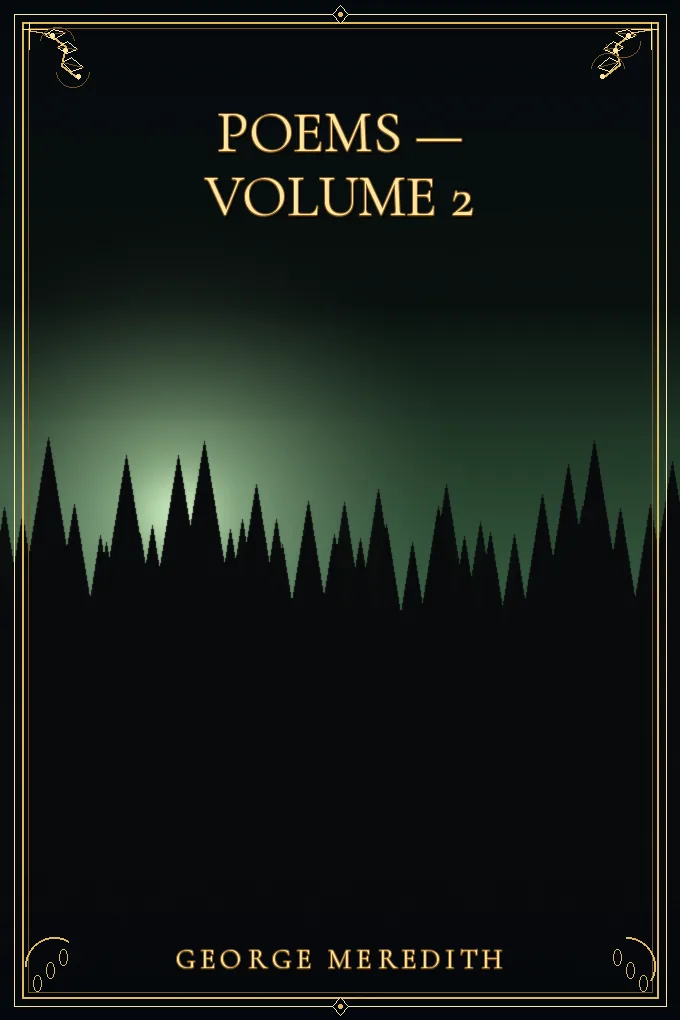
Cover illustration for Poems — Volume 2
Context Illustration Reading 1/29 · 5 lines
English subtitles · tap any word to listen 1 / 5
THE WOODS OF WESTERMAIN
I
ENTER these enchanted woods, You who dare.
Nothing harms beneath the leaves More than waves a swimmer cleaves.
Toss your heart up with the lark, Foot at peace with mouse and worm, Fair you fare.
0:00 / 0:00
Speed 0.75x
AI-generated narration by OpenAI · Slow US English
LEARNER DICTIONARY
Archivist
/ˈɑːrkɪvɪst/
Editorial verification pending

A keeper or guardian of historical records and memories.

Poems — Volume 2

Chapter IV · Chapter 4

Chapter 4 of Poems — Volume 2 is here in full — 149 sentences across 30 reading sections, with audio for every sentence and word.

Reading 1/29 · 5 reading units · Lines 1–5

Line 1
THE WOODS OF WESTERMAIN
Line 2
I
/aɪ/
Line 3
ENTER these enchanted woods, You who dare.
/ˈentər ðiːz ɪnˈtʃæn.tɪd wʊdz juː huː der/
Line 4
Nothing harms beneath the leaves More than waves a swimmer cleaves.
/ˈnʌθɪŋ hɑːrmz bɪˈniːθ ðə liːvz mɔːr ðæn weɪvz ə ˈswɪmər kliːvz/
Line 5
Toss your heart up with the lark, Foot at peace with mouse and worm, Fair you fare.
/tɔːs jɔːr hɑːrt ʌp wɪð ðə lɑːrk fʊt æt piːs wɪð maʊs ənd wɜːrm fer juː fer/

Learner Dictionary

These definitions explain words found in the current reading and keep every example grounded in its original sentence.

Oxford-style entry order: headword, part of speech, US IPA, concise definition, contextual example, and audio.

cleaves verb US /kliːvz/

third-person singular of “cleave” — separate or cut with a tool, such as a sharp instrument

From this reading “Nothing harms beneath the leaves More than waves a swimmer cleaves.”

enchanted adjective US /ɪnˈtʃæn.tɪd/

Filled with or placed under the influence of magical power or charm.

From this reading “ENTER these enchanted woods, You who dare.”

harms noun US /hɑːrmz/

plural of “harm” — any physical damage to the body caused by violence or accident or fracture etc.

From this reading “Nothing harms beneath the leaves More than waves a swimmer cleaves.”

lark noun US /lɑːrk/

North American songbirds having a yellow breast

From this reading “Toss your heart up with the lark, Foot at peace with mouse and worm, Fair you fare.”

mouse noun US /maʊs/

any of numerous small rodents typically resembling diminutive rats having pointed snouts and small ears on elongated bodies with slender usually hairless tails

From this reading “Toss your heart up with the lark, Foot at peace with mouse and worm, Fair you fare.”

swimmer noun US /ˈswɪmər/

a trained athlete who participates in swimming meets

From this reading “Nothing harms beneath the leaves More than waves a swimmer cleaves.”

Toss verb US /tɔːs/

throw or toss with a light motion

From this reading “Toss your heart up with the lark, Foot at peace with mouse and worm, Fair you fare.”

worm noun US /wɜːrm/

any of numerous relatively small elongated soft-bodied animals especially of the phyla Annelida and Chaetognatha and Nematoda and Nemertea and Platyhelminthes; also many insect larvae

From this reading “Toss your heart up with the lark, Foot at peace with mouse and worm, Fair you fare.”

All words in this reading · 35

Every word in these five lines is listed here, and every one of them can be played on its own.

Dictionary details are shown only when verified; these are not licensed Oxford entries.

adeterminerUS /ə/

used before a singular noun to mean one of a group, when it is not a particular one

From this reading Nothing harms beneath the leaves More than waves a swimmer cleaves.

andconjunctionUS /ənd/

used to join words or parts of a sentence that go together

From this reading Toss your heart up with the lark, Foot at peace with mouse and worm, Fair you fare.

atprepositionUS /æt/

in or near a particular place or position

From this reading Toss your heart up with the lark, Foot at peace with mouse and worm, Fair you fare.

beneathprepositionUS /bɪˈniːθ/

Directly under; in or to a lower position than.

From this reading Nothing harms beneath the leaves More than waves a swimmer cleaves.

cleavesverbUS /kliːvz/

third-person singular of “cleave” — separate or cut with a tool, such as a sharp instrument

From this reading Nothing harms beneath the leaves More than waves a swimmer cleaves.

dareverbUS /der/

take upon oneself; act presumptuously, without permission

From this reading ENTER these enchanted woods, You who dare.

enchantedadjectiveUS /ɪnˈtʃæn.tɪd/

Filled with or placed under the influence of magical power or charm.

From this reading ENTER these enchanted woods, You who dare.

ENTERverbUS /ˈentər/

to come or go into

From this reading ENTER these enchanted woods, You who dare.

FairadjectiveUS /fer/

free from favoritism or self-interest or bias or deception; conforming with established standards or rules

From this reading Toss your heart up with the lark, Foot at peace with mouse and worm, Fair you fare.

farenounUS /fer/

an agenda of things to do

From this reading Toss your heart up with the lark, Foot at peace with mouse and worm, Fair you fare.

FootnounUS /fʊt/

the part of the leg of a human being below the ankle joint

From this reading Toss your heart up with the lark, Foot at peace with mouse and worm, Fair you fare.

harmsnounUS /hɑːrmz/

plural of “harm” — any physical damage to the body caused by violence or accident or fracture etc.

From this reading Nothing harms beneath the leaves More than waves a swimmer cleaves.

heartnounUS /hɑːrt/

the locus of feelings and intuitions

From this reading Toss your heart up with the lark, Foot at peace with mouse and worm, Fair you fare.

IpronounUS /aɪ/

the person speaking or writing, as the subject of the verb

From this reading I

larknounUS /lɑːrk/

North American songbirds having a yellow breast

From this reading Toss your heart up with the lark, Foot at peace with mouse and worm, Fair you fare.

leavesnounUS /liːvz/

plural of “leaf” — the main organ of photosynthesis and transpiration in higher plants

From this reading Nothing harms beneath the leaves More than waves a swimmer cleaves.

MoreadjectiveUS /mɔːr/

(comparative of “much” used with mass nouns) a quantifier meaning greater in size or amount or extent or degree

From this reading Nothing harms beneath the leaves More than waves a swimmer cleaves.

mousenounUS /maʊs/

any of numerous small rodents typically resembling diminutive rats having pointed snouts and small ears on elongated bodies with slender usually hairless tails

From this reading Toss your heart up with the lark, Foot at peace with mouse and worm, Fair you fare.

NothingpronounUS /ˈnʌθɪŋ/

not one thing; not anything

From this reading Nothing harms beneath the leaves More than waves a swimmer cleaves.

OFprepositionUS /ʌv/

belonging to, or connected with, somebody or something

From this reading THE WOODS OF WESTERMAIN

peacenounUS /piːs/

the state prevailing during the absence of war

From this reading Toss your heart up with the lark, Foot at peace with mouse and worm, Fair you fare.

swimmernounUS /ˈswɪmər/

a trained athlete who participates in swimming meets

From this reading Nothing harms beneath the leaves More than waves a swimmer cleaves.

thanconjunctionUS /ðæn/

used to introduce the second part of a comparison

From this reading Nothing harms beneath the leaves More than waves a swimmer cleaves.

THEdeterminerUS /ðə/

used before a noun that is already known, already mentioned, or the only one of its kind

From this reading THE WOODS OF WESTERMAIN

thesedeterminerUS /ðiːz/

the plural of “this”: the people or things near, or just mentioned

From this reading ENTER these enchanted woods, You who dare.

TossverbUS /tɔːs/

throw or toss with a light motion

From this reading Toss your heart up with the lark, Foot at peace with mouse and worm, Fair you fare.

upadjectiveUS /ʌp/

being or moving higher in position or greater in some value; being above a former position or level

From this reading Toss your heart up with the lark, Foot at peace with mouse and worm, Fair you fare.

wavesnounUS /weɪvz/

plural of “wave” — one of a series of ridges that moves across the surface of a liquid (especially across a large body of water)

From this reading Nothing harms beneath the leaves More than waves a swimmer cleaves.

WESTERMAIN

Dictionary entry pending editorial verification. Tap Listen to hear the word.

From this reading THE WOODS OF WESTERMAIN

whopronounUS /huː/

which person or people

From this reading ENTER these enchanted woods, You who dare.

withprepositionUS /wɪð/

in the company of; together with

From this reading Toss your heart up with the lark, Foot at peace with mouse and worm, Fair you fare.

WOODSnounUS /wʊdz/

the trees and other plants in a large densely wooded area

From this reading THE WOODS OF WESTERMAIN

wormnounUS /wɜːrm/

any of numerous relatively small elongated soft-bodied animals especially of the phyla Annelida and Chaetognatha and Nematoda and Nemertea and Platyhelminthes; also many insect larvae

From this reading Toss your heart up with the lark, Foot at peace with mouse and worm, Fair you fare.

YoupronounUS /juː/

the person or people being spoken to

From this reading ENTER these enchanted woods, You who dare.

yourdeterminerUS /jɔːr/

belonging to the person or people being spoken to

From this reading Toss your heart up with the lark, Foot at peace with mouse and worm, Fair you fare.

Chapter 4 of Poems — Volume 2 by George Meredith holds 149 sentences, grouped into 30 reading sections of at most 5 sentences. The text is the public-domain source, unabridged, and the chapter records which sentences cover which part of the work so that nothing is dropped. Every word can be tapped for its pronunciation and dictionary entry.

What does chapter 4 of Poems — Volume 2 contain?

Chapter 4 holds 149 sentences of Poems — Volume 2, unabridged, divided into 30 reading sections.

This page carries chapter 4 of Poems — Volume 2 by George Meredith exactly as it stands in the public-domain source edition, without abridgement. It runs to 149 sentences, grouped into 30 sections of at most 5 sentences so that a reader can take the chapter in steady, finishable pieces. The chapter also stores a coverage record mapping every one of its sentences to a part of the work, which is how the edition demonstrates that no line was dropped.

How do I study chapter 4 of Poems — Volume 2?

Work through the 30 sections in order, replaying any sentence and tapping unfamiliar words for their entries.

Each of the 30 sections in this chapter is short enough to read once, hear once, and then re-read with the vocabulary in view. Tapping a word plays it alone and opens its dictionary entry with IPA, part of speech and meaning, so the reader is never forced to guess a pronunciation from spelling. Working section by section keeps a long chapter from becoming an undifferentiated wall of text, which is the usual reason a reader abandons a work of this period.

Can chapter 4 be read aloud to me?

Yes — every sentence and every individual word in chapter 4 can be played aloud in United States English.

Audio covers the whole chapter: any sentence can be played, and any single word within it can be played on its own. The voice uses United States English. For a work of this period that matters, because spelling is an unreliable guide to pronunciation for vocabulary that has fallen out of daily use, and a learner who guesses wrong tends to keep the error. Hearing the word in its own sentence, and then alone, settles it.

Questions about reading Poems — Volume 2

Common questions about reading Poems — Volume 2 by George Meredith on this page, its source edition and its audio.

Is this the complete text of Poems — Volume 2?

Yes. All 2831 sentences of Project Gutenberg eBook #1382 are kept, with a record of which sentences cover which part.

Which edition of Poems — Volume 2 is used?

Project Gutenberg eBook #1382, a public-domain edition. The Project Gutenberg header, footer and licence are removed.

How long does Poems — Volume 2 take to read?

About 235 minutes of reading across 567 sections of 5 sentences each, at an unhurried pace.

How to read Poems — Volume 2 section by section

How to work through Poems — Volume 2 section by section, using the audio and the tap-to-define vocabulary.

  1. Open a chapter

    Choose one of the 19 chapters of Poems — Volume 2 to begin.

  2. Read one section

    Each section holds 5 sentences; read it once through.

  3. Listen and tap

    Play the section aloud, then tap any unfamiliar word for its entry.

Vocabulary met early in Poems — Volume 2

Words and structures a reader meets early in Poems — Volume 2, each tappable for pronunciation and meaning.

Picture
A word that appears in the opening chapter of Poems — Volume 2; the reader can tap it to hear it and see its dictionary entry.
Cover
A word that appears in the opening chapter of Poems — Volume 2; the reader can tap it to hear it and see its dictionary entry.
Poems
A word that appears in the opening chapter of Poems — Volume 2; the reader can tap it to hear it and see its dictionary entry.
George
A word that appears in the opening chapter of Poems — Volume 2; the reader can tap it to hear it and see its dictionary entry.