Complete classic literature • Five-line readings • Clear US narration
VELMORA ACADEMY
Academy of Archival Languages & Memory Studies
Menu Close
Poetical Works of Matthew Arnold

Chapter IV · Chapter 4

Chapter 4 of Poetical Works of Matthew Arnold is here in full — 224 sentences across 45 reading sections, with audio for every sentence and word.

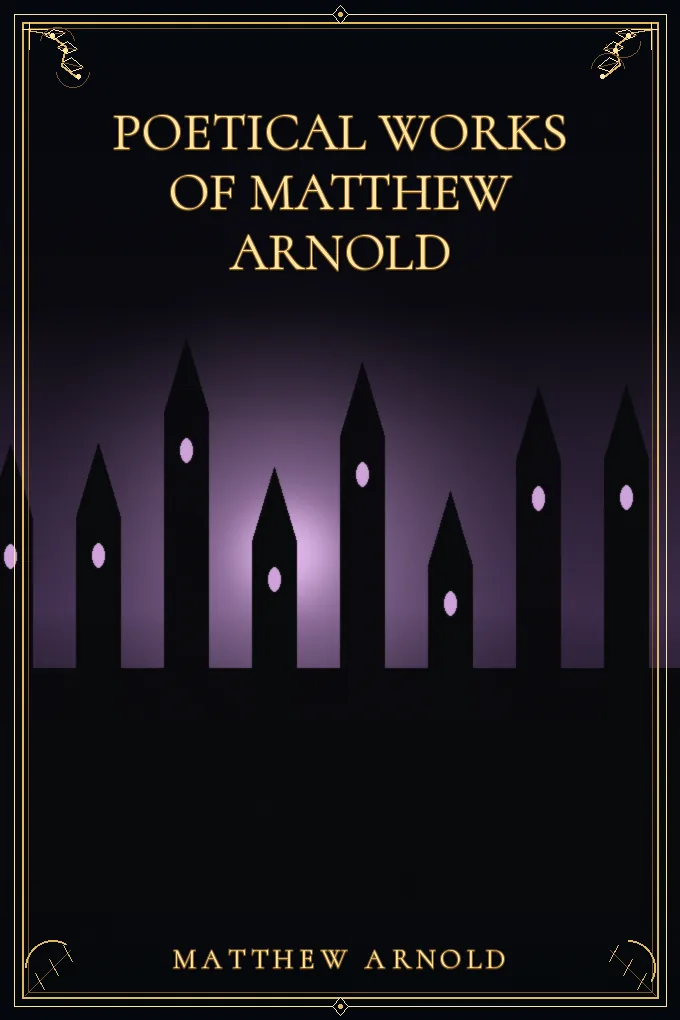
Cover illustration for Poetical Works of Matthew Arnold
Context Illustration Reading 1/44 · 5 lines
English subtitles · tap any word to listen 1 / 5
At last he sigh'd, and set forth back to Heaven.
TRISTRAM AND ISEULT[8] I Tristram _Tristram_ Is she not come?
The messenger was sure.
Prop me upon the pillows once again-- Raise me, my page! this cannot long endure.
--Christ, what a night! how the sleet whips the pane!
0:00 / 0:00
Speed 0.75x
AI-generated narration by OpenAI · Slow US English
LEARNER DICTIONARY
Archivist
/ˈɑːrkɪvɪst/
Editorial verification pending

A keeper or guardian of historical records and memories.

Poetical Works of Matthew Arnold

Chapter IV · Chapter 4

Chapter 4 of Poetical Works of Matthew Arnold is here in full — 224 sentences across 45 reading sections, with audio for every sentence and word.

Reading 1/44 · 5 reading units · Lines 1–5

Line 1
At last he sigh'd, and set forth back to Heaven.
Line 2
TRISTRAM AND ISEULT[8] I Tristram _Tristram_ Is she not come?
Line 3
The messenger was sure.
/ðə ˈmesəndʒər wɑːz ʃʊr/
Line 4
Prop me upon the pillows once again-- Raise me, my page! this cannot long endure.
Line 5
--Christ, what a night! how the sleet whips the pane!

Learner Dictionary

These definitions explain words found in the current reading and keep every example grounded in its original sentence.

Oxford-style entry order: headword, part of speech, US IPA, concise definition, contextual example, and audio.

Christ noun US /kraɪst/

a teacher and prophet born in Bethlehem and active in Nazareth; his life and sermons form the basis for Christianity (circa 4 BC - AD 29)

From this reading “--Christ, what a night! how the sleet whips the pane!”

messenger noun US /ˈmesəndʒər/

a person who carries a message

From this reading “The messenger was sure.”

pane noun US /peɪn/

sheet glass cut in shapes for windows or doors

From this reading “--Christ, what a night! how the sleet whips the pane!”

pillows noun US /ˈpɪloʊz/

plural of “pillow” — a cushion to support the head of a sleeping person

From this reading “Prop me upon the pillows once again-- Raise me, my page! this cannot long endure.”

Prop noun US /prɑːp/

a support placed beneath or against something to keep it from shaking or falling

From this reading “Prop me upon the pillows once again-- Raise me, my page! this cannot long endure.”

sleet noun US /sliːt/

partially melted snow (or a mixture of rain and snow)

From this reading “--Christ, what a night! how the sleet whips the pane!”

tristram noun US /ˈtrɪstrəm/

(Middle Ages) the nephew of the king of Cornwall who (according to legend) fell in love with his uncle's bride (Iseult) after they mistakenly drank a love potion that left them eternally in love with each other

From this reading “TRISTRAM AND ISEULT[8] I Tristram _Tristram_ Is she not come?”

whips noun US /wɪps/

plural of “whip” — an instrument with a handle and a flexible lash that is used for whipping

From this reading “--Christ, what a night! how the sleet whips the pane!”

All words in this reading · 43

Every word in these five lines is listed here, and every one of them can be played on its own.

Dictionary details are shown only when verified; these are not licensed Oxford entries.

8

Dictionary entry pending editorial verification. Tap Listen to hear the word.

From this reading TRISTRAM AND ISEULT[8] I Tristram _Tristram_ Is she not come?

adeterminerUS /ə/

used before a singular noun to mean one of a group, when it is not a particular one

From this reading --Christ, what a night! how the sleet whips the pane!

againadverbUS /əˈɡen/

anew

From this reading Prop me upon the pillows once again-- Raise me, my page! this cannot long endure.

andconjunctionUS /ənd/

used to join words or parts of a sentence that go together

From this reading At last he sigh'd, and set forth back to Heaven.

AtprepositionUS /æt/

in or near a particular place or position

From this reading At last he sigh'd, and set forth back to Heaven.

backadverbUS /bæk/

in or to or toward a former location

From this reading At last he sigh'd, and set forth back to Heaven.

cannot

Dictionary entry pending editorial verification. Tap Listen to hear the word.

From this reading Prop me upon the pillows once again-- Raise me, my page! this cannot long endure.

ChristnounUS /kraɪst/

a teacher and prophet born in Bethlehem and active in Nazareth; his life and sermons form the basis for Christianity (circa 4 BC - AD 29)

From this reading --Christ, what a night! how the sleet whips the pane!

comeverbUS /kʌm/

move toward, travel toward something or somebody or approach something or somebody

From this reading TRISTRAM AND ISEULT[8] I Tristram _Tristram_ Is she not come?

endureverbUS /enˈdjʊr/

put up with something or somebody unpleasant

From this reading Prop me upon the pillows once again-- Raise me, my page! this cannot long endure.

forthadverbUS /fɔːrθ/

from a particular thing or place or position (“forth” is obsolete)

From this reading At last he sigh'd, and set forth back to Heaven.

hepronounUS /hiː/

a man, boy, or male animal already mentioned, as the subject

From this reading At last he sigh'd, and set forth back to Heaven.

HeavennounUS /ˈhevən/

any place of complete bliss and delight and peace

From this reading At last he sigh'd, and set forth back to Heaven.

how

Dictionary entry pending editorial verification. Tap Listen to hear the word.

From this reading --Christ, what a night! how the sleet whips the pane!

IpronounUS /aɪ/

the person speaking or writing, as the subject of the verb

From this reading TRISTRAM AND ISEULT[8] I Tristram _Tristram_ Is she not come?

Isauxiliary verbUS /ɪz/

the form of “be” used with he, she, it, or a singular noun

From this reading TRISTRAM AND ISEULT[8] I Tristram _Tristram_ Is she not come?

ISEULTnoun

(Middle Ages) the bride of the king of Cornwall who (according to legend) fell in love with the king's nephew (Tristan) after they mistakenly drank a love potion that left them eternally in love with each other

From this reading TRISTRAM AND ISEULT[8] I Tristram _Tristram_ Is she not come?

lastadjectiveUS /læst/

immediately past

From this reading At last he sigh'd, and set forth back to Heaven.

longadjectiveUS /lɔːŋ/

primarily temporal sense; being or indicating a relatively great or greater than average duration or passage of time or a duration as specified

From this reading Prop me upon the pillows once again-- Raise me, my page! this cannot long endure.

mepronounUS /miː/

the person speaking, as the object of a verb or preposition

From this reading Prop me upon the pillows once again-- Raise me, my page! this cannot long endure.

messengernounUS /ˈmesəndʒər/

a person who carries a message

From this reading The messenger was sure.

mydeterminerUS /maɪ/

belonging to the person speaking

From this reading Prop me upon the pillows once again-- Raise me, my page! this cannot long endure.

nightnounUS /naɪt/

the time after sunset and before sunrise while it is dark outside

From this reading --Christ, what a night! how the sleet whips the pane!

notadverbUS /nɑːt/

used to make a word, phrase, or sentence negative

From this reading TRISTRAM AND ISEULT[8] I Tristram _Tristram_ Is she not come?

onceadverbUS /wʌns/

on one occasion

From this reading Prop me upon the pillows once again-- Raise me, my page! this cannot long endure.

pagenounUS /peɪdʒ/

one side of one leaf (of a book or magazine or newspaper or letter etc.) or the written or pictorial matter it contains

From this reading Prop me upon the pillows once again-- Raise me, my page! this cannot long endure.

panenounUS /peɪn/

sheet glass cut in shapes for windows or doors

From this reading --Christ, what a night! how the sleet whips the pane!

pillowsnounUS /ˈpɪloʊz/

plural of “pillow” — a cushion to support the head of a sleeping person

From this reading Prop me upon the pillows once again-- Raise me, my page! this cannot long endure.

PropnounUS /prɑːp/

a support placed beneath or against something to keep it from shaking or falling

From this reading Prop me upon the pillows once again-- Raise me, my page! this cannot long endure.

RaiseverbUS /reɪz/

raise the level or amount of something

From this reading Prop me upon the pillows once again-- Raise me, my page! this cannot long endure.

setverbUS /set/

put into a certain place or abstract location

From this reading At last he sigh'd, and set forth back to Heaven.

shepronounUS /ʃiː/

a woman, girl, or female animal already mentioned, as the subject

From this reading TRISTRAM AND ISEULT[8] I Tristram _Tristram_ Is she not come?

sigh'd

Dictionary entry pending editorial verification. Tap Listen to hear the word.

From this reading At last he sigh'd, and set forth back to Heaven.

sleetnounUS /sliːt/

partially melted snow (or a mixture of rain and snow)

From this reading --Christ, what a night! how the sleet whips the pane!

sureadjectiveUS /ʃʊr/

having or feeling no doubt or uncertainty; confident and assured

From this reading The messenger was sure.

ThedeterminerUS /ðə/

used before a noun that is already known, already mentioned, or the only one of its kind

From this reading The messenger was sure.

thisdeterminerUS /ðɪs/

used for a person or thing that is near, or that has just been mentioned

From this reading Prop me upon the pillows once again-- Raise me, my page! this cannot long endure.

toparticleUS /tuː/

used before the base form of a verb to make the infinitive

From this reading At last he sigh'd, and set forth back to Heaven.

TRISTRAMnounUS /ˈtrɪstrəm/

(Middle Ages) the nephew of the king of Cornwall who (according to legend) fell in love with his uncle's bride (Iseult) after they mistakenly drank a love potion that left them eternally in love with each other

From this reading TRISTRAM AND ISEULT[8] I Tristram _Tristram_ Is she not come?

uponprepositionUS /əˈpɑːn/

a formal word for “on”

From this reading Prop me upon the pillows once again-- Raise me, my page! this cannot long endure.

wasauxiliary verbUS /wɑːz/

the past form of “be” used with I, he, she, it, or a singular noun

From this reading The messenger was sure.

whatpronounUS /wʌt/

used to ask for information about something

From this reading --Christ, what a night! how the sleet whips the pane!

whipsnounUS /wɪps/

plural of “whip” — an instrument with a handle and a flexible lash that is used for whipping

From this reading --Christ, what a night! how the sleet whips the pane!

Chapter 4 of Poetical Works of Matthew Arnold by Matthew Arnold holds 224 sentences, grouped into 45 reading sections of at most 5 sentences. The text is the source edition, unabridged, and the chapter records which sentences cover which part of the work so that nothing is dropped. Every word can be tapped for its pronunciation and dictionary entry.

What does chapter 4 of Poetical Works of Matthew Arnold contain?

Chapter 4 holds 224 sentences of Poetical Works of Matthew Arnold, unabridged, divided into 45 reading sections.

This page carries chapter 4 of Poetical Works of Matthew Arnold by Matthew Arnold exactly as it stands in the source edition, without abridgement. It runs to 224 sentences, grouped into 45 sections of at most 5 sentences so that a reader can take the chapter in steady, finishable pieces. The chapter also stores a coverage record mapping every one of its sentences to a part of the work, which is how the edition demonstrates that no line was dropped.

How do I study chapter 4 of Poetical Works of Matthew Arnold?

Work through the 45 sections in order, replaying any sentence and tapping unfamiliar words for their entries.

Each of the 45 sections in this chapter is short enough to read once, hear once, and then re-read with the vocabulary in view. Tapping a word plays it alone and opens its dictionary entry with IPA, part of speech and meaning, so the reader is never forced to guess a pronunciation from spelling. Working section by section keeps a long chapter from becoming an undifferentiated wall of text, which is the usual reason a reader abandons a work of this period.

Can chapter 4 be read aloud to me?

Yes — every sentence and every individual word in chapter 4 can be played aloud in United States English.

Audio covers the whole chapter: any sentence can be played, and any single word within it can be played on its own. The voice uses United States English. For a work of this period that matters, because spelling is an unreliable guide to pronunciation for vocabulary that has fallen out of daily use, and a learner who guesses wrong tends to keep the error. Hearing the word in its own sentence, and then alone, settles it.

Questions about reading Poetical Works of Matthew Arnold

Common questions about reading Poetical Works of Matthew Arnold by Matthew Arnold on this page, its source edition and its audio.

Is this the complete text of Poetical Works of Matthew Arnold?

Yes. All 4389 sentences of Project Gutenberg eBook #27739 are kept, with a record of which sentences cover which part.

Which edition of Poetical Works of Matthew Arnold is used?

Project Gutenberg eBook #27739, unabridged. The Project Gutenberg header, footer and licence are removed.

How long does Poetical Works of Matthew Arnold take to read?

About 365 minutes of reading across 878 sections of 5 sentences each, at an unhurried pace.

How to read Poetical Works of Matthew Arnold section by section

How to work through Poetical Works of Matthew Arnold section by section, using the audio and the tap-to-define vocabulary.

  1. Open a chapter

    Choose one of the 14 chapters of Poetical Works of Matthew Arnold to begin.

  2. Read one section

    Each section holds 5 sentences; read it once through.

  3. Listen and tap

    Play the section aloud, then tap any unfamiliar word for its entry.

Vocabulary met early in Poetical Works of Matthew Arnold

Words and structures a reader meets early in Poetical Works of Matthew Arnold, each tappable for pronunciation and meaning.

Lesson
A word that appears in the opening chapter of Poetical Works of Matthew Arnold; the reader can tap it to hear it and see its dictionary entry.
Nature
A word that appears in the opening chapter of Poetical Works of Matthew Arnold; the reader can tap it to hear it and see its dictionary entry.
Learn
A word that appears in the opening chapter of Poetical Works of Matthew Arnold; the reader can tap it to hear it and see its dictionary entry.
Every
A word that appears in the opening chapter of Poetical Works of Matthew Arnold; the reader can tap it to hear it and see its dictionary entry.