Complete classic literature • Five-line readings • Clear US narration
VELMORA ACADEMY
Academy of Archival Languages & Memory Studies
Menu Close
Priscilla's Spies
Priscilla's Spies

Chapter XIII · Chapter 13

Chapter 13 of Priscilla's Spies is here in full — 215 sentences across 43 reading sections, with audio for every sentence and word.

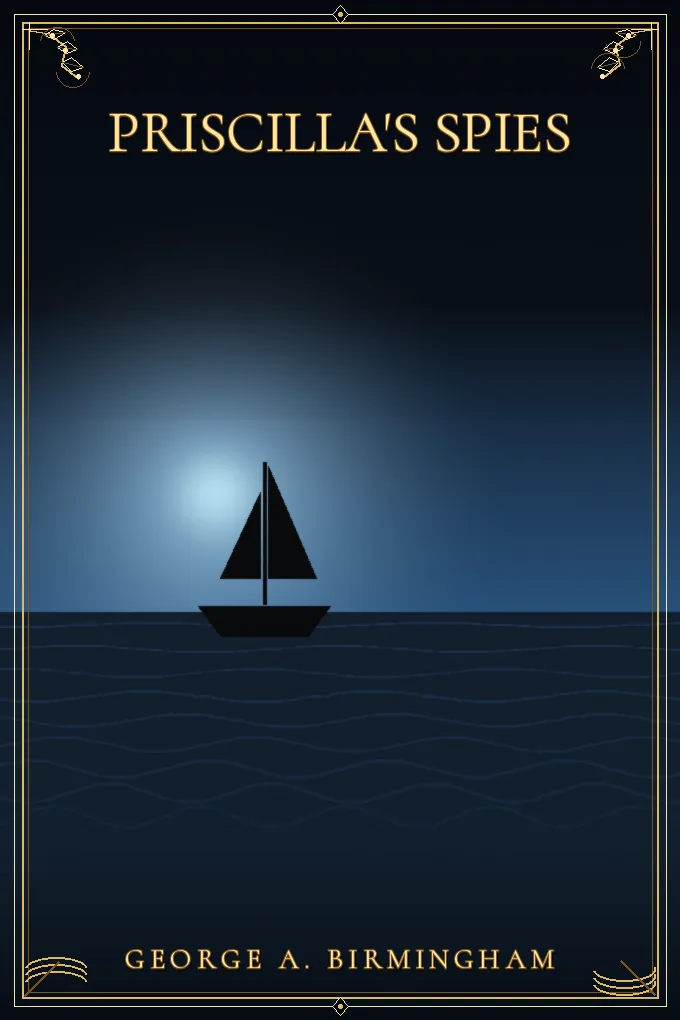
Cover illustration for Priscilla's Spies
Context Illustration Reading 1/43 · 5 lines
English subtitles · tap any word to listen 1 / 5
Thomas Antony Kinsella sat with his legs dangling over the edge of the quay.
Beneath him lay his boat.
The tide was flowing, but it had not yet floated her.

She was supported on an even keel by the mooring ropes made fast from her bow and stern to bollards on the quay.
Her sails and gear lay in confusion on her thwarts.
0:00 / 0:00
Speed 0.75x
AI-generated narration by OpenAI · Slow US English
LEARNER DICTIONARY
Archivist
/ˈɑːrkɪvɪst/
Editorial verification pending

A keeper or guardian of historical records and memories.

Priscilla's Spies

Chapter XIII · Chapter 13

Chapter 13 of Priscilla's Spies is here in full — 215 sentences across 43 reading sections, with audio for every sentence and word.

Reading 1/43 · 5 reading units · Lines 1–5

Line 1
Thomas Antony Kinsella sat with his legs dangling over the edge of the quay.
Line 2
Beneath him lay his boat.
/bɪˈniːθ hɪm leɪ hɪz boʊt/
Line 3
The tide was flowing, but it had not yet floated her.
/ðə taɪd wɑːz ˈfloʊɪŋ bʌt ɪt hæd nɑːt jet ˈfloʊtəd hɜːr/
Line 4
She was supported on an even keel by the mooring ropes made fast from her bow and stern to bollards on the quay.
Line 5
Her sails and gear lay in confusion on her thwarts.
/hɜːr seɪlz ənd ɡɪr leɪ ɪn kənˈfjuːʒən ɑːn hɜːr θwɔːrts/

Learner Dictionary

These definitions explain words found in the current reading and keep every example grounded in its original sentence.

Oxford-style entry order: headword, part of speech, US IPA, concise definition, contextual example, and audio.

Antony noun US /ˈæntəni/

Roman general under Julius Caesar in the Gallic wars; repudiated his wife for the Egyptian queen Cleopatra; they were defeated by Octavian at Actium (83-30 BC)

From this reading “Thomas Antony Kinsella sat with his legs dangling over the edge of the quay.”

dangling noun US /ˈdæŋɡəlɪŋ/

the act of suspending something (hanging it from above so it moves freely)

From this reading “Thomas Antony Kinsella sat with his legs dangling over the edge of the quay.”

gear noun US /ɡɪr/

a toothed wheel that engages another toothed mechanism in order to change the speed or direction of transmitted motion

From this reading “Her sails and gear lay in confusion on her thwarts.”

keel noun US /kiːl/

a projection or ridge that suggests a keel

From this reading “She was supported on an even keel by the mooring ropes made fast from her bow and stern to bollards on the quay.”

mooring noun US /ˈmʊrɪŋ/

a place where a craft can be made fast

From this reading “She was supported on an even keel by the mooring ropes made fast from her bow and stern to bollards on the quay.”

quay noun US /kiː/

wharf usually built parallel to the shoreline

From this reading “Thomas Antony Kinsella sat with his legs dangling over the edge of the quay.”

ropes noun US /roʊps/

plural of “rope” — a strong line

From this reading “She was supported on an even keel by the mooring ropes made fast from her bow and stern to bollards on the quay.”

thwarts noun US /θwɔːrts/

plural of “thwart” — a crosspiece spreading the gunnels of a boat; used as a seat in a rowboat

From this reading “Her sails and gear lay in confusion on her thwarts.”

All words in this reading · 49

Every word in these five lines is listed here, and every one of them can be played on its own.

Dictionary details are shown only when verified; these are not licensed Oxford entries.

andeterminerUS /æn/

the form of “a” used before a word that begins with a vowel sound

From this reading She was supported on an even keel by the mooring ropes made fast from her bow and stern to bollards on the quay.

andconjunctionUS /ənd/

used to join words or parts of a sentence that go together

From this reading She was supported on an even keel by the mooring ropes made fast from her bow and stern to bollards on the quay.

AntonynounUS /ˈæntəni/

Roman general under Julius Caesar in the Gallic wars; repudiated his wife for the Egyptian queen Cleopatra; they were defeated by Octavian at Actium (83-30 BC)

From this reading Thomas Antony Kinsella sat with his legs dangling over the edge of the quay.

BeneathprepositionUS /bɪˈniːθ/

Directly under; in or to a lower position than.

From this reading Beneath him lay his boat.

boatnounUS /boʊt/

a small vessel for travel on water

From this reading Beneath him lay his boat.

bollards

Dictionary entry pending editorial verification. Tap Listen to hear the word.

From this reading She was supported on an even keel by the mooring ropes made fast from her bow and stern to bollards on the quay.

bownounUS /baʊ/

a knot with two loops and loose ends; used to tie shoelaces

From this reading She was supported on an even keel by the mooring ropes made fast from her bow and stern to bollards on the quay.

butconjunctionUS /bʌt/

used to introduce something that contrasts with what came before

From this reading The tide was flowing, but it had not yet floated her.

byprepositionUS /baɪ/

showing who or what does the action

From this reading She was supported on an even keel by the mooring ropes made fast from her bow and stern to bollards on the quay.

confusionnounUS /kənˈfjuːʒən/

disorder resulting from a failure to behave predictably

From this reading Her sails and gear lay in confusion on her thwarts.

danglingnounUS /ˈdæŋɡəlɪŋ/

the act of suspending something (hanging it from above so it moves freely)

From this reading Thomas Antony Kinsella sat with his legs dangling over the edge of the quay.

edgenounUS /edʒ/

the boundary of a surface

From this reading Thomas Antony Kinsella sat with his legs dangling over the edge of the quay.

evenadjectiveUS /ˈiːvɪn/

divisible by two

From this reading She was supported on an even keel by the mooring ropes made fast from her bow and stern to bollards on the quay.

fastadverbUS /fæst/

quickly or rapidly (often used as a combining form)

From this reading She was supported on an even keel by the mooring ropes made fast from her bow and stern to bollards on the quay.

floatedverbUS /ˈfloʊtəd/

past form of “float” — be in motion due to some air or water current

From this reading The tide was flowing, but it had not yet floated her.

flowingnounUS /ˈfloʊɪŋ/

the motion characteristic of fluids (liquids or gases)

From this reading The tide was flowing, but it had not yet floated her.

fromprepositionUS /frʌm/

showing where something starts, or who sent it

From this reading She was supported on an even keel by the mooring ropes made fast from her bow and stern to bollards on the quay.

gearnounUS /ɡɪr/

a toothed wheel that engages another toothed mechanism in order to change the speed or direction of transmitted motion

From this reading Her sails and gear lay in confusion on her thwarts.

hadauxiliary verbUS /hæd/

the past form of “have”, used to form the past perfect

From this reading The tide was flowing, but it had not yet floated her.

herdeterminerUS /hɜːr/

belonging to a woman, girl, or female animal already mentioned

From this reading The tide was flowing, but it had not yet floated her.

himpronounUS /hɪm/

the male already mentioned, as the object of a verb or preposition

From this reading Beneath him lay his boat.

hisdeterminerUS /hɪz/

belonging to a man, boy, or male animal already mentioned

From this reading Thomas Antony Kinsella sat with his legs dangling over the edge of the quay.

inprepositionUS /ɪn/

inside something, or within a place, period, or state

From this reading Her sails and gear lay in confusion on her thwarts.

itpronounUS /ɪt/

a thing, animal, or idea already mentioned

From this reading The tide was flowing, but it had not yet floated her.

keelnounUS /kiːl/

a projection or ridge that suggests a keel

From this reading She was supported on an even keel by the mooring ropes made fast from her bow and stern to bollards on the quay.

Kinsella

Dictionary entry pending editorial verification. Tap Listen to hear the word.

From this reading Thomas Antony Kinsella sat with his legs dangling over the edge of the quay.

layverbUS /leɪ/

put into a certain place or abstract location

From this reading Beneath him lay his boat.

legsnounUS /leɡz/

staying power

From this reading Thomas Antony Kinsella sat with his legs dangling over the edge of the quay.

madeadjectiveUS /meɪd/

produced by a manufacturing process

From this reading She was supported on an even keel by the mooring ropes made fast from her bow and stern to bollards on the quay.

mooringnounUS /ˈmʊrɪŋ/

a place where a craft can be made fast

From this reading She was supported on an even keel by the mooring ropes made fast from her bow and stern to bollards on the quay.

notadverbUS /nɑːt/

used to make a word, phrase, or sentence negative

From this reading The tide was flowing, but it had not yet floated her.

ofprepositionUS /ʌv/

belonging to, or connected with, somebody or something

From this reading Thomas Antony Kinsella sat with his legs dangling over the edge of the quay.

onprepositionUS /ɑːn/

touching and supported by a surface

From this reading She was supported on an even keel by the mooring ropes made fast from her bow and stern to bollards on the quay.

overprepositionUS /ˈoʊvər/

above and across; more than

From this reading Thomas Antony Kinsella sat with his legs dangling over the edge of the quay.

quaynounUS /kiː/

wharf usually built parallel to the shoreline

From this reading Thomas Antony Kinsella sat with his legs dangling over the edge of the quay.

ropesnounUS /roʊps/

plural of “rope” — a strong line

From this reading She was supported on an even keel by the mooring ropes made fast from her bow and stern to bollards on the quay.

sailsnounUS /seɪlz/

plural of “sail” — a large piece of fabric (usually canvas fabric) by means of which wind is used to propel a sailing vessel

From this reading Her sails and gear lay in confusion on her thwarts.

satnounUS /sæt/

the seventh and last day of the week; observed as the Sabbath by Jews and some Christians

From this reading Thomas Antony Kinsella sat with his legs dangling over the edge of the quay.

ShepronounUS /ʃiː/

a woman, girl, or female animal already mentioned, as the subject

From this reading She was supported on an even keel by the mooring ropes made fast from her bow and stern to bollards on the quay.

sternadjectiveUS /stɜːrn/

of a stern or strict bearing or demeanor; forbidding in aspect

From this reading She was supported on an even keel by the mooring ropes made fast from her bow and stern to bollards on the quay.

supportedadjectiveUS /səˈpɔːrtɪd/

sustained or maintained by aid (as distinct from physical support)

From this reading She was supported on an even keel by the mooring ropes made fast from her bow and stern to bollards on the quay.

thedeterminerUS /ðə/

used before a noun that is already known, already mentioned, or the only one of its kind

From this reading Thomas Antony Kinsella sat with his legs dangling over the edge of the quay.

ThomasnounUS /ˈtɑːməs/

United States clockmaker who introduced mass production (1785-1859)

From this reading Thomas Antony Kinsella sat with his legs dangling over the edge of the quay.

thwartsnounUS /θwɔːrts/

plural of “thwart” — a crosspiece spreading the gunnels of a boat; used as a seat in a rowboat

From this reading Her sails and gear lay in confusion on her thwarts.

tidenounUS /taɪd/

the periodic rise and fall of the sea level under the gravitational pull of the moon

From this reading The tide was flowing, but it had not yet floated her.

toparticleUS /tuː/

used before the base form of a verb to make the infinitive

From this reading She was supported on an even keel by the mooring ropes made fast from her bow and stern to bollards on the quay.

wasauxiliary verbUS /wɑːz/

the past form of “be” used with I, he, she, it, or a singular noun

From this reading The tide was flowing, but it had not yet floated her.

withprepositionUS /wɪð/

in the company of; together with

From this reading Thomas Antony Kinsella sat with his legs dangling over the edge of the quay.

yetconjunctionUS /jet/

but in spite of that

From this reading The tide was flowing, but it had not yet floated her.

Chapter 13 of Priscilla's Spies by George A. Birmingham holds 215 sentences, grouped into 43 reading sections of at most 5 sentences. The text is the source edition, unabridged, and the chapter records which sentences cover which part of the work so that nothing is dropped. Every word can be tapped for its pronunciation and dictionary entry.

What does chapter 13 of Priscilla's Spies contain?

Chapter 13 holds 215 sentences of Priscilla's Spies, unabridged, divided into 43 reading sections.

This page carries chapter 13 of Priscilla's Spies by George A. Birmingham exactly as it stands in the source edition, without abridgement. It runs to 215 sentences, grouped into 43 sections of at most 5 sentences so that a reader can take the chapter in steady, finishable pieces. The chapter also stores a coverage record mapping every one of its sentences to a part of the work, which is how the edition demonstrates that no line was dropped.

How do I study chapter 13 of Priscilla's Spies?

Work through the 43 sections in order, replaying any sentence and tapping unfamiliar words for their entries.

Each of the 43 sections in this chapter is short enough to read once, hear once, and then re-read with the vocabulary in view. Tapping a word plays it alone and opens its dictionary entry with IPA, part of speech and meaning, so the reader is never forced to guess a pronunciation from spelling. Working section by section keeps a long chapter from becoming an undifferentiated wall of text, which is the usual reason a reader abandons a work of this period.

Can chapter 13 be read aloud to me?

Yes — every sentence and every individual word in chapter 13 can be played aloud in United States English.

Audio covers the whole chapter: any sentence can be played, and any single word within it can be played on its own. The voice uses United States English. For a work of this period that matters, because spelling is an unreliable guide to pronunciation for vocabulary that has fallen out of daily use, and a learner who guesses wrong tends to keep the error. Hearing the word in its own sentence, and then alone, settles it.

Questions about reading Priscilla's Spies

Common questions about reading Priscilla's Spies by George A. Birmingham on this page, its source edition and its audio.

Is this the complete text of Priscilla's Spies?

Yes. All 5408 sentences of Project Gutenberg eBook #21394 are kept, with a record of which sentences cover which part.

Which edition of Priscilla's Spies is used?

Project Gutenberg eBook #21394, unabridged. The Project Gutenberg header, footer and licence are removed.

How long does Priscilla's Spies take to read?

About 450 minutes of reading across 1082 sections of 5 sentences each, at an unhurried pace.

How to read Priscilla's Spies section by section

How to work through Priscilla's Spies section by section, using the audio and the tap-to-define vocabulary.

  1. Open a chapter

    Choose one of the 21 chapters of Priscilla's Spies to begin.

  2. Read one section

    Each section holds 5 sentences; read it once through.

  3. Listen and tap

    Play the section aloud, then tap any unfamiliar word for its entry.

Vocabulary met early in Priscilla's Spies

Words and structures a reader meets early in Priscilla's Spies, each tappable for pronunciation and meaning.

Edward
A word that appears in the opening chapter of Priscilla's Spies; the reader can tap it to hear it and see its dictionary entry.
Mannix
A word that appears in the opening chapter of Priscilla's Spies; the reader can tap it to hear it and see its dictionary entry.
Father
A word that appears in the opening chapter of Priscilla's Spies; the reader can tap it to hear it and see its dictionary entry.
Fortunate
A word that appears in the opening chapter of Priscilla's Spies; the reader can tap it to hear it and see its dictionary entry.