Complete classic literature • Five-line readings • Clear US narration
VELMORA ACADEMY
Academy of Archival Languages & Memory Studies
Menu Close
Sixty Folk-Tales from Exclusively Slavonic Sources

Chapter II

Chapter 2 of Sixty Folk-Tales from Exclusively Slavonic Sources is here in full — 452 sentences across 91 reading sections, with audio for every sentence and word.

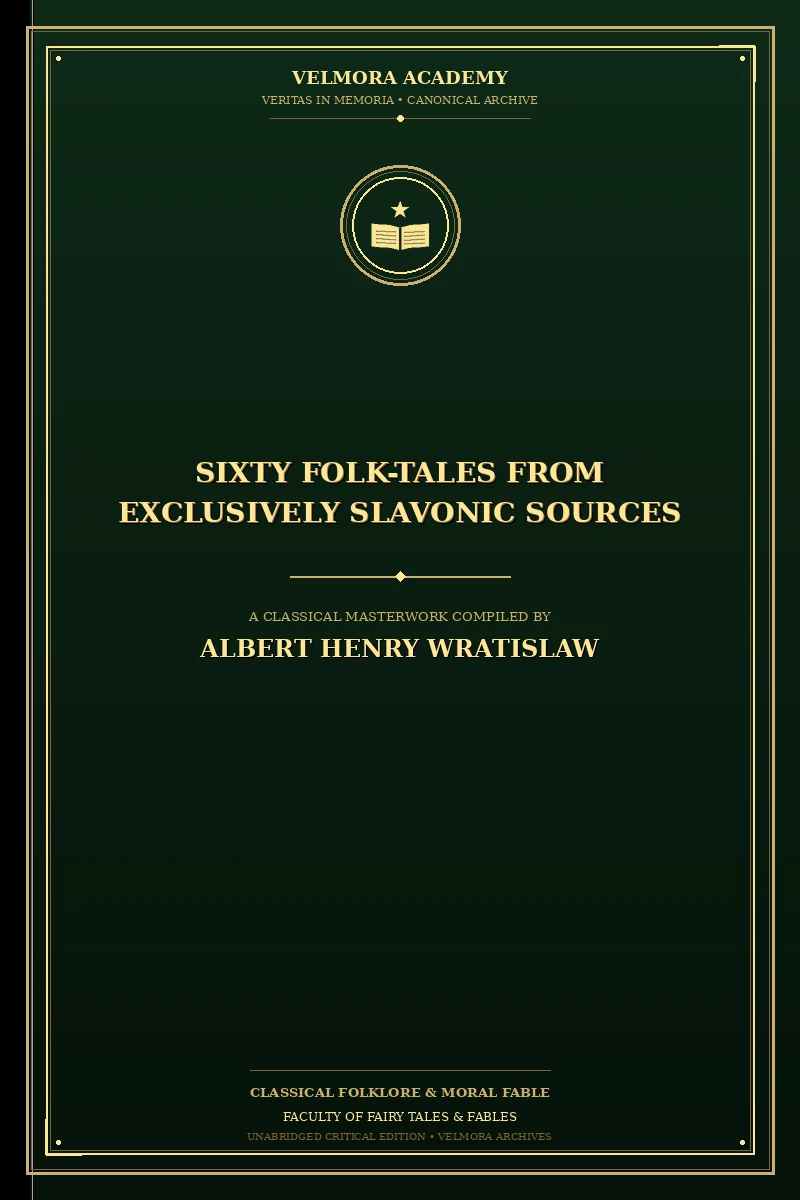
Cover illustration for Sixty Folk-Tales from Exclusively Slavonic Sources
Context Illustration Reading 1/90 · 5 lines
English subtitles · tap any word to listen 1 / 5
The king felt as if a sword had been thrust into his breast.
He didn't sleep till morning, thinking over what to do, and how to do it, to prevent that coming to pass which he had heard.
When day dawned the child began to cry.
The charcoal-burner got up and saw that his wife had gone to sleep for ever.
'Oh, my poor little orphan!' whimpered he; 'what shall I do with you now?'
0:00 / 0:00
Speed 0.75x
AI-generated narration by OpenAI · Slow US English
LEARNER DICTIONARY
Archivist
/ˈɑːrkɪvɪst/
Editorial verification pending

A keeper or guardian of historical records and memories.

Sixty Folk-Tales from Exclusively Slavonic Sources

Chapter II

Chapter 2 of Sixty Folk-Tales from Exclusively Slavonic Sources is here in full — 452 sentences across 91 reading sections, with audio for every sentence and word.

Reading 1/90 · 5 reading units · Lines 1–5

Line 1
The king felt as if a sword had been thrust into his breast.
/ðə kɪŋ felt æz ɪf ə sɔːrd hæd bɪn θrʌst ˈɪntuː hɪz brest/
Line 2
He didn't sleep till morning, thinking over what to do, and how to do it, to prevent that coming to pass which he had heard.
Line 3
When day dawned the child began to cry.
/wen deɪ dɔːnd ðə tʃaɪld bɪˈɡæn tuː kraɪ/
Line 4
The charcoal-burner got up and saw that his wife had gone to sleep for ever.
Line 5
'Oh, my poor little orphan!' whimpered he; 'what shall I do with you now?'

Learner Dictionary

These definitions explain words found in the current reading and keep every example grounded in its original sentence.

Oxford-style entry order: headword, part of speech, US IPA, concise definition, contextual example, and audio.

breast noun US /brest/

the front of the trunk from the neck to the abdomen

From this reading “The king felt as if a sword had been thrust into his breast.”

cry verb US /kraɪ/

utter a sudden loud cry

From this reading “When day dawned the child began to cry.”

dawned verb US /dɔːnd/

past form of “dawn” — become clear or enter one's consciousness or emotions

From this reading “When day dawned the child began to cry.”

orphan noun US /ˈɔːrfən/

a child who has lost both parents

From this reading “'Oh, my poor little orphan!' whimpered he; 'what shall I do with you now?'”

pass verb US /pæs/

go across or through

From this reading “He didn't sleep till morning, thinking over what to do, and how to do it, to prevent that coming to pass which he had heard.”

prevent verb US /prɪˈvent/

keep from happening or arising; make impossible

From this reading “He didn't sleep till morning, thinking over what to do, and how to do it, to prevent that coming to pass which he had heard.”

sword noun US /sɔːrd/

a cutting or thrusting weapon that has a long metal blade and a hilt with a hand guard

From this reading “The king felt as if a sword had been thrust into his breast.”

thrust verb US /θrʌst/

push forcefully

From this reading “The king felt as if a sword had been thrust into his breast.”

Word partnerships in these lines

English keeps certain words together, and knowing the pair is worth more than knowing each word alone. Every partnership below was counted across our whole published library, and earns its place by appearing far more often than two unrelated words of the same frequency would.

Shown as this reading writes them, with the form the library counts, what kind of pairing it is, and how often it occurs.

thrust into verb + particle

In this reading “The king felt as if a sword had been thrust into his breast.”

day dawned noun + noun counted as “day dawn”

In this reading “When day dawned the child began to cry.”

little orphan adjective + noun

In this reading “'Oh, my poor little orphan!' whimpered he; 'what shall I do with you now?'”

till morning preposition + noun

In this reading “He didn't sleep till morning, thinking over what to do, and how to do it, to prevent that coming to pass which he had heard.”

got up verb + adjective counted as “get up”

rise to one's feet

In this reading “The charcoal-burner got up and saw that his wife had gone to sleep for ever.”

for ever preposition + adverb

In this reading “The charcoal-burner got up and saw that his wife had gone to sleep for ever.”

All words in this reading · 57

Every word in these five lines is listed here, and every one of them can be played on its own.

Dictionary details are shown only when verified; these are not licensed Oxford entries.

adeterminerUS /ə/

used before a singular noun to mean one of a group, when it is not a particular one

From this reading The king felt as if a sword had been thrust into his breast.

andconjunctionUS /ənd/

used to join words or parts of a sentence that go together

From this reading He didn't sleep till morning, thinking over what to do, and how to do it, to prevent that coming to pass which he had heard.

asconjunctionUS /æz/

at the same time that; because; in the way that

From this reading The king felt as if a sword had been thrust into his breast.

beenauxiliary verbUS /bɪn/

the past participle of “be”

From this reading The king felt as if a sword had been thrust into his breast.

beganverbUS /bɪˈɡæn/

inflected form of “begin” — take the first step or steps in carrying out an action

From this reading When day dawned the child began to cry.

breastnounUS /brest/

the front of the trunk from the neck to the abdomen

From this reading The king felt as if a sword had been thrust into his breast.

charcoal-burner

Dictionary entry pending editorial verification. Tap Listen to hear the word.

From this reading The charcoal-burner got up and saw that his wife had gone to sleep for ever.

childnounUS /tʃaɪld/

a young person of either sex

From this reading When day dawned the child began to cry.

comingnounUS /ˈkʌmɪŋ/

the act of drawing spatially closer to something

From this reading He didn't sleep till morning, thinking over what to do, and how to do it, to prevent that coming to pass which he had heard.

cryverbUS /kraɪ/

utter a sudden loud cry

From this reading When day dawned the child began to cry.

dawnedverbUS /dɔːnd/

past form of “dawn” — become clear or enter one's consciousness or emotions

From this reading When day dawned the child began to cry.

daynounUS /deɪ/

time for Earth to make a complete rotation on its axis

From this reading When day dawned the child began to cry.

didn't

Dictionary entry pending editorial verification. Tap Listen to hear the word.

From this reading He didn't sleep till morning, thinking over what to do, and how to do it, to prevent that coming to pass which he had heard.

doauxiliary verbUS /duː/

used to form questions and negatives, and to give emphasis

From this reading He didn't sleep till morning, thinking over what to do, and how to do it, to prevent that coming to pass which he had heard.

everadverbUS /ˈevər/

at any time

From this reading The charcoal-burner got up and saw that his wife had gone to sleep for ever.

feltverbUS /felt/

mat together and make felt-like

From this reading The king felt as if a sword had been thrust into his breast.

forprepositionUS /fɔːr/

intended to be given to, or used by, somebody

From this reading The charcoal-burner got up and saw that his wife had gone to sleep for ever.

goneadjectiveUS /ɡɔːn/

destroyed or killed

From this reading The charcoal-burner got up and saw that his wife had gone to sleep for ever.

gotverbUS /ɡɑːt/

inflected form of “get” — come into the possession of something concrete or abstract

From this reading The charcoal-burner got up and saw that his wife had gone to sleep for ever.

hadauxiliary verbUS /hæd/

the past form of “have”, used to form the past perfect

From this reading The king felt as if a sword had been thrust into his breast.

HepronounUS /hiː/

a man, boy, or male animal already mentioned, as the subject

From this reading He didn't sleep till morning, thinking over what to do, and how to do it, to prevent that coming to pass which he had heard.

heardadjectiveUS /hɜːrd/

detected or perceived by the sense of hearing

From this reading He didn't sleep till morning, thinking over what to do, and how to do it, to prevent that coming to pass which he had heard.

hisdeterminerUS /hɪz/

belonging to a man, boy, or male animal already mentioned

From this reading The king felt as if a sword had been thrust into his breast.

how

Dictionary entry pending editorial verification. Tap Listen to hear the word.

From this reading He didn't sleep till morning, thinking over what to do, and how to do it, to prevent that coming to pass which he had heard.

IpronounUS /aɪ/

the person speaking or writing, as the subject of the verb

From this reading 'Oh, my poor little orphan!' whimpered he; 'what shall I do with you now?'

ifconjunctionUS /ɪf/

on condition that; in the event that

From this reading The king felt as if a sword had been thrust into his breast.

intoprepositionUS /ˈɪntuː/

moving to the inside of something

From this reading The king felt as if a sword had been thrust into his breast.

itpronounUS /ɪt/

a thing, animal, or idea already mentioned

From this reading He didn't sleep till morning, thinking over what to do, and how to do it, to prevent that coming to pass which he had heard.

kingnounUS /kɪŋ/

a male sovereign; ruler of a kingdom

From this reading The king felt as if a sword had been thrust into his breast.

littleadjectiveUS /ˈlɪtəl/

limited or below average in number or quantity or magnitude or extent

From this reading 'Oh, my poor little orphan!' whimpered he; 'what shall I do with you now?'

morningnounUS /ˈmɔːrnɪŋ/

the time period between dawn and noon

From this reading He didn't sleep till morning, thinking over what to do, and how to do it, to prevent that coming to pass which he had heard.

mydeterminerUS /maɪ/

belonging to the person speaking

From this reading 'Oh, my poor little orphan!' whimpered he; 'what shall I do with you now?'

nowadverbUS /naʊ/

in the historical present; at this point in the narration of a series of past events

From this reading 'Oh, my poor little orphan!' whimpered he; 'what shall I do with you now?'

OhnounUS /oʊ/

a midwestern state in north central United States in the Great Lakes region

From this reading 'Oh, my poor little orphan!' whimpered he; 'what shall I do with you now?'

orphannounUS /ˈɔːrfən/

a child who has lost both parents

From this reading 'Oh, my poor little orphan!' whimpered he; 'what shall I do with you now?'

overprepositionUS /ˈoʊvər/

above and across; more than

From this reading He didn't sleep till morning, thinking over what to do, and how to do it, to prevent that coming to pass which he had heard.

passverbUS /pæs/

go across or through

From this reading He didn't sleep till morning, thinking over what to do, and how to do it, to prevent that coming to pass which he had heard.

pooradjectiveUS /puːr/

deserving or inciting pity

From this reading 'Oh, my poor little orphan!' whimpered he; 'what shall I do with you now?'

preventverbUS /prɪˈvent/

keep from happening or arising; make impossible

From this reading He didn't sleep till morning, thinking over what to do, and how to do it, to prevent that coming to pass which he had heard.

sawverbUS /sɔː/

cut with a saw

From this reading The charcoal-burner got up and saw that his wife had gone to sleep for ever.

shallmodal verbUS /ʃæl/

used with I and we for the future, or to offer and suggest

From this reading 'Oh, my poor little orphan!' whimpered he; 'what shall I do with you now?'

sleepnounUS /sliːp/

a natural and periodic state of rest during which consciousness of the world is suspended

From this reading He didn't sleep till morning, thinking over what to do, and how to do it, to prevent that coming to pass which he had heard.

swordnounUS /sɔːrd/

a cutting or thrusting weapon that has a long metal blade and a hilt with a hand guard

From this reading The king felt as if a sword had been thrust into his breast.

thatconjunctionUS /ðæt/

used to introduce what somebody said, thought, or felt

From this reading He didn't sleep till morning, thinking over what to do, and how to do it, to prevent that coming to pass which he had heard.

ThedeterminerUS /ðə/

used before a noun that is already known, already mentioned, or the only one of its kind

From this reading The king felt as if a sword had been thrust into his breast.

thinkingnounUS /ˈθɪŋkɪŋ/

the process of using your mind to consider something carefully

From this reading He didn't sleep till morning, thinking over what to do, and how to do it, to prevent that coming to pass which he had heard.

thrustverbUS /θrʌst/

push forcefully

From this reading The king felt as if a sword had been thrust into his breast.

tillprepositionUS /tɪl/

up to a particular time

From this reading He didn't sleep till morning, thinking over what to do, and how to do it, to prevent that coming to pass which he had heard.

toparticleUS /tuː/

used before the base form of a verb to make the infinitive

From this reading He didn't sleep till morning, thinking over what to do, and how to do it, to prevent that coming to pass which he had heard.

upadjectiveUS /ʌp/

being or moving higher in position or greater in some value; being above a former position or level

From this reading The charcoal-burner got up and saw that his wife had gone to sleep for ever.

whatpronounUS /wʌt/

used to ask for information about something

From this reading He didn't sleep till morning, thinking over what to do, and how to do it, to prevent that coming to pass which he had heard.

WhenconjunctionUS /wen/

at the time that

From this reading When day dawned the child began to cry.

whichpronounUS /wɪtʃ/

used to introduce a clause giving more about a thing just mentioned

From this reading He didn't sleep till morning, thinking over what to do, and how to do it, to prevent that coming to pass which he had heard.

whimpered

Dictionary entry pending editorial verification. Tap Listen to hear the word.

From this reading 'Oh, my poor little orphan!' whimpered he; 'what shall I do with you now?'

wifenounUS /waɪf/

a married woman; a man's partner in marriage

From this reading The charcoal-burner got up and saw that his wife had gone to sleep for ever.

withprepositionUS /wɪð/

in the company of; together with

From this reading 'Oh, my poor little orphan!' whimpered he; 'what shall I do with you now?'

youpronounUS /juː/

the person or people being spoken to

From this reading 'Oh, my poor little orphan!' whimpered he; 'what shall I do with you now?'

Chapter 2 of Sixty Folk-Tales from Exclusively Slavonic Sources by Albert Henry [Compiler] Wratislaw holds 452 sentences, grouped into 91 reading sections of at most 5 sentences. The text is the source edition, unabridged, and the chapter records which sentences cover which part of the work so that nothing is dropped. Every word can be tapped for its pronunciation and dictionary entry.

What does chapter 2 of Sixty Folk-Tales from Exclusively Slavonic Sources contain?

Chapter 2 holds 452 sentences of Sixty Folk-Tales from Exclusively Slavonic Sources, unabridged, divided into 91 reading sections.

This page carries chapter 2 of Sixty Folk-Tales from Exclusively Slavonic Sources by Albert Henry [Compiler] Wratislaw exactly as it stands in the source edition, without abridgement. It runs to 452 sentences, grouped into 91 sections of at most 5 sentences so that a reader can take the chapter in steady, finishable pieces. The chapter also stores a coverage record mapping every one of its sentences to a part of the work, which is how the edition demonstrates that no line was dropped.

How do I study chapter 2 of Sixty Folk-Tales from Exclusively Slavonic Sources?

Work through the 91 sections in order, replaying any sentence and tapping unfamiliar words for their entries.

Each of the 91 sections in this chapter is short enough to read once, hear once, and then re-read with the vocabulary in view. Tapping a word plays it alone and opens its dictionary entry with IPA, part of speech and meaning, so the reader is never forced to guess a pronunciation from spelling. Working section by section keeps a long chapter from becoming an undifferentiated wall of text, which is the usual reason a reader abandons a work of this period.

Can chapter 2 be read aloud to me?

Yes — every sentence and every individual word in chapter 2 can be played aloud in United States English.

Audio covers the whole chapter: any sentence can be played, and any single word within it can be played on its own. The voice uses United States English. For a work of this period that matters, because spelling is an unreliable guide to pronunciation for vocabulary that has fallen out of daily use, and a learner who guesses wrong tends to keep the error. Hearing the word in its own sentence, and then alone, settles it.

Questions about reading Sixty Folk-Tales from Exclusively Slavonic Sources

Common questions about reading Sixty Folk-Tales from Exclusively Slavonic Sources by Albert Henry [Compiler] Wratislaw on this page, its source edition and its audio.

Is this the complete text of Sixty Folk-Tales from Exclusively Slavonic Sources?

Yes. All 5657 sentences of Project Gutenberg eBook #48761 are kept, with a record of which sentences cover which part.

Which edition of Sixty Folk-Tales from Exclusively Slavonic Sources is used?

Project Gutenberg eBook #48761, unabridged. The Project Gutenberg header, footer and licence are removed.

How long does Sixty Folk-Tales from Exclusively Slavonic Sources take to read?

About 471 minutes of reading across 1132 sections of 5 sentences each, at an unhurried pace.

How to read Sixty Folk-Tales from Exclusively Slavonic Sources section by section

How to work through Sixty Folk-Tales from Exclusively Slavonic Sources section by section, using the audio and the tap-to-define vocabulary.

  1. Open a chapter

    Choose one of the 14 chapters of Sixty Folk-Tales from Exclusively Slavonic Sources to begin.

  2. Read one section

    Each section holds 5 sentences; read it once through.

  3. Listen and tap

    Play the section aloud, then tap any unfamiliar word for its entry.

Vocabulary met early in Sixty Folk-Tales from Exclusively Slavonic Sources

Words and structures a reader meets early in Sixty Folk-Tales from Exclusively Slavonic Sources, each tappable for pronunciation and meaning.

Https
A word that appears in the opening chapter of Sixty Folk-Tales from Exclusively Slavonic Sources; the reader can tap it to hear it and see its dictionary entry.
Miraculous
A word that appears in the opening chapter of Sixty Folk-Tales from Exclusively Slavonic Sources; the reader can tap it to hear it and see its dictionary entry.
Wonder-working
A word that appears in the opening chapter of Sixty Folk-Tales from Exclusively Slavonic Sources; the reader can tap it to hear it and see its dictionary entry.
Friend
A word that appears in the opening chapter of Sixty Folk-Tales from Exclusively Slavonic Sources; the reader can tap it to hear it and see its dictionary entry.