Complete classic literature • Five-line readings • Clear US narration
VELMORA ACADEMY
Academy of Archival Languages & Memory Studies
Menu Close
Sixty Folk-Tales from Exclusively Slavonic Sources

Chapter X

Chapter 10 of Sixty Folk-Tales from Exclusively Slavonic Sources is here in full — 423 sentences across 85 reading sections, with audio for every sentence and word.

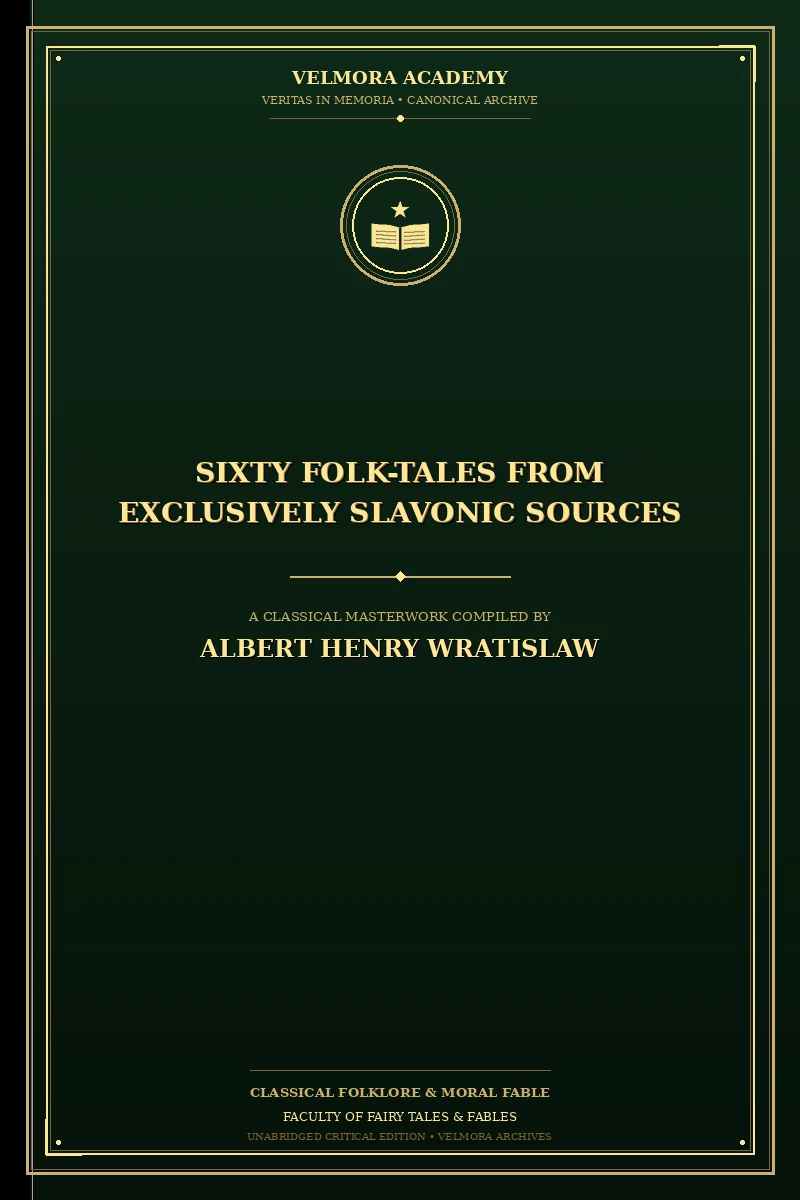
Cover illustration for Sixty Folk-Tales from Exclusively Slavonic Sources
Context Illustration Reading 1/84 · 5 lines
English subtitles · tap any word to listen 1 / 5
The Serbs possess actual epic poetry, of which an account is given by Mr. Morfill ('Slavonic Literature,' pp. 154-162).
XL.--THE LAME FOX.
There was a man who had three sons--two intelligent, and one a simpleton.
This man's right eye was always laughing, while his left eye was weeping and shedding tears.
This man's sons agreed to go to him one by one, and ask him why his right eye laughed and his left eye shed tears.
0:00 / 0:00
Speed 0.75x
AI-generated narration by OpenAI · Slow US English
LEARNER DICTIONARY
Archivist
/ˈɑːrkɪvɪst/
Editorial verification pending

A keeper or guardian of historical records and memories.

Sixty Folk-Tales from Exclusively Slavonic Sources

Chapter X

Chapter 10 of Sixty Folk-Tales from Exclusively Slavonic Sources is here in full — 423 sentences across 85 reading sections, with audio for every sentence and word.

Reading 1/84 · 5 reading units · Lines 1–5

Line 1
The Serbs possess actual epic poetry, of which an account is given by Mr. Morfill ('Slavonic Literature,' pp. 154-162).
Line 2
XL.--THE LAME FOX.
Line 3
There was a man who had three sons--two intelligent, and one a simpleton.
Line 4
This man's right eye was always laughing, while his left eye was weeping and shedding tears.
/ðɪs mænz raɪt aɪ wɑːz ˈɔːlweɪz ˈlæfɪŋ waɪl hɪz left aɪ wɑːz ˈwiːpɪŋ ənd ˈʃedɪŋ terz/
Line 5
This man's sons agreed to go to him one by one, and ask him why his right eye laughed and his left eye shed tears.
/ðɪs mænz sʌnz əˈɡriːd tuː ɡoʊ tuː hɪm wʌn baɪ wʌn ənd æsk hɪm waɪ hɪz raɪt aɪ læft ənd hɪz left aɪ ʃed terz/

Learner Dictionary

These definitions explain words found in the current reading and keep every example grounded in its original sentence.

Oxford-style entry order: headword, part of speech, US IPA, concise definition, contextual example, and audio.

actual adjective US /ˈæktʃəwəl/

presently existing in fact and not merely potential or possible

From this reading “The Serbs possess actual epic poetry, of which an account is given by Mr. Morfill ('Slavonic Literature,' pp. 154-162).”

epic adjective US /ˈepɪk/

very imposing or impressive; surpassing the ordinary (especially in size or scale)

From this reading “The Serbs possess actual epic poetry, of which an account is given by Mr. Morfill ('Slavonic Literature,' pp. 154-162).”

intelligent adjective US /ˌɪnˈtelədʒənt/

having the capacity for thought and reason especially to a high degree

From this reading “There was a man who had three sons--two intelligent, and one a simpleton.”

lame noun US /leɪm/

someone who doesn't understand what is going on

From this reading “XL.--THE LAME FOX.”

possess verb US /pəˈzes/

have as an attribute, knowledge, or skill

From this reading “The Serbs possess actual epic poetry, of which an account is given by Mr. Morfill ('Slavonic Literature,' pp. 154-162).”

Serbs noun US /sɜːrbz/

plural of “serb” — a member of a Slavic people who settled in Serbia and neighboring areas in the 6th and 7th centuries

From this reading “The Serbs possess actual epic poetry, of which an account is given by Mr. Morfill ('Slavonic Literature,' pp. 154-162).”

shedding noun US /ˈʃedɪŋ/

the process whereby something is shed

From this reading “This man's right eye was always laughing, while his left eye was weeping and shedding tears.”

weeping adjective US /ˈwiːpɪŋ/

showing sorrow

From this reading “This man's right eye was always laughing, while his left eye was weeping and shedding tears.”

Word partnerships in these lines

English keeps certain words together, and knowing the pair is worth more than knowing each word alone. Every partnership below was counted across our whole published library, and earns its place by appearing far more often than two unrelated words of the same frequency would.

Shown as this reading writes them, with the form the library counts, what kind of pairing it is, and how often it occurs.

shedding tears noun + noun

In this reading “This man's right eye was always laughing, while his left eye was weeping and shedding tears.”

shed tears verb + noun

In this reading “This man's sons agreed to go to him one by one, and ask him why his right eye laughed and his left eye shed tears.”

left eye noun + noun

In this reading “This man's right eye was always laughing, while his left eye was weeping and shedding tears.”

All words in this reading · 56

Every word in these five lines is listed here, and every one of them can be played on its own.

Dictionary details are shown only when verified; these are not licensed Oxford entries.

154

Dictionary entry pending editorial verification. Tap Listen to hear the word.

From this reading The Serbs possess actual epic poetry, of which an account is given by Mr. Morfill ('Slavonic Literature,' pp. 154-162).

162

Dictionary entry pending editorial verification. Tap Listen to hear the word.

From this reading The Serbs possess actual epic poetry, of which an account is given by Mr. Morfill ('Slavonic Literature,' pp. 154-162).

adeterminerUS /ə/

used before a singular noun to mean one of a group, when it is not a particular one

From this reading There was a man who had three sons--two intelligent, and one a simpleton.

accountnounUS /əˈkaʊnt/

a record or narrative description of past events

From this reading The Serbs possess actual epic poetry, of which an account is given by Mr. Morfill ('Slavonic Literature,' pp. 154-162).

actualadjectiveUS /ˈæktʃəwəl/

presently existing in fact and not merely potential or possible

From this reading The Serbs possess actual epic poetry, of which an account is given by Mr. Morfill ('Slavonic Literature,' pp. 154-162).

agreedadjectiveUS /əˈɡriːd/

united by being of the same opinion

From this reading This man's sons agreed to go to him one by one, and ask him why his right eye laughed and his left eye shed tears.

alwaysadverbUS /ˈɔːlweɪz/

at all times; all the time and on every occasion

From this reading This man's right eye was always laughing, while his left eye was weeping and shedding tears.

andeterminerUS /æn/

the form of “a” used before a word that begins with a vowel sound

From this reading The Serbs possess actual epic poetry, of which an account is given by Mr. Morfill ('Slavonic Literature,' pp. 154-162).

andconjunctionUS /ənd/

used to join words or parts of a sentence that go together

From this reading There was a man who had three sons--two intelligent, and one a simpleton.

askverbUS /æsk/

make a request or demand for something to somebody

From this reading This man's sons agreed to go to him one by one, and ask him why his right eye laughed and his left eye shed tears.

byprepositionUS /baɪ/

showing who or what does the action

From this reading The Serbs possess actual epic poetry, of which an account is given by Mr. Morfill ('Slavonic Literature,' pp. 154-162).

epicadjectiveUS /ˈepɪk/

very imposing or impressive; surpassing the ordinary (especially in size or scale)

From this reading The Serbs possess actual epic poetry, of which an account is given by Mr. Morfill ('Slavonic Literature,' pp. 154-162).

eyenounUS /aɪ/

the organ of sight

From this reading This man's right eye was always laughing, while his left eye was weeping and shedding tears.

FOXnounUS /fɑːks/

alert carnivorous mammal with pointed muzzle and ears and a bushy tail; most are predators that do not hunt in packs

From this reading XL.--THE LAME FOX.

givenadjectiveUS /ˈɡɪvən/

acknowledged as a supposition

From this reading The Serbs possess actual epic poetry, of which an account is given by Mr. Morfill ('Slavonic Literature,' pp. 154-162).

goverbUS /ɡoʊ/

change location; move, travel, or proceed, also metaphorically

From this reading This man's sons agreed to go to him one by one, and ask him why his right eye laughed and his left eye shed tears.

hadauxiliary verbUS /hæd/

the past form of “have”, used to form the past perfect

From this reading There was a man who had three sons--two intelligent, and one a simpleton.

himpronounUS /hɪm/

the male already mentioned, as the object of a verb or preposition

From this reading This man's sons agreed to go to him one by one, and ask him why his right eye laughed and his left eye shed tears.

hisdeterminerUS /hɪz/

belonging to a man, boy, or male animal already mentioned

From this reading This man's right eye was always laughing, while his left eye was weeping and shedding tears.

intelligentadjectiveUS /ˌɪnˈtelədʒənt/

having the capacity for thought and reason especially to a high degree

From this reading There was a man who had three sons--two intelligent, and one a simpleton.

isauxiliary verbUS /ɪz/

the form of “be” used with he, she, it, or a singular noun

From this reading The Serbs possess actual epic poetry, of which an account is given by Mr. Morfill ('Slavonic Literature,' pp. 154-162).

LAMEnounUS /leɪm/

someone who doesn't understand what is going on

From this reading XL.--THE LAME FOX.

laughedverbUS /læft/

past form of “laugh” — produce laughter

From this reading This man's sons agreed to go to him one by one, and ask him why his right eye laughed and his left eye shed tears.

laughingadjectiveUS /ˈlæfɪŋ/

showing or feeling mirth or pleasure or happiness

From this reading This man's right eye was always laughing, while his left eye was weeping and shedding tears.

leftnounUS /left/

location near or direction toward the left side; i.e. the side to the north when a person or object faces east

From this reading This man's right eye was always laughing, while his left eye was weeping and shedding tears.

LiteraturenounUS /ˈlɪtərətʃər/

creative writing of recognized artistic value

From this reading The Serbs possess actual epic poetry, of which an account is given by Mr. Morfill ('Slavonic Literature,' pp. 154-162).

mannounUS /mæn/

an adult person who is male (as opposed to a woman)

From this reading There was a man who had three sons--two intelligent, and one a simpleton.

man'snounUS /mænz/

possessive form of “man” — an adult person who is male (as opposed to a woman)

From this reading This man's right eye was always laughing, while his left eye was weeping and shedding tears.

Morfill

Dictionary entry pending editorial verification. Tap Listen to hear the word.

From this reading The Serbs possess actual epic poetry, of which an account is given by Mr. Morfill ('Slavonic Literature,' pp. 154-162).

MrnounUS /ˈmɪstər/

a form of address for a man

From this reading The Serbs possess actual epic poetry, of which an account is given by Mr. Morfill ('Slavonic Literature,' pp. 154-162).

ofprepositionUS /ʌv/

belonging to, or connected with, somebody or something

From this reading The Serbs possess actual epic poetry, of which an account is given by Mr. Morfill ('Slavonic Literature,' pp. 154-162).

onepronounUS /wʌn/

used to mean any person in general, including the speaker

From this reading There was a man who had three sons--two intelligent, and one a simpleton.

poetrynounUS /ˈpoʊətri/

literature in metrical form

From this reading The Serbs possess actual epic poetry, of which an account is given by Mr. Morfill ('Slavonic Literature,' pp. 154-162).

possessverbUS /pəˈzes/

have as an attribute, knowledge, or skill

From this reading The Serbs possess actual epic poetry, of which an account is given by Mr. Morfill ('Slavonic Literature,' pp. 154-162).

pp

Dictionary entry pending editorial verification. Tap Listen to hear the word.

From this reading The Serbs possess actual epic poetry, of which an account is given by Mr. Morfill ('Slavonic Literature,' pp. 154-162).

rightadverbUS /raɪt/

precisely, exactly

From this reading This man's right eye was always laughing, while his left eye was weeping and shedding tears.

SerbsnounUS /sɜːrbz/

plural of “serb” — a member of a Slavic people who settled in Serbia and neighboring areas in the 6th and 7th centuries

From this reading The Serbs possess actual epic poetry, of which an account is given by Mr. Morfill ('Slavonic Literature,' pp. 154-162).

shedverbUS /ʃed/

get rid of

From this reading This man's sons agreed to go to him one by one, and ask him why his right eye laughed and his left eye shed tears.

sheddingnounUS /ˈʃedɪŋ/

the process whereby something is shed

From this reading This man's right eye was always laughing, while his left eye was weeping and shedding tears.

simpletonnoun

a person lacking intelligence or common sense

From this reading There was a man who had three sons--two intelligent, and one a simpleton.

Slavonicnoun

a branch of the Indo-European family of languages

From this reading The Serbs possess actual epic poetry, of which an account is given by Mr. Morfill ('Slavonic Literature,' pp. 154-162).

sonsnounUS /sʌnz/

plural of “son” — a male human offspring

From this reading There was a man who had three sons--two intelligent, and one a simpleton.

tearsnounUS /terz/

the process of shedding tears (usually accompanied by sobs or other inarticulate sounds)

From this reading This man's right eye was always laughing, while his left eye was weeping and shedding tears.

ThedeterminerUS /ðə/

used before a noun that is already known, already mentioned, or the only one of its kind

From this reading The Serbs possess actual epic poetry, of which an account is given by Mr. Morfill ('Slavonic Literature,' pp. 154-162).

ThereadverbUS /ðer/

in or at that place or location

From this reading There was a man who had three sons--two intelligent, and one a simpleton.

ThisdeterminerUS /ðɪs/

used for a person or thing that is near, or that has just been mentioned

From this reading This man's right eye was always laughing, while his left eye was weeping and shedding tears.

threenounUS /θriː/

the cardinal number that is the sum of one and one and one

From this reading There was a man who had three sons--two intelligent, and one a simpleton.

toparticleUS /tuː/

used before the base form of a verb to make the infinitive

From this reading This man's sons agreed to go to him one by one, and ask him why his right eye laughed and his left eye shed tears.

twonounUS /tuː/

the cardinal number that is the sum of one and one or a numeral representing this number

From this reading There was a man who had three sons--two intelligent, and one a simpleton.

wasauxiliary verbUS /wɑːz/

the past form of “be” used with I, he, she, it, or a singular noun

From this reading There was a man who had three sons--two intelligent, and one a simpleton.

weepingadjectiveUS /ˈwiːpɪŋ/

showing sorrow

From this reading This man's right eye was always laughing, while his left eye was weeping and shedding tears.

whichpronounUS /wɪtʃ/

used to introduce a clause giving more about a thing just mentioned

From this reading The Serbs possess actual epic poetry, of which an account is given by Mr. Morfill ('Slavonic Literature,' pp. 154-162).

whileconjunctionUS /waɪl/

during the time that

From this reading This man's right eye was always laughing, while his left eye was weeping and shedding tears.

whopronounUS /huː/

which person or people

From this reading There was a man who had three sons--two intelligent, and one a simpleton.

whynounUS /waɪ/

the cause or intention underlying an action or situation, especially in the phrase “the whys and wherefores”

From this reading This man's sons agreed to go to him one by one, and ask him why his right eye laughed and his left eye shed tears.

XLnoun

the cardinal number that is the product of ten and four

From this reading XL.--THE LAME FOX.

Chapter 10 of Sixty Folk-Tales from Exclusively Slavonic Sources by Albert Henry [Compiler] Wratislaw holds 423 sentences, grouped into 85 reading sections of at most 5 sentences. The text is the source edition, unabridged, and the chapter records which sentences cover which part of the work so that nothing is dropped. Every word can be tapped for its pronunciation and dictionary entry.

What does chapter 10 of Sixty Folk-Tales from Exclusively Slavonic Sources contain?

Chapter 10 holds 423 sentences of Sixty Folk-Tales from Exclusively Slavonic Sources, unabridged, divided into 85 reading sections.

This page carries chapter 10 of Sixty Folk-Tales from Exclusively Slavonic Sources by Albert Henry [Compiler] Wratislaw exactly as it stands in the source edition, without abridgement. It runs to 423 sentences, grouped into 85 sections of at most 5 sentences so that a reader can take the chapter in steady, finishable pieces. The chapter also stores a coverage record mapping every one of its sentences to a part of the work, which is how the edition demonstrates that no line was dropped.

How do I study chapter 10 of Sixty Folk-Tales from Exclusively Slavonic Sources?

Work through the 85 sections in order, replaying any sentence and tapping unfamiliar words for their entries.

Each of the 85 sections in this chapter is short enough to read once, hear once, and then re-read with the vocabulary in view. Tapping a word plays it alone and opens its dictionary entry with IPA, part of speech and meaning, so the reader is never forced to guess a pronunciation from spelling. Working section by section keeps a long chapter from becoming an undifferentiated wall of text, which is the usual reason a reader abandons a work of this period.

Can chapter 10 be read aloud to me?

Yes — every sentence and every individual word in chapter 10 can be played aloud in United States English.

Audio covers the whole chapter: any sentence can be played, and any single word within it can be played on its own. The voice uses United States English. For a work of this period that matters, because spelling is an unreliable guide to pronunciation for vocabulary that has fallen out of daily use, and a learner who guesses wrong tends to keep the error. Hearing the word in its own sentence, and then alone, settles it.

Questions about reading Sixty Folk-Tales from Exclusively Slavonic Sources

Common questions about reading Sixty Folk-Tales from Exclusively Slavonic Sources by Albert Henry [Compiler] Wratislaw on this page, its source edition and its audio.

Is this the complete text of Sixty Folk-Tales from Exclusively Slavonic Sources?

Yes. All 5657 sentences of Project Gutenberg eBook #48761 are kept, with a record of which sentences cover which part.

Which edition of Sixty Folk-Tales from Exclusively Slavonic Sources is used?

Project Gutenberg eBook #48761, unabridged. The Project Gutenberg header, footer and licence are removed.

How long does Sixty Folk-Tales from Exclusively Slavonic Sources take to read?

About 471 minutes of reading across 1132 sections of 5 sentences each, at an unhurried pace.

How to read Sixty Folk-Tales from Exclusively Slavonic Sources section by section

How to work through Sixty Folk-Tales from Exclusively Slavonic Sources section by section, using the audio and the tap-to-define vocabulary.

  1. Open a chapter

    Choose one of the 14 chapters of Sixty Folk-Tales from Exclusively Slavonic Sources to begin.

  2. Read one section

    Each section holds 5 sentences; read it once through.

  3. Listen and tap

    Play the section aloud, then tap any unfamiliar word for its entry.

Vocabulary met early in Sixty Folk-Tales from Exclusively Slavonic Sources

Words and structures a reader meets early in Sixty Folk-Tales from Exclusively Slavonic Sources, each tappable for pronunciation and meaning.

Https
A word that appears in the opening chapter of Sixty Folk-Tales from Exclusively Slavonic Sources; the reader can tap it to hear it and see its dictionary entry.
Miraculous
A word that appears in the opening chapter of Sixty Folk-Tales from Exclusively Slavonic Sources; the reader can tap it to hear it and see its dictionary entry.
Wonder-working
A word that appears in the opening chapter of Sixty Folk-Tales from Exclusively Slavonic Sources; the reader can tap it to hear it and see its dictionary entry.
Friend
A word that appears in the opening chapter of Sixty Folk-Tales from Exclusively Slavonic Sources; the reader can tap it to hear it and see its dictionary entry.