the form of “a” used before a word that begins with a vowel sound
From this reading It is commonly supposed that the writer of an historical tale idealises the characters therein represented, heightens the romance of the situation, and at any rate brings the fairer tints of the scene into undue prominence.
used to join words or parts of a sentence that go together
From this reading It is commonly supposed that the writer of an historical tale idealises the characters therein represented, heightens the romance of the situation, and at any rate brings the fairer tints of the scene into undue prominence.
one or some or every or all without specification
From this reading It is commonly supposed that the writer of an historical tale idealises the characters therein represented, heightens the romance of the situation, and at any rate brings the fairer tints of the scene into undue prominence.
in or near a particular place or position
From this reading It is commonly supposed that the writer of an historical tale idealises the characters therein represented, heightens the romance of the situation, and at any rate brings the fairer tints of the scene into undue prominence.
third-person singular of “bring” — take something or somebody with oneself somewhere
From this reading It is commonly supposed that the writer of an historical tale idealises the characters therein represented, heightens the romance of the situation, and at any rate brings the fairer tints of the scene into undue prominence.
showing who or what does the action
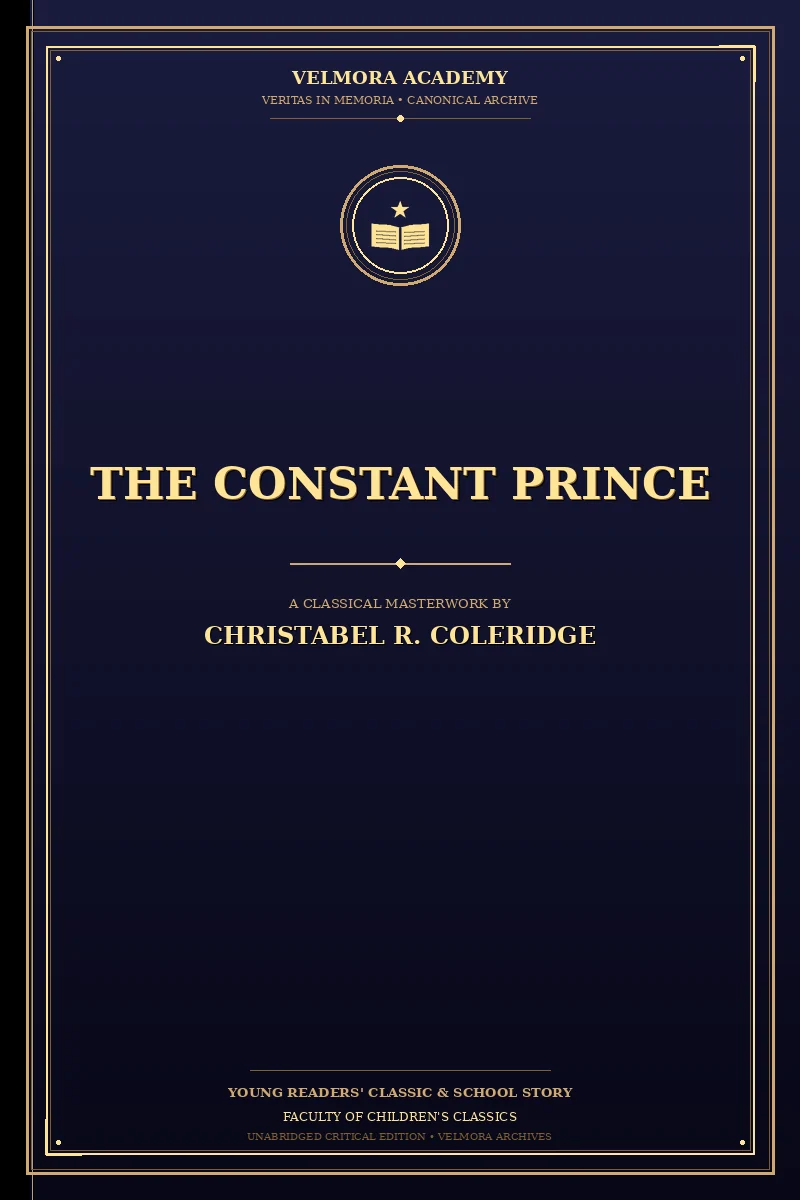
From this reading The Constant Prince, by Christobel Coleridge.
plural of “character” — an imaginary person represented in a work of fiction (play or film or story)
From this reading It is commonly supposed that the writer of an historical tale idealises the characters therein represented, heightens the romance of the situation, and at any rate brings the fairer tints of the scene into undue prominence.
Christobel
Dictionary entry pending editorial verification. Tap Listen to hear the word.
From this reading The Constant Prince, by Christobel Coleridge.
without doubt or question
From this reading I wish to make it clearly understood that I have not done so in this instance.
ColeridgenounUS /ˈkoʊlrɪdʒ/
English romantic poet (1772-1834)
From this reading The Constant Prince, by Christobel Coleridge.
commonlyadverbUS /ˈkɑːmənli/
under normal conditions
From this reading It is commonly supposed that the writer of an historical tale idealises the characters therein represented, heightens the romance of the situation, and at any rate brings the fairer tints of the scene into undue prominence.
unvarying in nature
From this reading The Constant Prince, by Christobel Coleridge.
having finished or arrived at completion
From this reading I wish to make it clearly understood that I have not done so in this instance.
faireradjectiveUS /ˈferər/
comparative of “fair” — free from favoritism or self-interest or bias or deception; conforming with established standards or rules
From this reading It is commonly supposed that the writer of an historical tale idealises the characters therein represented, heightens the romance of the situation, and at any rate brings the fairer tints of the scene into undue prominence.
haveauxiliary verbUS /hæv/
used with a past participle to form the perfect tenses
From this reading I wish to make it clearly understood that I have not done so in this instance.
heightensverbUS /ˈhaɪtənz/
third-person singular of “heighten” — become more extreme
From this reading It is commonly supposed that the writer of an historical tale idealises the characters therein represented, heightens the romance of the situation, and at any rate brings the fairer tints of the scene into undue prominence.
historicaladjectiveUS /hɪˈstɔːrɪkəl/
of or relating to the study of history
From this reading It is commonly supposed that the writer of an historical tale idealises the characters therein represented, heightens the romance of the situation, and at any rate brings the fairer tints of the scene into undue prominence.
the person speaking or writing, as the subject of the verb
From this reading I wish to make it clearly understood that I have not done so in this instance.
idealises
Dictionary entry pending editorial verification. Tap Listen to hear the word.
From this reading It is commonly supposed that the writer of an historical tale idealises the characters therein represented, heightens the romance of the situation, and at any rate brings the fairer tints of the scene into undue prominence.
inside something, or within a place, period, or state
From this reading I wish to make it clearly understood that I have not done so in this instance.
an occurrence of something
From this reading I wish to make it clearly understood that I have not done so in this instance.
intoprepositionUS /ˈɪntuː/
moving to the inside of something
From this reading It is commonly supposed that the writer of an historical tale idealises the characters therein represented, heightens the romance of the situation, and at any rate brings the fairer tints of the scene into undue prominence.
the form of “be” used with he, she, it, or a singular noun
From this reading It is commonly supposed that the writer of an historical tale idealises the characters therein represented, heightens the romance of the situation, and at any rate brings the fairer tints of the scene into undue prominence.
a thing, animal, or idea already mentioned
From this reading It is commonly supposed that the writer of an historical tale idealises the characters therein represented, heightens the romance of the situation, and at any rate brings the fairer tints of the scene into undue prominence.
engage in
From this reading I wish to make it clearly understood that I have not done so in this instance.
used to make a word, phrase, or sentence negative
From this reading I wish to make it clearly understood that I have not done so in this instance.
belonging to, or connected with, somebody or something
From this reading It is commonly supposed that the writer of an historical tale idealises the characters therein represented, heightens the romance of the situation, and at any rate brings the fairer tints of the scene into undue prominence.
PREFACEnounUS /ˈprefəs/
a short introductory essay preceding the text of a book
From this reading PREFACE.
a male member of a royal family other than the sovereign (especially the son of a sovereign)
From this reading The Constant Prince, by Christobel Coleridge.
prominencenounUS /ˈprɑːmənəns/
the state of being prominent: widely known or eminent
From this reading It is commonly supposed that the writer of an historical tale idealises the characters therein represented, heightens the romance of the situation, and at any rate brings the fairer tints of the scene into undue prominence.
a magnitude or frequency relative to a time unit
From this reading It is commonly supposed that the writer of an historical tale idealises the characters therein represented, heightens the romance of the situation, and at any rate brings the fairer tints of the scene into undue prominence.
representedadjectiveUS /ˌreprɪˈzentɪd/
represented accurately or precisely
From this reading It is commonly supposed that the writer of an historical tale idealises the characters therein represented, heightens the romance of the situation, and at any rate brings the fairer tints of the scene into undue prominence.
a relationship between two lovers
From this reading It is commonly supposed that the writer of an historical tale idealises the characters therein represented, heightens the romance of the situation, and at any rate brings the fairer tints of the scene into undue prominence.
the place where some action occurs
From this reading It is commonly supposed that the writer of an historical tale idealises the characters therein represented, heightens the romance of the situation, and at any rate brings the fairer tints of the scene into undue prominence.
the general state of things; the combination of circumstances at a given time
From this reading It is commonly supposed that the writer of an historical tale idealises the characters therein represented, heightens the romance of the situation, and at any rate brings the fairer tints of the scene into undue prominence.
for that reason; with the result that
From this reading I wish to make it clearly understood that I have not done so in this instance.
required or under orders
From this reading It is commonly supposed that the writer of an historical tale idealises the characters therein represented, heightens the romance of the situation, and at any rate brings the fairer tints of the scene into undue prominence.
a message that tells the particulars of an act or occurrence or course of events; presented in writing or drama or cinema or as a radio or television program
From this reading It is commonly supposed that the writer of an historical tale idealises the characters therein represented, heightens the romance of the situation, and at any rate brings the fairer tints of the scene into undue prominence.
used to introduce what somebody said, thought, or felt
From this reading It is commonly supposed that the writer of an historical tale idealises the characters therein represented, heightens the romance of the situation, and at any rate brings the fairer tints of the scene into undue prominence.
used before a noun that is already known, already mentioned, or the only one of its kind
From this reading The Constant Prince, by Christobel Coleridge.
thereinadverbUS /ðeˈrɪn/
(formal) in or into that thing or place
From this reading It is commonly supposed that the writer of an historical tale idealises the characters therein represented, heightens the romance of the situation, and at any rate brings the fairer tints of the scene into undue prominence.
used for a person or thing that is near, or that has just been mentioned
From this reading I wish to make it clearly understood that I have not done so in this instance.
tintsnounUS /tɪnts/
plural of “tint” — a quality of a given color that differs slightly from another color
From this reading It is commonly supposed that the writer of an historical tale idealises the characters therein represented, heightens the romance of the situation, and at any rate brings the fairer tints of the scene into undue prominence.
used before the base form of a verb to make the infinitive
From this reading I wish to make it clearly understood that I have not done so in this instance.
fully apprehended as to purport or meaning or explanation
From this reading I wish to make it clearly understood that I have not done so in this instance.
undueadjectiveUS /ənˈduː/
not yet payable
From this reading It is commonly supposed that the writer of an historical tale idealises the characters therein represented, heightens the romance of the situation, and at any rate brings the fairer tints of the scene into undue prominence.
hope for; have a wish
From this reading I wish to make it clearly understood that I have not done so in this instance.
writes (books or stories or articles or the like) professionally (for pay)
From this reading It is commonly supposed that the writer of an historical tale idealises the characters therein represented, heightens the romance of the situation, and at any rate brings the fairer tints of the scene into undue prominence.