Complete classic literature • Five-line readings • Clear US narration
VELMORA ACADEMY
Academy of Archival Languages & Memory Studies
Menu Close
The Death Shot: A Story Retold

Chapter XVIII · Chapter 18

Chapter 18 of The Death Shot: A Story Retold is here in full — 417 sentences across 84 reading sections, with audio for every sentence and word.

Cover illustration for The Death Shot: A Story Retold
Context Illustration Reading 1/83 · 5 lines
English subtitles · tap any word to listen 1 / 5
Chisholm once more turns out of the tent, soon after re-entering it, the half-blood behind him.
"Nandy," says Borlasse; calling the latter by a name mutually understood.
"I want you to take charge of that mulatto, and keep him under your eye.
You musn't let any of the boys come nigh enough to hold speech wi' him.
You go, Luke, and give them orders they're not to."
0:00 / 0:00
Speed 0.75x
AI-generated narration by OpenAI · Slow US English
LEARNER DICTIONARY
Archivist
/ˈɑːrkɪvɪst/
Editorial verification pending

A keeper or guardian of historical records and memories.

The Death Shot: A Story Retold

Chapter XVIII · Chapter 18

Chapter 18 of The Death Shot: A Story Retold is here in full — 417 sentences across 84 reading sections, with audio for every sentence and word.

Reading 1/83 · 5 reading units · Lines 1–5

Line 1
Chisholm once more turns out of the tent, soon after re-entering it, the half-blood behind him.
Line 2
"Nandy," says Borlasse; calling the latter by a name mutually understood.
Line 3
"I want you to take charge of that mulatto, and keep him under your eye.
/aɪ wɑːnt juː tuː teɪk tʃɑːrdʒ ʌv ðæt məˈlɑːtoʊ ənd kiːp hɪm ˈʌndər jɔːr aɪ/
Line 4
You musn't let any of the boys come nigh enough to hold speech wi' him.
Line 5
You go, Luke, and give them orders they're not to."

Learner Dictionary

These definitions explain words found in the current reading and keep every example grounded in its original sentence.

Oxford-style entry order: headword, part of speech, US IPA, concise definition, contextual example, and audio.

calling noun US /ˈkɔːlɪŋ/

the particular occupation for which you are trained

From this reading “"Nandy," says Borlasse; calling the latter by a name mutually understood.”

Luke noun US /luːk/

(New Testament) the Apostle closely associated with St. Paul and traditionally assumed to be the author of the third Gospel

From this reading “You go, Luke, and give them orders they're not to."”

mulatto noun US /məˈlɑːtoʊ/

an offspring of a black and a white parent

From this reading “"I want you to take charge of that mulatto, and keep him under your eye.”

mutually adverb US /ˈmjuːtʃuːəli/

in a mutual or shared manner

From this reading “"Nandy," says Borlasse; calling the latter by a name mutually understood.”

nigh adjective US /naɪ/

not far distant in time or space or degree or circumstances

From this reading “You musn't let any of the boys come nigh enough to hold speech wi' him.”

orders noun US /ˈɔːrdərz/

plural of “order” — (often plural) a command given by a superior (e.g., a military or law enforcement officer) that must be obeyed

From this reading “You go, Luke, and give them orders they're not to."”

tent noun US /tent/

a portable shelter (usually of canvas stretched over supporting poles and fastened to the ground with ropes and pegs)

From this reading “Chisholm once more turns out of the tent, soon after re-entering it, the half-blood behind him.”

turns noun US /tɜːrnz/

plural of “turn” — a circular segment of a curve

From this reading “Chisholm once more turns out of the tent, soon after re-entering it, the half-blood behind him.”

All words in this reading · 55

Every word in these five lines is listed here, and every one of them can be played on its own.

Dictionary details are shown only when verified; these are not licensed Oxford entries.

adeterminerUS /ə/

used before a singular noun to mean one of a group, when it is not a particular one

From this reading "Nandy," says Borlasse; calling the latter by a name mutually understood.

afterprepositionUS /ˈæftər/

later than; following

From this reading Chisholm once more turns out of the tent, soon after re-entering it, the half-blood behind him.

andconjunctionUS /ənd/

used to join words or parts of a sentence that go together

From this reading "I want you to take charge of that mulatto, and keep him under your eye.

anyadjectiveUS /ˈeni/

one or some or every or all without specification

From this reading You musn't let any of the boys come nigh enough to hold speech wi' him.

behindprepositionUS /bɪˈhaɪnd/

at or toward the back of something

From this reading Chisholm once more turns out of the tent, soon after re-entering it, the half-blood behind him.

Borlasse

Dictionary entry pending editorial verification. Tap Listen to hear the word.

From this reading "Nandy," says Borlasse; calling the latter by a name mutually understood.

boysnounUS /bɔɪz/

plural of “boy” — a youthful male person

From this reading You musn't let any of the boys come nigh enough to hold speech wi' him.

byprepositionUS /baɪ/

showing who or what does the action

From this reading "Nandy," says Borlasse; calling the latter by a name mutually understood.

callingnounUS /ˈkɔːlɪŋ/

the particular occupation for which you are trained

From this reading "Nandy," says Borlasse; calling the latter by a name mutually understood.

chargeverbUS /tʃɑːrdʒ/

to make a rush at or sudden attack upon, as in battle

From this reading "I want you to take charge of that mulatto, and keep him under your eye.

Chisholm

Dictionary entry pending editorial verification. Tap Listen to hear the word.

From this reading Chisholm once more turns out of the tent, soon after re-entering it, the half-blood behind him.

comeverbUS /kʌm/

move toward, travel toward something or somebody or approach something or somebody

From this reading You musn't let any of the boys come nigh enough to hold speech wi' him.

enoughnounUS /ɪˈnʌf/

an adequate quantity; a quantity that is large enough to achieve a purpose

From this reading You musn't let any of the boys come nigh enough to hold speech wi' him.

eyenounUS /aɪ/

the organ of sight

From this reading "I want you to take charge of that mulatto, and keep him under your eye.

giveverbUS /ɡɪv/

cause to have, in the abstract sense or physical sense

From this reading You go, Luke, and give them orders they're not to."

goverbUS /ɡoʊ/

change location; move, travel, or proceed, also metaphorically

From this reading You go, Luke, and give them orders they're not to."

half-blood

Dictionary entry pending editorial verification. Tap Listen to hear the word.

From this reading Chisholm once more turns out of the tent, soon after re-entering it, the half-blood behind him.

himpronounUS /hɪm/

the male already mentioned, as the object of a verb or preposition

From this reading Chisholm once more turns out of the tent, soon after re-entering it, the half-blood behind him.

holdverbUS /hoʊld/

cause to continue in a certain state, position, or activity; e.g., “keep clean”

From this reading You musn't let any of the boys come nigh enough to hold speech wi' him.

IpronounUS /aɪ/

the person speaking or writing, as the subject of the verb

From this reading "I want you to take charge of that mulatto, and keep him under your eye.

itpronounUS /ɪt/

a thing, animal, or idea already mentioned

From this reading Chisholm once more turns out of the tent, soon after re-entering it, the half-blood behind him.

keepverbUS /kiːp/

cause to continue in a certain state, position, or activity; e.g., “keep clean”

From this reading "I want you to take charge of that mulatto, and keep him under your eye.

latteradjectiveUS /ˈlætər/

referring to the second of two things or persons mentioned (or the last one or ones of several)

From this reading "Nandy," says Borlasse; calling the latter by a name mutually understood.

letauxiliary verbUS /let/

used to make a suggestion or a command including the speaker

From this reading You musn't let any of the boys come nigh enough to hold speech wi' him.

LukenounUS /luːk/

(New Testament) the Apostle closely associated with St. Paul and traditionally assumed to be the author of the third Gospel

From this reading You go, Luke, and give them orders they're not to."

moreadjectiveUS /mɔːr/

(comparative of “much” used with mass nouns) a quantifier meaning greater in size or amount or extent or degree

From this reading Chisholm once more turns out of the tent, soon after re-entering it, the half-blood behind him.

mulattonounUS /məˈlɑːtoʊ/

an offspring of a black and a white parent

From this reading "I want you to take charge of that mulatto, and keep him under your eye.

musn't

Dictionary entry pending editorial verification. Tap Listen to hear the word.

From this reading You musn't let any of the boys come nigh enough to hold speech wi' him.

mutuallyadverbUS /ˈmjuːtʃuːəli/

in a mutual or shared manner

From this reading "Nandy," says Borlasse; calling the latter by a name mutually understood.

nameverbUS /neɪm/

assign a specified (usually proper) proper name to

From this reading "Nandy," says Borlasse; calling the latter by a name mutually understood.

Nandy

Dictionary entry pending editorial verification. Tap Listen to hear the word.

From this reading "Nandy," says Borlasse; calling the latter by a name mutually understood.

nighadjectiveUS /naɪ/

not far distant in time or space or degree or circumstances

From this reading You musn't let any of the boys come nigh enough to hold speech wi' him.

notadverbUS /nɑːt/

used to make a word, phrase, or sentence negative

From this reading You go, Luke, and give them orders they're not to."

ofprepositionUS /ʌv/

belonging to, or connected with, somebody or something

From this reading Chisholm once more turns out of the tent, soon after re-entering it, the half-blood behind him.

onceadverbUS /wʌns/

on one occasion

From this reading Chisholm once more turns out of the tent, soon after re-entering it, the half-blood behind him.

ordersnounUS /ˈɔːrdərz/

plural of “order” — (often plural) a command given by a superior (e.g., a military or law enforcement officer) that must be obeyed

From this reading You go, Luke, and give them orders they're not to."

outadjectiveUS /aʊt/

not allowed to continue to bat or run

From this reading Chisholm once more turns out of the tent, soon after re-entering it, the half-blood behind him.

re-entering

Dictionary entry pending editorial verification. Tap Listen to hear the word.

From this reading Chisholm once more turns out of the tent, soon after re-entering it, the half-blood behind him.

saysnounUS /sez/

plural of “say” — the chance to speak

From this reading "Nandy," says Borlasse; calling the latter by a name mutually understood.

soonadverbUS /suːn/

in the near future

From this reading Chisholm once more turns out of the tent, soon after re-entering it, the half-blood behind him.

speechnounUS /spiːtʃ/

the act of delivering a formal spoken communication to an audience

From this reading You musn't let any of the boys come nigh enough to hold speech wi' him.

takeverbUS /teɪk/

carry out

From this reading "I want you to take charge of that mulatto, and keep him under your eye.

tentnounUS /tent/

a portable shelter (usually of canvas stretched over supporting poles and fastened to the ground with ropes and pegs)

From this reading Chisholm once more turns out of the tent, soon after re-entering it, the half-blood behind him.

thatconjunctionUS /ðæt/

used to introduce what somebody said, thought, or felt

From this reading "I want you to take charge of that mulatto, and keep him under your eye.

thedeterminerUS /ðə/

used before a noun that is already known, already mentioned, or the only one of its kind

From this reading Chisholm once more turns out of the tent, soon after re-entering it, the half-blood behind him.

thempronounUS /ðem/

the people or things already mentioned, as the object

From this reading You go, Luke, and give them orders they're not to."

they're

Dictionary entry pending editorial verification. Tap Listen to hear the word.

From this reading You go, Luke, and give them orders they're not to."

toparticleUS /tuː/

used before the base form of a verb to make the infinitive

From this reading "I want you to take charge of that mulatto, and keep him under your eye.

turnsnounUS /tɜːrnz/

plural of “turn” — a circular segment of a curve

From this reading Chisholm once more turns out of the tent, soon after re-entering it, the half-blood behind him.

underprepositionUS /ˈʌndər/

below or beneath something; less than

From this reading "I want you to take charge of that mulatto, and keep him under your eye.

understoodadjectiveUS /ˌʌndərˈstʊd/

fully apprehended as to purport or meaning or explanation

From this reading "Nandy," says Borlasse; calling the latter by a name mutually understood.

wantverbUS /wɑːnt/

feel or have a desire for; want strongly

From this reading "I want you to take charge of that mulatto, and keep him under your eye.

winoun

a midwestern state in north central United States

From this reading You musn't let any of the boys come nigh enough to hold speech wi' him.

youpronounUS /juː/

the person or people being spoken to

From this reading "I want you to take charge of that mulatto, and keep him under your eye.

yourdeterminerUS /jɔːr/

belonging to the person or people being spoken to

From this reading "I want you to take charge of that mulatto, and keep him under your eye.
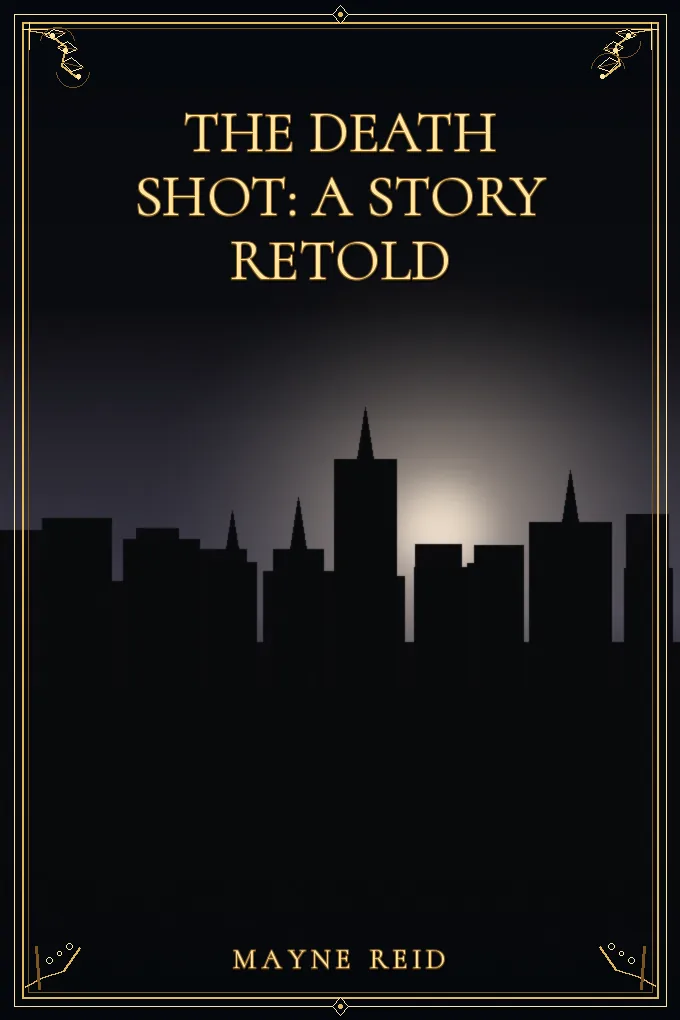
Chapter 18 of The Death Shot: A Story Retold by Mayne Reid holds 417 sentences, grouped into 84 reading sections of at most 5 sentences. The text is the source edition, unabridged, and the chapter records which sentences cover which part of the work so that nothing is dropped. Every word can be tapped for its pronunciation and dictionary entry.

What does chapter 18 of The Death Shot: A Story Retold contain?

Chapter 18 holds 417 sentences of The Death Shot: A Story Retold, unabridged, divided into 84 reading sections.

This page carries chapter 18 of The Death Shot: A Story Retold by Mayne Reid exactly as it stands in the source edition, without abridgement. It runs to 417 sentences, grouped into 84 sections of at most 5 sentences so that a reader can take the chapter in steady, finishable pieces. The chapter also stores a coverage record mapping every one of its sentences to a part of the work, which is how the edition demonstrates that no line was dropped.

How do I study chapter 18 of The Death Shot: A Story Retold?

Work through the 84 sections in order, replaying any sentence and tapping unfamiliar words for their entries.

Each of the 84 sections in this chapter is short enough to read once, hear once, and then re-read with the vocabulary in view. Tapping a word plays it alone and opens its dictionary entry with IPA, part of speech and meaning, so the reader is never forced to guess a pronunciation from spelling. Working section by section keeps a long chapter from becoming an undifferentiated wall of text, which is the usual reason a reader abandons a work of this period.

Can chapter 18 be read aloud to me?

Yes — every sentence and every individual word in chapter 18 can be played aloud in United States English.

Audio covers the whole chapter: any sentence can be played, and any single word within it can be played on its own. The voice uses United States English. For a work of this period that matters, because spelling is an unreliable guide to pronunciation for vocabulary that has fallen out of daily use, and a learner who guesses wrong tends to keep the error. Hearing the word in its own sentence, and then alone, settles it.

Questions about reading The Death Shot: A Story Retold

Common questions about reading The Death Shot: A Story Retold by Mayne Reid on this page, its source edition and its audio.

Is this the complete text of The Death Shot: A Story Retold?

Yes. All 8226 sentences of Project Gutenberg eBook #23140 are kept, with a record of which sentences cover which part.

Which edition of The Death Shot: A Story Retold is used?

Project Gutenberg eBook #23140, unabridged. The Project Gutenberg header, footer and licence are removed.

How long does The Death Shot: A Story Retold take to read?

About 600 minutes of reading across 1646 sections of 5 sentences each, at an unhurried pace.

How to read The Death Shot: A Story Retold section by section

How to work through The Death Shot: A Story Retold section by section, using the audio and the tap-to-define vocabulary.

  1. Open a chapter

    Choose one of the 20 chapters of The Death Shot: A Story Retold to begin.

  2. Read one section

    Each section holds 5 sentences; read it once through.

  3. Listen and tap

    Play the section aloud, then tap any unfamiliar word for its entry.

Vocabulary met early in The Death Shot: A Story Retold

Words and structures a reader meets early in The Death Shot: A Story Retold, each tappable for pronunciation and meaning.

Death
A word that appears in the opening chapter of The Death Shot: A Story Retold; the reader can tap it to hear it and see its dictionary entry.
Story
A word that appears in the opening chapter of The Death Shot: A Story Retold; the reader can tap it to hear it and see its dictionary entry.
Retold
A word that appears in the opening chapter of The Death Shot: A Story Retold; the reader can tap it to hear it and see its dictionary entry.
Captain
A word that appears in the opening chapter of The Death Shot: A Story Retold; the reader can tap it to hear it and see its dictionary entry.