Learn English through classic literature • Five-line readings • Clear US narration
VELMORA ACADEMY
Academy of Archival Languages & Memory Studies
Menu Close
The Historical Nights' Entertainment

Chapter IX · Chapter 9

Chapter 9 of The Historical Nights' Entertainment is here in full — 187 sentences across 38 reading sections, with audio for every sentence and word.

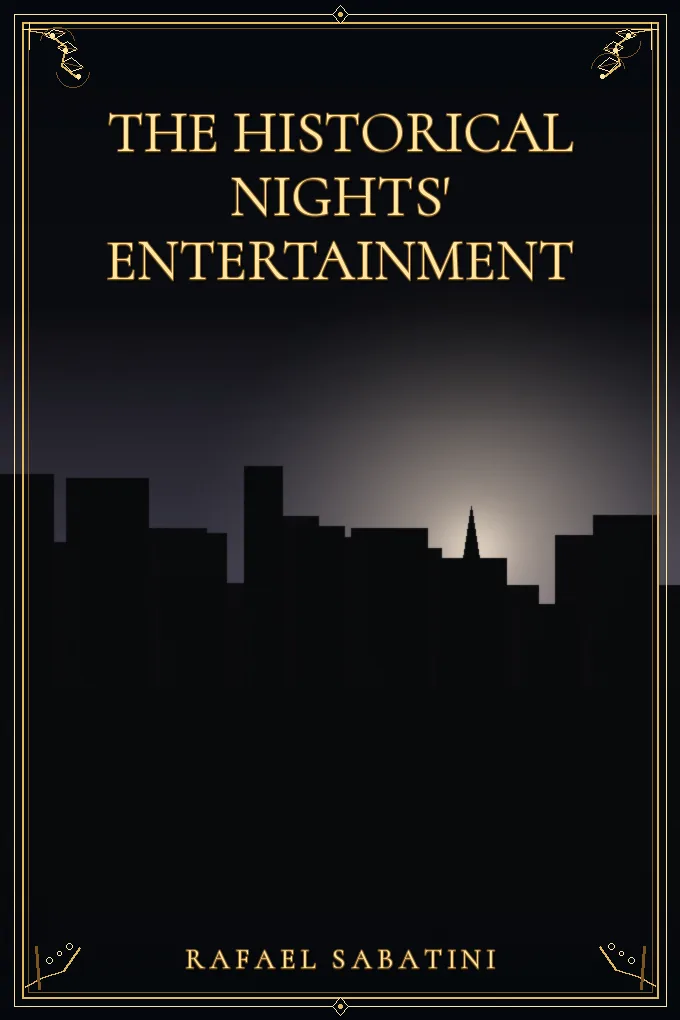
Cover illustration for The Historical Nights' Entertainment
Context Illustration Reading 1/37 · 5 lines
English subtitles · tap any word to listen 1 / 5
So,” he said, very sinister, you'll not be warned.”
Nor will you,” I answered, no whit less sinister myself.
It was broad daylight.
A pale March sunshine was beating down upon the cobbled streets, and passers-by were plentiful.
There was no fingering of hilts or talk of skewering on either side.
0:00 / 0:00
Speed 0.75x
AI-generated narration by OpenAI · Slow US English
LEARNER DICTIONARY
Archivist
/ˈɑːrkɪvɪst/
Editorial verification pending

A keeper or guardian of historical records and memories.

The Historical Nights' Entertainment

Chapter IX · Chapter 9

Chapter 9 of The Historical Nights' Entertainment is here in full — 187 sentences across 38 reading sections, with audio for every sentence and word.

Reading 1/37 · 5 reading units · Lines 1–5

Line 1
So,” he said, very sinister, “you'll not be warned.”
Line 2
Nor will you,” I answered, no whit less sinister myself.
/nɔːr wɪl juː aɪ ˈænsərd noʊ wɪt les ˈsɪnɪstər ˌmaɪˈself/
Line 3
It was broad daylight.
/ɪt wɑːz brɔːd ˈdeɪlaɪt/
Line 4
A pale March sunshine was beating down upon the cobbled streets, and passers-by were plentiful.
/ə peɪl mɑːrtʃ ˈsʌnʃaɪn wɑːz ˈbiːtɪŋ daʊn əˈpɑːn ðə ˈkɑːbəld striːts ənd ˈpæsərzbaɪ wɜːr ˈplentəfəl/
Line 5
There was no fingering of hilts or talk of skewering on either side.

Learner Dictionary

These definitions explain words found in the current reading and keep every example grounded in its original sentence.

Oxford-style entry order: headword, part of speech, US IPA, concise definition, contextual example, and audio.

cobbled verb US /ˈkɑːbəld/

past form of “cobble” — pave with cobblestones

From this reading “A pale March sunshine was beating down upon the cobbled streets, and passers-by were plentiful.”

fingering noun US /ˈfɪŋɡərɪŋ/

the placement of the fingers for playing different notes (or sequences of notes) on a musical instrument

From this reading “There was no fingering of hilts or talk of skewering on either side.”

hilts noun US /hɪlts/

plural of “hilt” — the handle of a sword or dagger

From this reading “There was no fingering of hilts or talk of skewering on either side.”

passers-by noun US /ˈpæsərzbaɪ/

plural of “passer-by” — a person who passes by casually or by chance

From this reading “A pale March sunshine was beating down upon the cobbled streets, and passers-by were plentiful.”

plentiful adjective US /ˈplentəfəl/

existing in great number or quantity

From this reading “A pale March sunshine was beating down upon the cobbled streets, and passers-by were plentiful.”

sinister adjective US /ˈsɪnɪstər/

threatening or foreshadowing evil or tragic developments

From this reading ““So,” he said, very sinister, “you'll not be warned.””

warned verb US /wɔːrnd/

past form of “warn” — notify of danger, potential harm, or risk

From this reading ““So,” he said, very sinister, “you'll not be warned.””

whit noun US /wɪt/

a tiny or scarcely detectable amount

From this reading ““Nor will you,” I answered, no whit less sinister myself.”

All words in this reading · 46

Every word in these five lines is listed here, and every one of them can be played on its own.

Dictionary details are shown only when verified; these are not licensed Oxford entries.

AdeterminerUS /ə/

used before a singular noun to mean one of a group, when it is not a particular one

From this reading A pale March sunshine was beating down upon the cobbled streets, and passers-by were plentiful.

andconjunctionUS /ənd/

used to join words or parts of a sentence that go together

From this reading A pale March sunshine was beating down upon the cobbled streets, and passers-by were plentiful.

answeredverbUS /ˈænsərd/

past form of “answer” — react verbally

From this reading “Nor will you,” I answered, no whit less sinister myself.

beauxiliary verbUS /biː/

used with a past participle to form the passive, or with -ing for continuous tenses

From this reading “So,” he said, very sinister, “you'll not be warned.”

beatingnounUS /ˈbiːtɪŋ/

the act of overcoming or outdoing

From this reading A pale March sunshine was beating down upon the cobbled streets, and passers-by were plentiful.

broadadjectiveUS /brɔːd/

having great (or a certain) extent from one side to the other

From this reading It was broad daylight.

cobbledverbUS /ˈkɑːbəld/

past form of “cobble” — pave with cobblestones

From this reading A pale March sunshine was beating down upon the cobbled streets, and passers-by were plentiful.

daylightnounUS /ˈdeɪlaɪt/

the time after sunrise and before sunset while it is light outside

From this reading It was broad daylight.

downadjectiveUS /daʊn/

being or moving lower in position or less in some value

From this reading A pale March sunshine was beating down upon the cobbled streets, and passers-by were plentiful.

eitherdeterminerUS /ˈiːðər/

one or the other of two

From this reading There was no fingering of hilts or talk of skewering on either side.

fingeringnounUS /ˈfɪŋɡərɪŋ/

the placement of the fingers for playing different notes (or sequences of notes) on a musical instrument

From this reading There was no fingering of hilts or talk of skewering on either side.

hepronounUS /hiː/

a man, boy, or male animal already mentioned, as the subject

From this reading “So,” he said, very sinister, “you'll not be warned.”

hiltsnounUS /hɪlts/

plural of “hilt” — the handle of a sword or dagger

From this reading There was no fingering of hilts or talk of skewering on either side.

IpronounUS /aɪ/

the person speaking or writing, as the subject of the verb

From this reading “Nor will you,” I answered, no whit less sinister myself.

ItpronounUS /ɪt/

a thing, animal, or idea already mentioned

From this reading It was broad daylight.

lessadverbUS /les/

used to form the comparative of some adjectives and adverbs

From this reading “Nor will you,” I answered, no whit less sinister myself.

MarchverbUS /mɑːrtʃ/

march in a procession

From this reading A pale March sunshine was beating down upon the cobbled streets, and passers-by were plentiful.

myselfpronounUS /ˌmaɪˈself/

used when the speaker is also the object of the action

From this reading “Nor will you,” I answered, no whit less sinister myself.

nodeterminerUS /noʊ/

not any; not one

From this reading “Nor will you,” I answered, no whit less sinister myself.

NorconjunctionUS /nɔːr/

and not; used after a negative to add a second negative

From this reading “Nor will you,” I answered, no whit less sinister myself.

notadverbUS /nɑːt/

used to make a word, phrase, or sentence negative

From this reading “So,” he said, very sinister, “you'll not be warned.”

ofprepositionUS /ʌv/

belonging to, or connected with, somebody or something

From this reading There was no fingering of hilts or talk of skewering on either side.

onprepositionUS /ɑːn/

touching and supported by a surface

From this reading There was no fingering of hilts or talk of skewering on either side.

orconjunctionUS /ɔːr/

used to join alternatives or possibilities

From this reading There was no fingering of hilts or talk of skewering on either side.

paleadjectiveUS /peɪl/

very light colored; highly diluted with white

From this reading A pale March sunshine was beating down upon the cobbled streets, and passers-by were plentiful.

passers-bynounUS /ˈpæsərzbaɪ/

plural of “passer-by” — a person who passes by casually or by chance

From this reading A pale March sunshine was beating down upon the cobbled streets, and passers-by were plentiful.

plentifuladjectiveUS /ˈplentəfəl/

existing in great number or quantity

From this reading A pale March sunshine was beating down upon the cobbled streets, and passers-by were plentiful.

saidadjectiveUS /sed/

being the one previously mentioned or spoken of

From this reading “So,” he said, very sinister, “you'll not be warned.”

sidenounUS /saɪd/

a place within a region identified relative to a center or reference location

From this reading There was no fingering of hilts or talk of skewering on either side.

sinisteradjectiveUS /ˈsɪnɪstər/

threatening or foreshadowing evil or tragic developments

From this reading “So,” he said, very sinister, “you'll not be warned.”

skewering

Dictionary entry pending editorial verification. Tap Listen to hear the word.

From this reading There was no fingering of hilts or talk of skewering on either side.

SoconjunctionUS /soʊ/

for that reason; with the result that

From this reading “So,” he said, very sinister, “you'll not be warned.”

streetsnounUS /striːts/

plural of “street” — a thoroughfare (usually including sidewalks) that is lined with buildings

From this reading A pale March sunshine was beating down upon the cobbled streets, and passers-by were plentiful.

sunshinenounUS /ˈsʌnʃaɪn/

the rays of the sun

From this reading A pale March sunshine was beating down upon the cobbled streets, and passers-by were plentiful.

talkverbUS /tɔːk/

exchange thoughts; talk with

From this reading There was no fingering of hilts or talk of skewering on either side.

thedeterminerUS /ðə/

used before a noun that is already known, already mentioned, or the only one of its kind

From this reading A pale March sunshine was beating down upon the cobbled streets, and passers-by were plentiful.

ThereadverbUS /ðer/

in or at that place or location

From this reading There was no fingering of hilts or talk of skewering on either side.

uponprepositionUS /əˈpɑːn/

a formal word for “on”

From this reading A pale March sunshine was beating down upon the cobbled streets, and passers-by were plentiful.

veryadjectiveUS /ˈveri/

precisely as stated

From this reading “So,” he said, very sinister, “you'll not be warned.”

warnedverbUS /wɔːrnd/

past form of “warn” — notify of danger, potential harm, or risk

From this reading “So,” he said, very sinister, “you'll not be warned.”

wasauxiliary verbUS /wɑːz/

the past form of “be” used with I, he, she, it, or a singular noun

From this reading It was broad daylight.

wereauxiliary verbUS /wɜːr/

the past form of “be” used with you, we, they, or a plural noun

From this reading A pale March sunshine was beating down upon the cobbled streets, and passers-by were plentiful.

whitnounUS /wɪt/

a tiny or scarcely detectable amount

From this reading “Nor will you,” I answered, no whit less sinister myself.

willmodal verbUS /wɪl/

used to talk about the future, or about willingness

From this reading “Nor will you,” I answered, no whit less sinister myself.

youpronounUS /juː/

the person or people being spoken to

From this reading “Nor will you,” I answered, no whit less sinister myself.

you'll

Dictionary entry pending editorial verification. Tap Listen to hear the word.

From this reading “So,” he said, very sinister, “you'll not be warned.”

Chapter 9 of The Historical Nights' Entertainment by Rafael Sabatini holds 187 sentences, grouped into 38 reading sections of at most 5 sentences. The text is the public-domain source, unabridged, and the chapter records which sentences cover which part of the work so that nothing is dropped. Every word can be tapped for its pronunciation and dictionary entry.

What does chapter 9 of The Historical Nights' Entertainment contain?

Chapter 9 holds 187 sentences of The Historical Nights' Entertainment, unabridged, divided into 38 reading sections.

This page carries chapter 9 of The Historical Nights' Entertainment by Rafael Sabatini exactly as it stands in the public-domain source edition, without abridgement. It runs to 187 sentences, grouped into 38 sections of at most 5 sentences so that a reader can take the chapter in steady, finishable pieces. The chapter also stores a coverage record mapping every one of its sentences to a part of the work, which is how the edition demonstrates that no line was dropped.

How do I study chapter 9 of The Historical Nights' Entertainment?

Work through the 38 sections in order, replaying any sentence and tapping unfamiliar words for their entries.

Each of the 38 sections in this chapter is short enough to read once, hear once, and then re-read with the vocabulary in view. Tapping a word plays it alone and opens its dictionary entry with IPA, part of speech and meaning, so the reader is never forced to guess a pronunciation from spelling. Working section by section keeps a long chapter from becoming an undifferentiated wall of text, which is the usual reason a reader abandons a work of this period.

Can chapter 9 be read aloud to me?

Yes — every sentence and every individual word in chapter 9 can be played aloud in United States English.

Audio covers the whole chapter: any sentence can be played, and any single word within it can be played on its own. The voice uses United States English. For a work of this period that matters, because spelling is an unreliable guide to pronunciation for vocabulary that has fallen out of daily use, and a learner who guesses wrong tends to keep the error. Hearing the word in its own sentence, and then alone, settles it.

Questions about reading The Historical Nights' Entertainment

Common questions about reading The Historical Nights' Entertainment by Rafael Sabatini on this page, its source edition and its audio.

Is this the complete text of The Historical Nights' Entertainment?

Yes. All 5642 sentences of Project Gutenberg eBook #2636 are kept, with a record of which sentences cover which part.

Which edition of The Historical Nights' Entertainment is used?

Project Gutenberg eBook #2636, a public-domain edition. The Project Gutenberg header, footer and licence are removed.

How long does The Historical Nights' Entertainment take to read?

About 470 minutes of reading across 1129 sections of 5 sentences each, at an unhurried pace.

How to read The Historical Nights' Entertainment section by section

How to work through The Historical Nights' Entertainment section by section, using the audio and the tap-to-define vocabulary.

  1. Open a chapter

    Choose one of the 31 chapters of The Historical Nights' Entertainment to begin.

  2. Read one section

    Each section holds 5 sentences; read it once through.

  3. Listen and tap

    Play the section aloud, then tap any unfamiliar word for its entry.

Vocabulary met early in The Historical Nights' Entertainment

Words and structures a reader meets early in The Historical Nights' Entertainment, each tappable for pronunciation and meaning.

Approaching
A word that appears in the opening chapter of The Historical Nights' Entertainment; the reader can tap it to hear it and see its dictionary entry.
Historical
A word that appears in the opening chapter of The Historical Nights' Entertainment; the reader can tap it to hear it and see its dictionary entry.
Nights'
A word that appears in the opening chapter of The Historical Nights' Entertainment; the reader can tap it to hear it and see its dictionary entry.
Entertainment
A word that appears in the opening chapter of The Historical Nights' Entertainment; the reader can tap it to hear it and see its dictionary entry.