Complete classic literature • Five-line readings • Clear US narration
VELMORA ACADEMY
Academy of Archival Languages & Memory Studies
Menu Close
The Khaki Boys at the Front

Chapter I

Chapter 1 of The Khaki Boys at the Front is here in full — 129 sentences across 26 reading sections, with audio for every sentence and word.

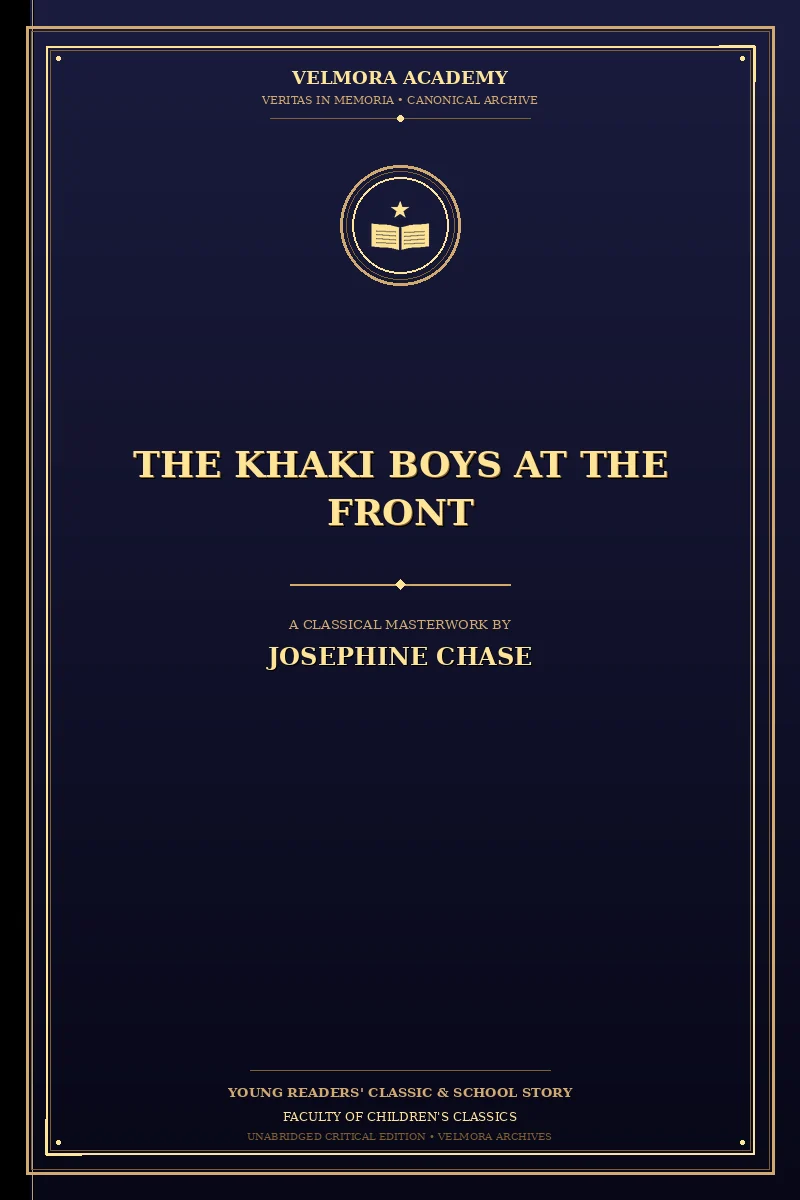
Cover illustration for The Khaki Boys at the Front
Context Illustration Reading 1/25 · 5 lines
English subtitles · tap any word to listen 1 / 5
"I suppose we might as well be hiking along," announced Roger Barlow regretfully, as he consulted his watch.
"We've lots of time yet, but we'd better be early than late back to camp.
We are strangers in a strange land and we've quite a long way to go."
"I'm satisfied to go.
I came up here to see Paris and I've seen it.
0:00 / 0:00
Speed 0.75x
AI-generated narration by OpenAI · Slow US English
LEARNER DICTIONARY
Archivist
/ˈɑːrkɪvɪst/
Editorial verification pending

A keeper or guardian of historical records and memories.

The Khaki Boys at the Front

Chapter I

Chapter 1 of The Khaki Boys at the Front is here in full — 129 sentences across 26 reading sections, with audio for every sentence and word.

Reading 1/25 · 5 reading units · Lines 1–5

Line 1
"I suppose we might as well be hiking along," announced Roger Barlow regretfully, as he consulted his watch.
Line 2
"We've lots of time yet, but we'd better be early than late back to camp.
Line 3
We are strangers in a strange land and we've quite a long way to go."
Line 4
"I'm satisfied to go.
Line 5
I came up here to see Paris and I've seen it.

Learner Dictionary

These definitions explain words found in the current reading and keep every example grounded in its original sentence.

Oxford-style entry order: headword, part of speech, US IPA, concise definition, contextual example, and audio.

announced adjective US /əˈnaʊnst/

declared publicly; made widely known

From this reading “"I suppose we might as well be hiking along," announced Roger Barlow regretfully, as he consulted his watch.”

consulted verb US /kənˈsʌltəd/

past form of “consult” — get or ask advice from

From this reading “"I suppose we might as well be hiking along," announced Roger Barlow regretfully, as he consulted his watch.”

hiking noun US /ˈhaɪkɪŋ/

a long walk usually for exercise or pleasure

From this reading “"I suppose we might as well be hiking along," announced Roger Barlow regretfully, as he consulted his watch.”

lots noun US /lɑːts/

a large number or amount

From this reading “"We've lots of time yet, but we'd better be early than late back to camp.”

Paris noun US /ˈperɪs/

the capital and largest city of France; and international center of culture and commerce

From this reading “I came up here to see Paris and I've seen it.”

regretfully adverb US /rɪˈɡretfəli/

with regret (used in polite formulas)

From this reading “"I suppose we might as well be hiking along," announced Roger Barlow regretfully, as he consulted his watch.”

satisfied adjective US /ˈsætəsfaɪd/

filled with satisfaction

From this reading “"I'm satisfied to go.”

strangers noun US /ˈstreɪndʒərz/

plural of “stranger” — anyone who does not belong in the environment in which they are found

From this reading “We are strangers in a strange land and we've quite a long way to go."”

Word partnerships in these lines

English keeps certain words together, and knowing the pair is worth more than knowing each word alone. Every partnership below was counted across our whole published library, and earns its place by appearing far more often than two unrelated words of the same frequency would.

Shown as this reading writes them, with the form the library counts, what kind of pairing it is, and how often it occurs.

strange land adjective + noun

In this reading “We are strangers in a strange land and we've quite a long way to go."”

came up verb + adjective counted as “come up”

bring forth, usually something desirable

In this reading “I came up here to see Paris and I've seen it.”

long way adjective + noun

In this reading “We are strangers in a strange land and we've quite a long way to go."”

All words in this reading · 52

Every word in these five lines is listed here, and every one of them can be played on its own.

Dictionary details are shown only when verified; these are not licensed Oxford entries.

adeterminerUS /ə/

used before a singular noun to mean one of a group, when it is not a particular one

From this reading We are strangers in a strange land and we've quite a long way to go."

alongprepositionUS /əˈlɔːŋ/

following the length of something from one end toward the other

From this reading "I suppose we might as well be hiking along," announced Roger Barlow regretfully, as he consulted his watch.

andconjunctionUS /ənd/

used to join words or parts of a sentence that go together

From this reading We are strangers in a strange land and we've quite a long way to go."

announcedadjectiveUS /əˈnaʊnst/

declared publicly; made widely known

From this reading "I suppose we might as well be hiking along," announced Roger Barlow regretfully, as he consulted his watch.

areauxiliary verbUS /ɑːr/

the form of “be” used with you, we, they, or a plural noun

From this reading We are strangers in a strange land and we've quite a long way to go."

asconjunctionUS /æz/

at the same time that; because; in the way that

From this reading "I suppose we might as well be hiking along," announced Roger Barlow regretfully, as he consulted his watch.

backadverbUS /bæk/

in or to or toward a former location

From this reading "We've lots of time yet, but we'd better be early than late back to camp.

Barlow

Dictionary entry pending editorial verification. Tap Listen to hear the word.

From this reading "I suppose we might as well be hiking along," announced Roger Barlow regretfully, as he consulted his watch.

beauxiliary verbUS /biː/

used with a past participle to form the passive, or with -ing for continuous tenses

From this reading "I suppose we might as well be hiking along," announced Roger Barlow regretfully, as he consulted his watch.

betteradjectiveUS /ˈbetər/

(comparative of “good”) superior to another (of the same class or set or kind) in excellence or quality or desirability or suitability; more highly skilled than another

From this reading "We've lots of time yet, but we'd better be early than late back to camp.

butconjunctionUS /bʌt/

used to introduce something that contrasts with what came before

From this reading "We've lots of time yet, but we'd better be early than late back to camp.

cameverbUS /keɪm/

inflected form of “come” — move toward, travel toward something or somebody or approach something or somebody

From this reading I came up here to see Paris and I've seen it.

campnounUS /kæmp/

temporary living quarters specially built by the army for soldiers

From this reading "We've lots of time yet, but we'd better be early than late back to camp.

consultedverbUS /kənˈsʌltəd/

past form of “consult” — get or ask advice from

From this reading "I suppose we might as well be hiking along," announced Roger Barlow regretfully, as he consulted his watch.

earlyadjectiveUS /ˈɜːrli/

at or near the beginning of a period of time or course of events or before the usual or expected time

From this reading "We've lots of time yet, but we'd better be early than late back to camp.

goverbUS /ɡoʊ/

change location; move, travel, or proceed, also metaphorically

From this reading We are strangers in a strange land and we've quite a long way to go."

hepronounUS /hiː/

a man, boy, or male animal already mentioned, as the subject

From this reading "I suppose we might as well be hiking along," announced Roger Barlow regretfully, as he consulted his watch.

hereadverbUS /hiːr/

in or at this place; where the speaker or writer is

From this reading I came up here to see Paris and I've seen it.

hikingnounUS /ˈhaɪkɪŋ/

a long walk usually for exercise or pleasure

From this reading "I suppose we might as well be hiking along," announced Roger Barlow regretfully, as he consulted his watch.

hisdeterminerUS /hɪz/

belonging to a man, boy, or male animal already mentioned

From this reading "I suppose we might as well be hiking along," announced Roger Barlow regretfully, as he consulted his watch.

IpronounUS /aɪ/

the person speaking or writing, as the subject of the verb

From this reading "I suppose we might as well be hiking along," announced Roger Barlow regretfully, as he consulted his watch.

I'm

Dictionary entry pending editorial verification. Tap Listen to hear the word.

From this reading "I'm satisfied to go.

I've

Dictionary entry pending editorial verification. Tap Listen to hear the word.

From this reading I came up here to see Paris and I've seen it.

inprepositionUS /ɪn/

inside something, or within a place, period, or state

From this reading We are strangers in a strange land and we've quite a long way to go."

itpronounUS /ɪt/

a thing, animal, or idea already mentioned

From this reading I came up here to see Paris and I've seen it.

landnounUS /lænd/

the land on which real estate is located

From this reading We are strangers in a strange land and we've quite a long way to go."

lateadjectiveUS /leɪt/

being or occurring at an advanced period of time or after a usual or expected time

From this reading "We've lots of time yet, but we'd better be early than late back to camp.

longadjectiveUS /lɔːŋ/

primarily temporal sense; being or indicating a relatively great or greater than average duration or passage of time or a duration as specified

From this reading We are strangers in a strange land and we've quite a long way to go."

lotsnounUS /lɑːts/

a large number or amount

From this reading "We've lots of time yet, but we'd better be early than late back to camp.

mightmodal verbUS /maɪt/

used to say something is possible but not certain

From this reading "I suppose we might as well be hiking along," announced Roger Barlow regretfully, as he consulted his watch.

ofprepositionUS /ʌv/

belonging to, or connected with, somebody or something

From this reading "We've lots of time yet, but we'd better be early than late back to camp.

ParisnounUS /ˈperɪs/

the capital and largest city of France; and international center of culture and commerce

From this reading I came up here to see Paris and I've seen it.

quiteadverbUS /kwaɪt/

to a degree (not used with a negative)

From this reading We are strangers in a strange land and we've quite a long way to go."

regretfullyadverbUS /rɪˈɡretfəli/

with regret (used in polite formulas)

From this reading "I suppose we might as well be hiking along," announced Roger Barlow regretfully, as he consulted his watch.

Roger

Dictionary entry pending editorial verification. Tap Listen to hear the word.

From this reading "I suppose we might as well be hiking along," announced Roger Barlow regretfully, as he consulted his watch.

satisfiedadjectiveUS /ˈsætəsfaɪd/

filled with satisfaction

From this reading "I'm satisfied to go.

seeverbUS /siː/

perceive by sight or have the power to perceive by sight

From this reading I came up here to see Paris and I've seen it.

seenverbUS /siːn/

inflected form of “see” — perceive by sight or have the power to perceive by sight

From this reading I came up here to see Paris and I've seen it.

strangeadjectiveUS /streɪndʒ/

being definitely out of the ordinary and unexpected; slightly odd or even a bit weird

From this reading We are strangers in a strange land and we've quite a long way to go."

strangersnounUS /ˈstreɪndʒərz/

plural of “stranger” — anyone who does not belong in the environment in which they are found

From this reading We are strangers in a strange land and we've quite a long way to go."

supposeverbUS /səˈpoʊz/

express a supposition

From this reading "I suppose we might as well be hiking along," announced Roger Barlow regretfully, as he consulted his watch.

thanconjunctionUS /ðæn/

used to introduce the second part of a comparison

From this reading "We've lots of time yet, but we'd better be early than late back to camp.

timenounUS /taɪm/

an instance or single occasion for some event

From this reading "We've lots of time yet, but we'd better be early than late back to camp.

toparticleUS /tuː/

used before the base form of a verb to make the infinitive

From this reading "We've lots of time yet, but we'd better be early than late back to camp.

upadjectiveUS /ʌp/

being or moving higher in position or greater in some value; being above a former position or level

From this reading I came up here to see Paris and I've seen it.

watchverbUS /wɑːtʃ/

look attentively

From this reading "I suppose we might as well be hiking along," announced Roger Barlow regretfully, as he consulted his watch.

waynounUS /weɪ/

how something is done or how it happens

From this reading We are strangers in a strange land and we've quite a long way to go."

wepronounUS /wiː/

the speaker together with one or more other people

From this reading "I suppose we might as well be hiking along," announced Roger Barlow regretfully, as he consulted his watch.

we'd

Dictionary entry pending editorial verification. Tap Listen to hear the word.

From this reading "We've lots of time yet, but we'd better be early than late back to camp.

We've

Dictionary entry pending editorial verification. Tap Listen to hear the word.

From this reading "We've lots of time yet, but we'd better be early than late back to camp.

welladverbUS /wel/

(often used as a combining form) in a good or proper or satisfactory manner or to a high standard (“good” is a nonstandard dialectal variant for “well”)

From this reading "I suppose we might as well be hiking along," announced Roger Barlow regretfully, as he consulted his watch.

yetconjunctionUS /jet/

but in spite of that

From this reading "We've lots of time yet, but we'd better be early than late back to camp.

Chapter 1 of The Khaki Boys at the Front by Josephine, -1931 Chase holds 129 sentences, grouped into 26 reading sections of at most 5 sentences. The text is the source edition, unabridged, and the chapter records which sentences cover which part of the work so that nothing is dropped. Every word can be tapped for its pronunciation and dictionary entry.

What does chapter 1 of The Khaki Boys at the Front contain?

Chapter 1 holds 129 sentences of The Khaki Boys at the Front, unabridged, divided into 26 reading sections.

This page carries chapter 1 of The Khaki Boys at the Front by Josephine, -1931 Chase exactly as it stands in the source edition, without abridgement. It runs to 129 sentences, grouped into 26 sections of at most 5 sentences so that a reader can take the chapter in steady, finishable pieces. The chapter also stores a coverage record mapping every one of its sentences to a part of the work, which is how the edition demonstrates that no line was dropped.

How do I study chapter 1 of The Khaki Boys at the Front?

Work through the 26 sections in order, replaying any sentence and tapping unfamiliar words for their entries.

Each of the 26 sections in this chapter is short enough to read once, hear once, and then re-read with the vocabulary in view. Tapping a word plays it alone and opens its dictionary entry with IPA, part of speech and meaning, so the reader is never forced to guess a pronunciation from spelling. Working section by section keeps a long chapter from becoming an undifferentiated wall of text, which is the usual reason a reader abandons a work of this period.

Can chapter 1 be read aloud to me?

Yes — every sentence and every individual word in chapter 1 can be played aloud in United States English.

Audio covers the whole chapter: any sentence can be played, and any single word within it can be played on its own. The voice uses United States English. For a work of this period that matters, because spelling is an unreliable guide to pronunciation for vocabulary that has fallen out of daily use, and a learner who guesses wrong tends to keep the error. Hearing the word in its own sentence, and then alone, settles it.

Questions about reading The Khaki Boys at the Front

Common questions about reading The Khaki Boys at the Front by Josephine, -1931 Chase on this page, its source edition and its audio.

Is this the complete text of The Khaki Boys at the Front?

Yes. All 3250 sentences of Project Gutenberg eBook #48653 are kept, with a record of which sentences cover which part.

Which edition of The Khaki Boys at the Front is used?

Project Gutenberg eBook #48653, unabridged. The Project Gutenberg header, footer and licence are removed.

How long does The Khaki Boys at the Front take to read?

About 270 minutes of reading across 650 sections of 5 sentences each, at an unhurried pace.

How to read The Khaki Boys at the Front section by section

How to work through The Khaki Boys at the Front section by section, using the audio and the tap-to-define vocabulary.

  1. Open a chapter

    Choose one of the 24 chapters of The Khaki Boys at the Front to begin.

  2. Read one section

    Each section holds 5 sentences; read it once through.

  3. Listen and tap

    Play the section aloud, then tap any unfamiliar word for its entry.

Vocabulary met early in The Khaki Boys at the Front

Words and structures a reader meets early in The Khaki Boys at the Front, each tappable for pronunciation and meaning.

Suppose
A word that appears in the opening chapter of The Khaki Boys at the Front; the reader can tap it to hear it and see its dictionary entry.
Might
A word that appears in the opening chapter of The Khaki Boys at the Front; the reader can tap it to hear it and see its dictionary entry.
Hiking
A word that appears in the opening chapter of The Khaki Boys at the Front; the reader can tap it to hear it and see its dictionary entry.
Along
A word that appears in the opening chapter of The Khaki Boys at the Front; the reader can tap it to hear it and see its dictionary entry.