Complete classic literature • Five-line readings • Clear US narration
VELMORA ACADEMY
Academy of Archival Languages & Memory Studies
Menu Close
The Lost Warship
The Lost Warship

Chapter IV · Chapter 4

Chapter 4 of The Lost Warship is here in full — 260 sentences across 52 reading sections, with audio for every sentence and word.

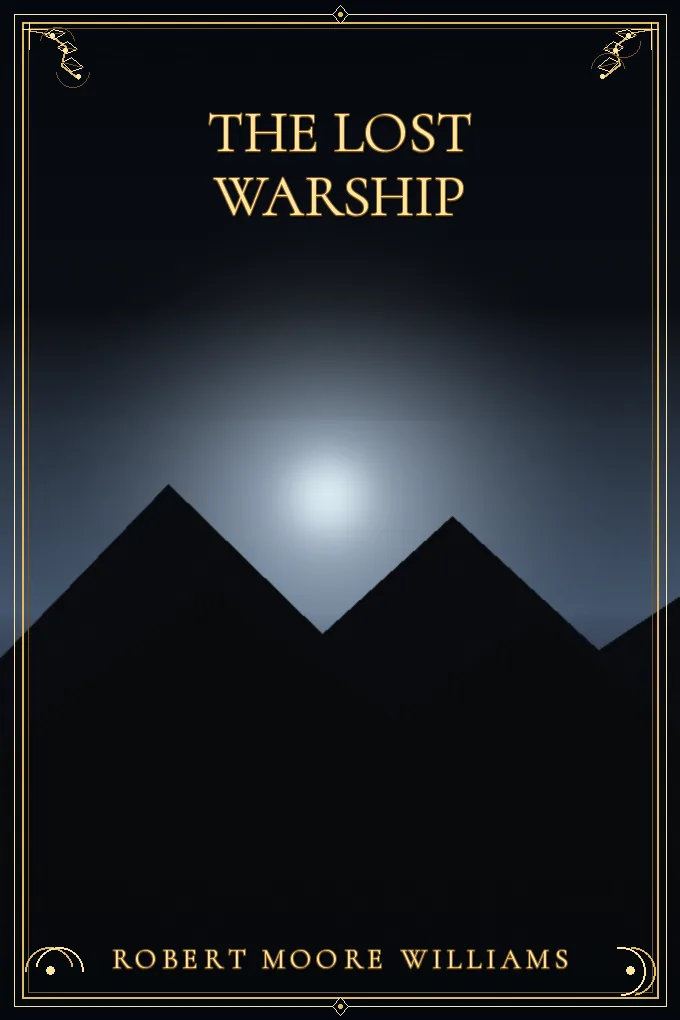
Cover illustration for The Lost Warship
Context Illustration Reading 1/52 · 5 lines
English subtitles · tap any word to listen 1 / 5
Silver on the Sea Night had come hours ago.
Craig stood on the deck, watching the sea and the sky and the stars in the sky.
Up overhead the constellations had changed.
They were not the familiar star clusters that he knew.
Completely blacked out, the Idaho moved very slowly through the darkness.
0:00 / 0:00
Speed 0.75x
AI-generated narration by OpenAI · Slow US English
LEARNER DICTIONARY
Archivist
/ˈɑːrkɪvɪst/
Editorial verification pending

A keeper or guardian of historical records and memories.

The Lost Warship

Chapter IV · Chapter 4

Chapter 4 of The Lost Warship is here in full — 260 sentences across 52 reading sections, with audio for every sentence and word.

Reading 1/52 · 5 reading units · Lines 1–5

Line 1
Silver on the Sea Night had come hours ago.
/ˈsɪlvər ɑːn ðə siː naɪt hæd kʌm ˈaʊərz əˈɡoʊ/
Line 2
Craig stood on the deck, watching the sea and the sky and the stars in the sky.
Line 3
Up overhead the constellations had changed.
/ʌp ˈoʊvərˈhed ðə ˌkɑːnstəˈleɪʃənz hæd tʃeɪndʒd/
Line 4
They were not the familiar star clusters that he knew.
/ðeɪ wɜːr nɑːt ðə fəˈmɪljər stɑːr ˈklʌstərz ðæt hiː nuː/
Line 5
Completely blacked out, the Idaho moved very slowly through the darkness.
/kəmˈpliːtli blækt aʊt ðə ˈaɪdəhoʊ muːvd ˈveri ˈsloʊli θruː ðə ˈdɑːrknəs/

Learner Dictionary

These definitions explain words found in the current reading and keep every example grounded in its original sentence.

Oxford-style entry order: headword, part of speech, US IPA, concise definition, contextual example, and audio.

blacked verb US /blækt/

past form of “black” — make or become black

From this reading “Completely blacked out, the Idaho moved very slowly through the darkness.”

clusters noun US /ˈklʌstərz/

plural of “cluster” — a grouping of a number of similar things

From this reading “They were not the familiar star clusters that he knew.”

Completely adverb US /kəmˈpliːtli/

to a complete degree or to the full or entire extent (“whole” is often used informally for “wholly”)

From this reading “Completely blacked out, the Idaho moved very slowly through the darkness.”

constellations noun US /ˌkɑːnstəˈleɪʃənz/

plural of “constellation” — an arrangement of parts or elements

From this reading “Up overhead the constellations had changed.”

familiar adjective US /fəˈmɪljər/

well known or easily recognized

From this reading “They were not the familiar star clusters that he knew.”

Idaho noun US /ˈaɪdəhoʊ/

a state in the Rocky Mountains

From this reading “Completely blacked out, the Idaho moved very slowly through the darkness.”

overhead adverb US /ˈoʊvərˈhed/

above your head; in the sky

From this reading “Up overhead the constellations had changed.”

star noun US /stɑːr/

(astronomy) a celestial body of hot gases that radiates energy derived from thermonuclear reactions in the interior

From this reading “They were not the familiar star clusters that he knew.”

Word partnerships in these lines

English keeps certain words together, and knowing the pair is worth more than knowing each word alone. Every partnership below was counted across our whole published library, and earns its place by appearing far more often than two unrelated words of the same frequency would.

Shown as this reading writes them, with the form the library counts, what kind of pairing it is, and how often it occurs.

through the darkness preposition + article + noun counted as “through … darkness”

In this reading “Completely blacked out, the Idaho moved very slowly through the darkness.”

on the deck preposition + article + noun counted as “on … deck”

In this reading “Craig stood on the deck, watching the sea and the sky and the stars in the sky.”

stood on verb + particle

In this reading “Craig stood on the deck, watching the sea and the sky and the stars in the sky.”

in the sky preposition + article + noun counted as “in … sky”

In this reading “Craig stood on the deck, watching the sea and the sky and the stars in the sky.”

on the Sea preposition + article + noun counted as “on … sea”

In this reading “Silver on the Sea Night had come hours ago.”

All words in this reading · 39

Every word in these five lines is listed here, and every one of them can be played on its own.

Dictionary details are shown only when verified; these are not licensed Oxford entries.

agoadverbUS /əˈɡoʊ/

in the past

From this reading Silver on the Sea Night had come hours ago.

andconjunctionUS /ənd/

used to join words or parts of a sentence that go together

From this reading Craig stood on the deck, watching the sea and the sky and the stars in the sky.

blackedverbUS /blækt/

past form of “black” — make or become black

From this reading Completely blacked out, the Idaho moved very slowly through the darkness.

changedadjectiveUS /tʃeɪndʒd/

made or become different in nature or form

From this reading Up overhead the constellations had changed.

clustersnounUS /ˈklʌstərz/

plural of “cluster” — a grouping of a number of similar things

From this reading They were not the familiar star clusters that he knew.

comeverbUS /kʌm/

move toward, travel toward something or somebody or approach something or somebody

From this reading Silver on the Sea Night had come hours ago.

CompletelyadverbUS /kəmˈpliːtli/

to a complete degree or to the full or entire extent (“whole” is often used informally for “wholly”)

From this reading Completely blacked out, the Idaho moved very slowly through the darkness.

constellationsnounUS /ˌkɑːnstəˈleɪʃənz/

plural of “constellation” — an arrangement of parts or elements

From this reading Up overhead the constellations had changed.

Craig

Dictionary entry pending editorial verification. Tap Listen to hear the word.

From this reading Craig stood on the deck, watching the sea and the sky and the stars in the sky.

darknessnounUS /ˈdɑːrknəs/

absence of light or illumination

From this reading Completely blacked out, the Idaho moved very slowly through the darkness.

decknounUS /dek/

any of various platforms built into a vessel

From this reading Craig stood on the deck, watching the sea and the sky and the stars in the sky.

familiaradjectiveUS /fəˈmɪljər/

well known or easily recognized

From this reading They were not the familiar star clusters that he knew.

hadauxiliary verbUS /hæd/

the past form of “have”, used to form the past perfect

From this reading Silver on the Sea Night had come hours ago.

hepronounUS /hiː/

a man, boy, or male animal already mentioned, as the subject

From this reading They were not the familiar star clusters that he knew.

hoursnounUS /ˈaʊərz/

a period of time assigned for work

From this reading Silver on the Sea Night had come hours ago.

IdahonounUS /ˈaɪdəhoʊ/

a state in the Rocky Mountains

From this reading Completely blacked out, the Idaho moved very slowly through the darkness.

inprepositionUS /ɪn/

inside something, or within a place, period, or state

From this reading Craig stood on the deck, watching the sea and the sky and the stars in the sky.

knewverbUS /nuː/

inflected form of “know” — be cognizant or aware of a fact or a specific piece of information; possess knowledge or information about

From this reading They were not the familiar star clusters that he knew.

movedadjectiveUS /muːvd/

being excited or provoked to the expression of an emotion

From this reading Completely blacked out, the Idaho moved very slowly through the darkness.

NightnounUS /naɪt/

the time after sunset and before sunrise while it is dark outside

From this reading Silver on the Sea Night had come hours ago.

notadverbUS /nɑːt/

used to make a word, phrase, or sentence negative

From this reading They were not the familiar star clusters that he knew.

onprepositionUS /ɑːn/

touching and supported by a surface

From this reading Silver on the Sea Night had come hours ago.

outadjectiveUS /aʊt/

not allowed to continue to bat or run

From this reading Completely blacked out, the Idaho moved very slowly through the darkness.

overheadadverbUS /ˈoʊvərˈhed/

above your head; in the sky

From this reading Up overhead the constellations had changed.

SeanounUS /siː/

a division of an ocean or a large body of salt water partially enclosed by land

From this reading Silver on the Sea Night had come hours ago.

SilvernounUS /ˈsɪlvər/

a soft white precious univalent metallic element having the highest electrical and thermal conductivity of any metal; occurs in argentite and in free form; used in coins and jewelry and tableware and photography

From this reading Silver on the Sea Night had come hours ago.

skynounUS /skaɪ/

the atmosphere and outer space as viewed from the earth

From this reading Craig stood on the deck, watching the sea and the sky and the stars in the sky.

slowlyadverbUS /ˈsloʊli/

without speed (“slow” is sometimes used informally for “slowly”)

From this reading Completely blacked out, the Idaho moved very slowly through the darkness.

starnounUS /stɑːr/

(astronomy) a celestial body of hot gases that radiates energy derived from thermonuclear reactions in the interior

From this reading They were not the familiar star clusters that he knew.

starsnounUS /stɑːrz/

plural of “star” — (astronomy) a celestial body of hot gases that radiates energy derived from thermonuclear reactions in the interior

From this reading Craig stood on the deck, watching the sea and the sky and the stars in the sky.

stoodverbUS /stʊd/

Maintained an upright posture.

From this reading Craig stood on the deck, watching the sea and the sky and the stars in the sky.

thatconjunctionUS /ðæt/

used to introduce what somebody said, thought, or felt

From this reading They were not the familiar star clusters that he knew.

thedeterminerUS /ðə/

used before a noun that is already known, already mentioned, or the only one of its kind

From this reading Silver on the Sea Night had come hours ago.

TheypronounUS /ðeɪ/

the people, animals, or things already mentioned, as the subject

From this reading They were not the familiar star clusters that he knew.

throughprepositionUS /θruː/

from one end or side of something to the other

From this reading Completely blacked out, the Idaho moved very slowly through the darkness.

UpadjectiveUS /ʌp/

being or moving higher in position or greater in some value; being above a former position or level

From this reading Up overhead the constellations had changed.

veryadjectiveUS /ˈveri/

precisely as stated

From this reading Completely blacked out, the Idaho moved very slowly through the darkness.

watchingnounUS /ˈwɑːtʃɪŋ/

the act of observing; taking a patient look

From this reading Craig stood on the deck, watching the sea and the sky and the stars in the sky.

wereauxiliary verbUS /wɜːr/

the past form of “be” used with you, we, they, or a plural noun

From this reading They were not the familiar star clusters that he knew.

Chapter 4 of The Lost Warship by Robert Moore Williams holds 260 sentences, grouped into 52 reading sections of at most 5 sentences. The text is the source edition, unabridged, and the chapter records which sentences cover which part of the work so that nothing is dropped. Every word can be tapped for its pronunciation and dictionary entry.

What does chapter 4 of The Lost Warship contain?

Chapter 4 holds 260 sentences of The Lost Warship, unabridged, divided into 52 reading sections.

This page carries chapter 4 of The Lost Warship by Robert Moore Williams exactly as it stands in the source edition, without abridgement. It runs to 260 sentences, grouped into 52 sections of at most 5 sentences so that a reader can take the chapter in steady, finishable pieces. The chapter also stores a coverage record mapping every one of its sentences to a part of the work, which is how the edition demonstrates that no line was dropped.

How do I study chapter 4 of The Lost Warship?

Work through the 52 sections in order, replaying any sentence and tapping unfamiliar words for their entries.

Each of the 52 sections in this chapter is short enough to read once, hear once, and then re-read with the vocabulary in view. Tapping a word plays it alone and opens its dictionary entry with IPA, part of speech and meaning, so the reader is never forced to guess a pronunciation from spelling. Working section by section keeps a long chapter from becoming an undifferentiated wall of text, which is the usual reason a reader abandons a work of this period.

Can chapter 4 be read aloud to me?

Yes — every sentence and every individual word in chapter 4 can be played aloud in United States English.

Audio covers the whole chapter: any sentence can be played, and any single word within it can be played on its own. The voice uses United States English. For a work of this period that matters, because spelling is an unreliable guide to pronunciation for vocabulary that has fallen out of daily use, and a learner who guesses wrong tends to keep the error. Hearing the word in its own sentence, and then alone, settles it.

Questions about reading The Lost Warship

Common questions about reading The Lost Warship by Robert Moore Williams on this page, its source edition and its audio.

Is this the complete text of The Lost Warship?

Yes. All 2652 sentences of Project Gutenberg eBook #32563 are kept, with a record of which sentences cover which part.

Which edition of The Lost Warship is used?

Project Gutenberg eBook #32563, unabridged. The Project Gutenberg header, footer and licence are removed.

How long does The Lost Warship take to read?

About 221 minutes of reading across 531 sections of 5 sentences each, at an unhurried pace.

How to read The Lost Warship section by section

How to work through The Lost Warship section by section, using the audio and the tap-to-define vocabulary.

  1. Open a chapter

    Choose one of the 8 chapters of The Lost Warship to begin.

  2. Read one section

    Each section holds 5 sentences; read it once through.

  3. Listen and tap

    Play the section aloud, then tap any unfamiliar word for its entry.

Vocabulary met early in The Lost Warship

Words and structures a reader meets early in The Lost Warship, each tappable for pronunciation and meaning.

Sidenote
A word that appears in the opening chapter of The Lost Warship; the reader can tap it to hear it and see its dictionary entry.
Bombs
A word that appears in the opening chapter of The Lost Warship; the reader can tap it to hear it and see its dictionary entry.
Rained
A word that appears in the opening chapter of The Lost Warship; the reader can tap it to hear it and see its dictionary entry.
Tremendous
A word that appears in the opening chapter of The Lost Warship; the reader can tap it to hear it and see its dictionary entry.