Complete classic literature • Five-line readings • Clear US narration
VELMORA ACADEMY
Academy of Archival Languages & Memory Studies
Menu Close
The Motor Boys on the Atlantic

Chapter XX

Chapter 20 of The Motor Boys on the Atlantic is here in full — 104 sentences across 21 reading sections, with audio for every sentence and word.

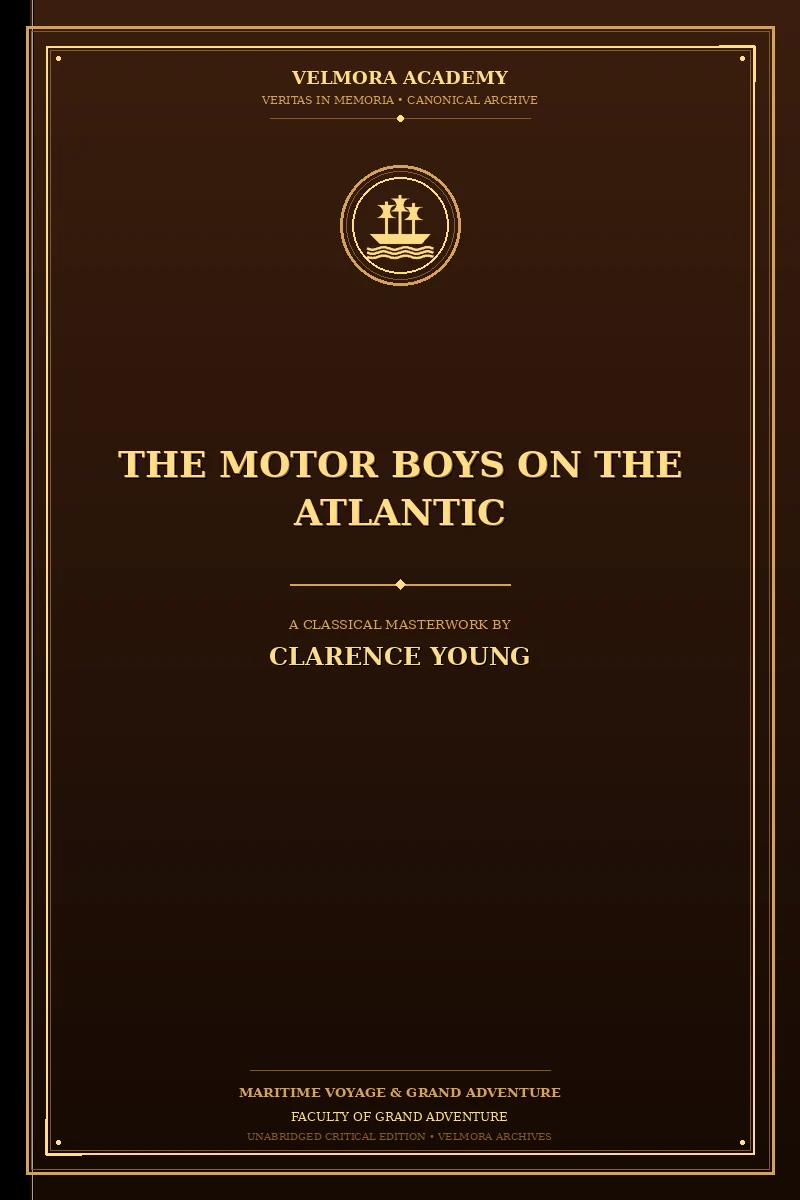
Cover illustration for The Motor Boys on the Atlantic
Context Illustration Reading 1/20 · 5 lines
English subtitles · tap any word to listen 1 / 5
NODDY’S COMPANION Now the storm had broken in all its power.
How the wind whistled over the boat, almost tearing the awning loose!
But Sam had seen to the fastenings, and the old sailor well knew the awful force of a gale.
The sail, too, held, though it needed all the strength of the ropes Sam had carefully placed here and there to brace it.
“Take the wheel!” roared Sam to Jerry.
0:00 / 0:00
Speed 0.75x
AI-generated narration by OpenAI · Slow US English
LEARNER DICTIONARY
Archivist
/ˈɑːrkɪvɪst/
Editorial verification pending

A keeper or guardian of historical records and memories.

The Motor Boys on the Atlantic

Chapter XX

Chapter 20 of The Motor Boys on the Atlantic is here in full — 104 sentences across 21 reading sections, with audio for every sentence and word.

Reading 1/20 · 5 reading units · Lines 1–5

Line 1
NODDY’S COMPANION Now the storm had broken in all its power.
Line 2
How the wind whistled over the boat, almost tearing the awning loose!
Line 3
But Sam had seen to the fastenings, and the old sailor well knew the awful force of a gale.
/bʌt sæm hæd siːn tuː ðə ˈfæsənɪŋz ənd ðə oʊld ˈseɪlər wel nuː ðə ˈɑːfəl fɔːrs ʌv ə ɡeɪl/
Line 4
The sail, too, held, though it needed all the strength of the ropes Sam had carefully placed here and there to brace it.
/ðə seɪl tuː held ðoʊ ɪt ˈniːdəd ɔːl ðə streŋkθ ʌv ðə roʊps sæm hæd ˈkerfəli pleɪst hiːr ənd ðer tuː breɪs ɪt/
Line 5
“Take the wheel!” roared Sam to Jerry.
/teɪk ðə wiːl rɔːrd sæm tuː ˈdʒeri/

Learner Dictionary

These definitions explain words found in the current reading and keep every example grounded in its original sentence.

Oxford-style entry order: headword, part of speech, US IPA, concise definition, contextual example, and audio.

awning noun US /ˈɑːnɪŋ/

a canopy made of canvas to shelter people or things from rain or sun

From this reading “How the wind whistled over the boat, almost tearing the awning loose!”

brace verb US /breɪs/

prepare (oneself) for something unpleasant or difficult

From this reading “The sail, too, held, though it needed all the strength of the ropes Sam had carefully placed here and there to brace it.”

fastenings noun US /ˈfæsənɪŋz/

plural of “fastening” — restraint that attaches to something or holds something in place

From this reading “But Sam had seen to the fastenings, and the old sailor well knew the awful force of a gale.”

gale noun US /ɡeɪl/

a strong wind moving 45-90 knots; force 7 to 10 on Beaufort scale

From this reading “But Sam had seen to the fastenings, and the old sailor well knew the awful force of a gale.”

roared verb US /rɔːrd/

past form of “roar” — make a loud noise, as of wind, water, or vehicles

From this reading ““Take the wheel!” roared Sam to Jerry.”

ropes noun US /roʊps/

plural of “rope” — a strong line

From this reading “The sail, too, held, though it needed all the strength of the ropes Sam had carefully placed here and there to brace it.”

tearing noun US /ˈterɪŋ/

shedding tears

From this reading “How the wind whistled over the boat, almost tearing the awning loose!”

whistled verb US /ˈwɪsəld/

past form of “whistle” — make whistling sounds

From this reading “How the wind whistled over the boat, almost tearing the awning loose!”

Word partnerships in these lines

English keeps certain words together, and knowing the pair is worth more than knowing each word alone. Every partnership below was counted across our whole published library, and earns its place by appearing far more often than two unrelated words of the same frequency would.

Shown as this reading writes them, with the form the library counts, what kind of pairing it is, and how often it occurs.

carefully placed adverb + adjective

In this reading “The sail, too, held, though it needed all the strength of the ropes Sam had carefully placed here and there to brace it.”

old sailor adjective + noun

In this reading “But Sam had seen to the fastenings, and the old sailor well knew the awful force of a gale.”

All words in this reading · 52

Every word in these five lines is listed here, and every one of them can be played on its own.

Dictionary details are shown only when verified; these are not licensed Oxford entries.

adeterminerUS /ə/

used before a singular noun to mean one of a group, when it is not a particular one

From this reading But Sam had seen to the fastenings, and the old sailor well knew the awful force of a gale.

alladjectiveUS /ɔːl/

(quantifier) used with either mass or count nouns to indicate the whole number or amount of or every one of a class

From this reading NODDY’S COMPANION Now the storm had broken in all its power.

almostadverbUS /ˈɔːlmoʊst/

(of actions or states) slightly short of or not quite accomplished; all but

From this reading How the wind whistled over the boat, almost tearing the awning loose!

andconjunctionUS /ənd/

used to join words or parts of a sentence that go together

From this reading But Sam had seen to the fastenings, and the old sailor well knew the awful force of a gale.

awfuladjectiveUS /ˈɑːfəl/

exceptionally bad or displeasing

From this reading But Sam had seen to the fastenings, and the old sailor well knew the awful force of a gale.

awningnounUS /ˈɑːnɪŋ/

a canopy made of canvas to shelter people or things from rain or sun

From this reading How the wind whistled over the boat, almost tearing the awning loose!

boatnounUS /boʊt/

a small vessel for travel on water

From this reading How the wind whistled over the boat, almost tearing the awning loose!

braceverbUS /breɪs/

prepare (oneself) for something unpleasant or difficult

From this reading The sail, too, held, though it needed all the strength of the ropes Sam had carefully placed here and there to brace it.

brokenadjectiveUS /ˈbroʊkən/

physically and forcibly separated into pieces or cracked or split

From this reading NODDY’S COMPANION Now the storm had broken in all its power.

ButconjunctionUS /bʌt/

used to introduce something that contrasts with what came before

From this reading But Sam had seen to the fastenings, and the old sailor well knew the awful force of a gale.

carefullyadverbUS /ˈkerfəli/

taking care or paying attention

From this reading The sail, too, held, though it needed all the strength of the ropes Sam had carefully placed here and there to brace it.

COMPANIONnounUS /kəmˈpænjən/

a friend who is frequently in the company of another

From this reading NODDY’S COMPANION Now the storm had broken in all its power.

fasteningsnounUS /ˈfæsənɪŋz/

plural of “fastening” — restraint that attaches to something or holds something in place

From this reading But Sam had seen to the fastenings, and the old sailor well knew the awful force of a gale.

forcenounUS /fɔːrs/

a powerful effect or influence

From this reading But Sam had seen to the fastenings, and the old sailor well knew the awful force of a gale.

galenounUS /ɡeɪl/

a strong wind moving 45-90 knots; force 7 to 10 on Beaufort scale

From this reading But Sam had seen to the fastenings, and the old sailor well knew the awful force of a gale.

hadauxiliary verbUS /hæd/

the past form of “have”, used to form the past perfect

From this reading NODDY’S COMPANION Now the storm had broken in all its power.

heldadjectiveUS /held/

occupied or in the control of; often used in combination

From this reading The sail, too, held, though it needed all the strength of the ropes Sam had carefully placed here and there to brace it.

hereadverbUS /hiːr/

in or at this place; where the speaker or writer is

From this reading The sail, too, held, though it needed all the strength of the ropes Sam had carefully placed here and there to brace it.

How

Dictionary entry pending editorial verification. Tap Listen to hear the word.

From this reading How the wind whistled over the boat, almost tearing the awning loose!

inprepositionUS /ɪn/

inside something, or within a place, period, or state

From this reading NODDY’S COMPANION Now the storm had broken in all its power.

itpronounUS /ɪt/

a thing, animal, or idea already mentioned

From this reading The sail, too, held, though it needed all the strength of the ropes Sam had carefully placed here and there to brace it.

itsdeterminerUS /ɪts/

belonging to the thing or animal already mentioned

From this reading NODDY’S COMPANION Now the storm had broken in all its power.

JerrynounUS /ˈdʒeri/

offensive term for a person of German descent

From this reading “Take the wheel!” roared Sam to Jerry.

knewverbUS /nuː/

inflected form of “know” — be cognizant or aware of a fact or a specific piece of information; possess knowledge or information about

From this reading But Sam had seen to the fastenings, and the old sailor well knew the awful force of a gale.

looseadjectiveUS /luːs/

not compact or dense in structure or arrangement

From this reading How the wind whistled over the boat, almost tearing the awning loose!

neededadjectiveUS /ˈniːdəd/

necessary for relief or supply

From this reading The sail, too, held, though it needed all the strength of the ropes Sam had carefully placed here and there to brace it.

NODDY'S

Dictionary entry pending editorial verification. Tap Listen to hear the word.

From this reading NODDY’S COMPANION Now the storm had broken in all its power.

NowadverbUS /naʊ/

in the historical present; at this point in the narration of a series of past events

From this reading NODDY’S COMPANION Now the storm had broken in all its power.

ofprepositionUS /ʌv/

belonging to, or connected with, somebody or something

From this reading But Sam had seen to the fastenings, and the old sailor well knew the awful force of a gale.

oldadjectiveUS /oʊld/

(used especially of persons) having lived for a relatively long time or attained a specific age

From this reading But Sam had seen to the fastenings, and the old sailor well knew the awful force of a gale.

overprepositionUS /ˈoʊvər/

above and across; more than

From this reading How the wind whistled over the boat, almost tearing the awning loose!

placedadjectiveUS /pleɪst/

situated in a particular spot or position

From this reading The sail, too, held, though it needed all the strength of the ropes Sam had carefully placed here and there to brace it.

powernounUS /ˈpaʊər/

possession of controlling influence

From this reading NODDY’S COMPANION Now the storm had broken in all its power.

roaredverbUS /rɔːrd/

past form of “roar” — make a loud noise, as of wind, water, or vehicles

From this reading “Take the wheel!” roared Sam to Jerry.

ropesnounUS /roʊps/

plural of “rope” — a strong line

From this reading The sail, too, held, though it needed all the strength of the ropes Sam had carefully placed here and there to brace it.

sailverbUS /seɪl/

traverse or travel on (a body of water)

From this reading The sail, too, held, though it needed all the strength of the ropes Sam had carefully placed here and there to brace it.

sailornounUS /ˈseɪlər/

any member of a ship's crew

From this reading But Sam had seen to the fastenings, and the old sailor well knew the awful force of a gale.

SamnounUS /sæm/

a guided missile fired from land or shipboard against an airborne target

From this reading But Sam had seen to the fastenings, and the old sailor well knew the awful force of a gale.

seenverbUS /siːn/

inflected form of “see” — perceive by sight or have the power to perceive by sight

From this reading But Sam had seen to the fastenings, and the old sailor well knew the awful force of a gale.

stormverbUS /stɔːrm/

behave violently, as if in state of a great anger

From this reading NODDY’S COMPANION Now the storm had broken in all its power.

strengthnounUS /streŋkθ/

the property of being physically or mentally strong

From this reading The sail, too, held, though it needed all the strength of the ropes Sam had carefully placed here and there to brace it.

TakeverbUS /teɪk/

carry out

From this reading “Take the wheel!” roared Sam to Jerry.

tearingnounUS /ˈterɪŋ/

shedding tears

From this reading How the wind whistled over the boat, almost tearing the awning loose!

thedeterminerUS /ðə/

used before a noun that is already known, already mentioned, or the only one of its kind

From this reading NODDY’S COMPANION Now the storm had broken in all its power.

thereadverbUS /ðer/

in or at that place or location

From this reading The sail, too, held, though it needed all the strength of the ropes Sam had carefully placed here and there to brace it.

thoughconjunctionUS /ðoʊ/

in spite of the fact that

From this reading The sail, too, held, though it needed all the strength of the ropes Sam had carefully placed here and there to brace it.

toparticleUS /tuː/

used before the base form of a verb to make the infinitive

From this reading But Sam had seen to the fastenings, and the old sailor well knew the awful force of a gale.

tooadverbUS /tuː/

to a degree exceeding normal or proper limits

From this reading The sail, too, held, though it needed all the strength of the ropes Sam had carefully placed here and there to brace it.

welladverbUS /wel/

(often used as a combining form) in a good or proper or satisfactory manner or to a high standard (“good” is a nonstandard dialectal variant for “well”)

From this reading But Sam had seen to the fastenings, and the old sailor well knew the awful force of a gale.

wheelverbUS /wiːl/

change directions as if revolving on a pivot

From this reading “Take the wheel!” roared Sam to Jerry.

whistledverbUS /ˈwɪsəld/

past form of “whistle” — make whistling sounds

From this reading How the wind whistled over the boat, almost tearing the awning loose!

windnounUS /waɪnd/

air moving (sometimes with considerable force) from an area of high pressure to an area of low pressure

From this reading How the wind whistled over the boat, almost tearing the awning loose!

Chapter 20 of The Motor Boys on the Atlantic by Clarence Young holds 104 sentences, grouped into 21 reading sections of at most 5 sentences. The text is the source edition, unabridged, and the chapter records which sentences cover which part of the work so that nothing is dropped. Every word can be tapped for its pronunciation and dictionary entry.

What does chapter 20 of The Motor Boys on the Atlantic contain?

Chapter 20 holds 104 sentences of The Motor Boys on the Atlantic, unabridged, divided into 21 reading sections.

This page carries chapter 20 of The Motor Boys on the Atlantic by Clarence Young exactly as it stands in the source edition, without abridgement. It runs to 104 sentences, grouped into 21 sections of at most 5 sentences so that a reader can take the chapter in steady, finishable pieces. The chapter also stores a coverage record mapping every one of its sentences to a part of the work, which is how the edition demonstrates that no line was dropped.

How do I study chapter 20 of The Motor Boys on the Atlantic?

Work through the 21 sections in order, replaying any sentence and tapping unfamiliar words for their entries.

Each of the 21 sections in this chapter is short enough to read once, hear once, and then re-read with the vocabulary in view. Tapping a word plays it alone and opens its dictionary entry with IPA, part of speech and meaning, so the reader is never forced to guess a pronunciation from spelling. Working section by section keeps a long chapter from becoming an undifferentiated wall of text, which is the usual reason a reader abandons a work of this period.

Can chapter 20 be read aloud to me?

Yes — every sentence and every individual word in chapter 20 can be played aloud in United States English.

Audio covers the whole chapter: any sentence can be played, and any single word within it can be played on its own. The voice uses United States English. For a work of this period that matters, because spelling is an unreliable guide to pronunciation for vocabulary that has fallen out of daily use, and a learner who guesses wrong tends to keep the error. Hearing the word in its own sentence, and then alone, settles it.

Questions about reading The Motor Boys on the Atlantic

Common questions about reading The Motor Boys on the Atlantic by Clarence Young on this page, its source edition and its audio.

Is this the complete text of The Motor Boys on the Atlantic?

Yes. All 3899 sentences of Project Gutenberg eBook #44846 are kept, with a record of which sentences cover which part.

Which edition of The Motor Boys on the Atlantic is used?

Project Gutenberg eBook #44846, unabridged. The Project Gutenberg header, footer and licence are removed.

How long does The Motor Boys on the Atlantic take to read?

About 324 minutes of reading across 780 sections of 5 sentences each, at an unhurried pace.

How to read The Motor Boys on the Atlantic section by section

How to work through The Motor Boys on the Atlantic section by section, using the audio and the tap-to-define vocabulary.

  1. Open a chapter

    Choose one of the 30 chapters of The Motor Boys on the Atlantic to begin.

  2. Read one section

    Each section holds 5 sentences; read it once through.

  3. Listen and tap

    Play the section aloud, then tap any unfamiliar word for its entry.

Vocabulary met early in The Motor Boys on the Atlantic

Words and structures a reader meets early in The Motor Boys on the Atlantic, each tappable for pronunciation and meaning.

Author
A word that appears in the opening chapter of The Motor Boys on the Atlantic; the reader can tap it to hear it and see its dictionary entry.
Racer
A word that appears in the opening chapter of The Motor Boys on the Atlantic; the reader can tap it to hear it and see its dictionary entry.
Series
A word that appears in the opening chapter of The Motor Boys on the Atlantic; the reader can tap it to hear it and see its dictionary entry.
Ranger
A word that appears in the opening chapter of The Motor Boys on the Atlantic; the reader can tap it to hear it and see its dictionary entry.