(quantifier) used with either mass or count nouns to indicate the whole number or amount of or every one of a class
From this reading “Yes, I knew you would; but it is quite true, all the same.”
used to join words or parts of a sentence that go together
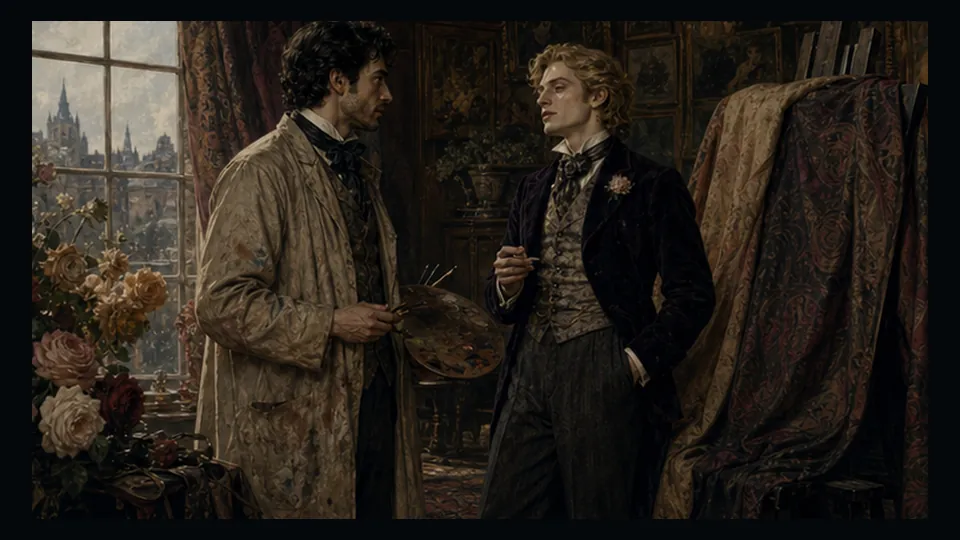
From this reading Lord Henry stretched himself out on the divan and laughed.
in or near a particular place or position
From this reading “I know you will laugh at me,” he replied, “but I really can’t exhibit it.
used to introduce something that contrasts with what came before
From this reading “I know you will laugh at me,” he replied, “but I really can’t exhibit it.
can't
Dictionary entry pending editorial verification. Tap Listen to hear the word.
From this reading “I know you will laugh at me,” he replied, “but I really can’t exhibit it.
divannounUS /dɪˈvæn/
a long backless sofa (usually with pillows against a wall)
From this reading Lord Henry stretched himself out on the divan and laughed.
exhibitverbUS /ɪɡˈzɪbɪt/
show an attribute, property, knowledge, or skill
From this reading “I know you will laugh at me,” he replied, “but I really can’t exhibit it.
haveauxiliary verbUS /hæv/
used with a past participle to form the perfect tenses
From this reading I have put too much of myself into it.”
a man, boy, or male animal already mentioned, as the subject
From this reading “I know you will laugh at me,” he replied, “but I really can’t exhibit it.
a unit of inductance in which an induced electromotive force of one volt is produced when the current is varied at the rate of one ampere per second
From this reading Lord Henry stretched himself out on the divan and laughed.
used when the man or boy doing the action is also its object
From this reading Lord Henry stretched himself out on the divan and laughed.
the person speaking or writing, as the subject of the verb
From this reading “I know you will laugh at me,” he replied, “but I really can’t exhibit it.
inside something, or within a place, period, or state
From this reading “Too much of yourself in it!
intoprepositionUS /ˈɪntuː/
moving to the inside of something
From this reading I have put too much of myself into it.”
the form of “be” used with he, she, it, or a singular noun
From this reading “Yes, I knew you would; but it is quite true, all the same.”
a thing, animal, or idea already mentioned
From this reading “I know you will laugh at me,” he replied, “but I really can’t exhibit it.
inflected form of “know” — be cognizant or aware of a fact or a specific piece of information; possess knowledge or information about
From this reading “Yes, I knew you would; but it is quite true, all the same.”
be cognizant or aware of a fact or a specific piece of information; possess knowledge or information about
From this reading “I know you will laugh at me,” he replied, “but I really can’t exhibit it.
the sound of laughing
From this reading “I know you will laugh at me,” he replied, “but I really can’t exhibit it.
past form of “laugh” — produce laughter
From this reading Lord Henry stretched himself out on the divan and laughed.
terms referring to the Judeo-Christian God
From this reading Lord Henry stretched himself out on the divan and laughed.
the person speaking, as the object of a verb or preposition
From this reading “I know you will laugh at me,” he replied, “but I really can’t exhibit it.
to a great degree or extent
From this reading I have put too much of myself into it.”
used when the speaker is also the object of the action
From this reading I have put too much of myself into it.”
belonging to, or connected with, somebody or something
From this reading I have put too much of myself into it.”
touching and supported by a surface
From this reading Lord Henry stretched himself out on the divan and laughed.
not allowed to continue to bat or run
From this reading Lord Henry stretched himself out on the divan and laughed.
put into a certain place or abstract location
From this reading I have put too much of myself into it.”
to a degree (not used with a negative)
From this reading “Yes, I knew you would; but it is quite true, all the same.”
in accordance with truth or fact or reality
From this reading “I know you will laugh at me,” he replied, “but I really can’t exhibit it.
inflected form of “reply” — react verbally
From this reading “I know you will laugh at me,” he replied, “but I really can’t exhibit it.
Identical; not different.
From this reading “Yes, I knew you would; but it is quite true, all the same.”
(of muscles) relieved of stiffness by stretching
From this reading Lord Henry stretched himself out on the divan and laughed.
used before a noun that is already known, already mentioned, or the only one of its kind
From this reading Lord Henry stretched himself out on the divan and laughed.
to a degree exceeding normal or proper limits
From this reading I have put too much of myself into it.”
consistent with fact or reality; not false
From this reading “Yes, I knew you would; but it is quite true, all the same.”
used to talk about the future, or about willingness
From this reading “I know you will laugh at me,” he replied, “but I really can’t exhibit it.
used for something imagined, polite, or habitual in the past
From this reading “Yes, I knew you would; but it is quite true, all the same.”
an affirmative
From this reading “Yes, I knew you would; but it is quite true, all the same.”
the person or people being spoken to
From this reading “I know you will laugh at me,” he replied, “but I really can’t exhibit it.
used when the person spoken to is also the object of the action
From this reading “Too much of yourself in it!