used before a singular noun to mean one of a group, when it is not a particular one
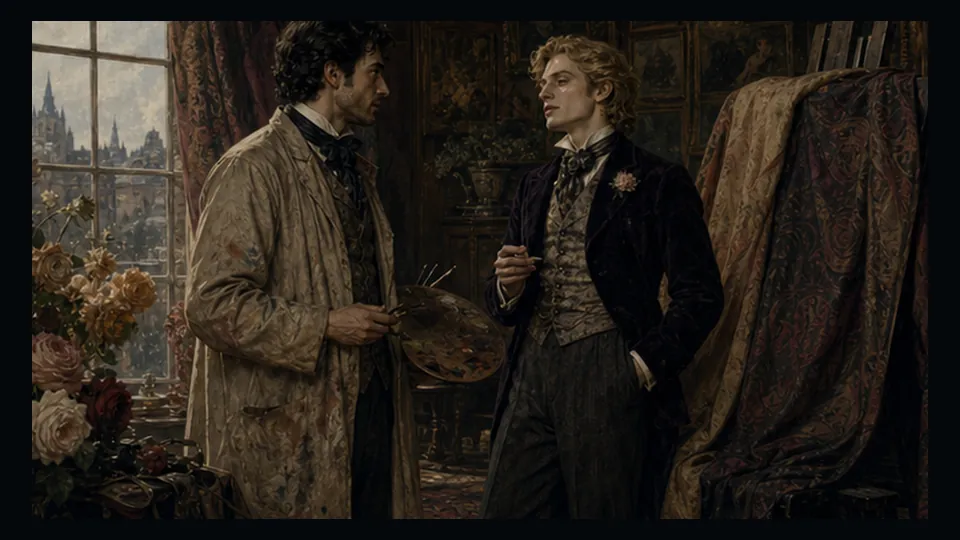
From this reading “Harry,” said Basil Hallward, looking him straight in the face, “every portrait that is painted with feeling is a portrait of the artist, not of the sitter.
an unfortunate mishap; especially one causing damage or injury
From this reading The sitter is merely the accident, the occasion.
a person whose creative work shows sensitivity and imagination
From this reading “Harry,” said Basil Hallward, looking him straight in the face, “every portrait that is painted with feeling is a portrait of the artist, not of the sitter.
BasilnounUS /ˈbæzəl/
any of several Old World tropical aromatic annual or perennial herbs of the genus Ocimum
From this reading “Harry,” said Basil Hallward, looking him straight in the face, “every portrait that is painted with feeling is a portrait of the artist, not of the sitter.
for the reason that
From this reading You said it was because there was too much of yourself in it.
childishadjectiveUS /ˈtʃaɪldɪʃ/
indicating a lack of maturity
From this reading Now, that is childish.”
didauxiliary verbUS /dɪd/
the past form of “do”, used in questions and negatives
From this reading “No, you did not.
everydeterminerUS /ˈevəri/
all the members of a group, with none left out
From this reading “Harry,” said Basil Hallward, looking him straight in the face, “every portrait that is painted with feeling is a portrait of the artist, not of the sitter.
the front of the human head from the forehead to the chin and ear to ear
From this reading “Harry,” said Basil Hallward, looking him straight in the face, “every portrait that is painted with feeling is a portrait of the artist, not of the sitter.
the experiencing of affective and emotional states
From this reading “Harry,” said Basil Hallward, looking him straight in the face, “every portrait that is painted with feeling is a portrait of the artist, not of the sitter.
Hallward
Dictionary entry pending editorial verification. Tap Listen to hear the word.
From this reading “Harry,” said Basil Hallward, looking him straight in the face, “every portrait that is painted with feeling is a portrait of the artist, not of the sitter.
annoy continually or chronically
From this reading “Harry,” said Basil Hallward, looking him straight in the face, “every portrait that is painted with feeling is a portrait of the artist, not of the sitter.
the male already mentioned, as the object of a verb or preposition
From this reading “Harry,” said Basil Hallward, looking him straight in the face, “every portrait that is painted with feeling is a portrait of the artist, not of the sitter.
inside something, or within a place, period, or state
From this reading You said it was because there was too much of yourself in it.
the form of “be” used with he, she, it, or a singular noun
From this reading Now, that is childish.”
a thing, animal, or idea already mentioned
From this reading You said it was because there was too much of yourself in it.
the act of directing the eyes toward something and perceiving it visually
From this reading “Harry,” said Basil Hallward, looking him straight in the face, “every portrait that is painted with feeling is a portrait of the artist, not of the sitter.
and nothing more
From this reading The sitter is merely the accident, the occasion.
to a great degree or extent
From this reading You said it was because there was too much of yourself in it.
not any; not one
From this reading “No, you did not.
used to make a word, phrase, or sentence negative
From this reading “No, you did not.
in the historical present; at this point in the narration of a series of past events
From this reading Now, that is childish.”
an event that occurs at a critical time
From this reading The sitter is merely the accident, the occasion.
belonging to, or connected with, somebody or something
From this reading You said it was because there was too much of yourself in it.
coated with paint
From this reading “Harry,” said Basil Hallward, looking him straight in the face, “every portrait that is painted with feeling is a portrait of the artist, not of the sitter.
a word picture of a person's appearance and character
From this reading “Harry,” said Basil Hallward, looking him straight in the face, “every portrait that is painted with feeling is a portrait of the artist, not of the sitter.
being the one previously mentioned or spoken of
From this reading You said it was because there was too much of yourself in it.
sitternounUS /ˈsɪtər/
Dutch astronomer who calculated the size of the universe and suggested that it is expanding (1872-1934)
From this reading “Harry,” said Basil Hallward, looking him straight in the face, “every portrait that is painted with feeling is a portrait of the artist, not of the sitter.
successive (without a break)
From this reading “Harry,” said Basil Hallward, looking him straight in the face, “every portrait that is painted with feeling is a portrait of the artist, not of the sitter.
used to introduce what somebody said, thought, or felt
From this reading Now, that is childish.”
used before a noun that is already known, already mentioned, or the only one of its kind
From this reading “Harry,” said Basil Hallward, looking him straight in the face, “every portrait that is painted with feeling is a portrait of the artist, not of the sitter.
in or at that place or location
From this reading You said it was because there was too much of yourself in it.
to a degree exceeding normal or proper limits
From this reading You said it was because there was too much of yourself in it.
wasauxiliary verbUS /wɑːz/
the past form of “be” used with I, he, she, it, or a singular noun
From this reading You said it was because there was too much of yourself in it.
in the company of; together with
From this reading “Harry,” said Basil Hallward, looking him straight in the face, “every portrait that is painted with feeling is a portrait of the artist, not of the sitter.
the person or people being spoken to
From this reading “No, you did not.
used when the person spoken to is also the object of the action
From this reading You said it was because there was too much of yourself in it.