used before a singular noun to mean one of a group, when it is not a particular one
From this reading “I don’t agree with a single word that you have said, and, what is more, Harry, I feel sure you don’t either.”
be in accord; be in agreement
From this reading “I don’t agree with a single word that you have said, and, what is more, Harry, I feel sure you don’t either.”
at all times; all the time and on every occasion
From this reading If one puts forward an idea to a true Englishman—always a rash thing to do—he never dreams of considering whether the idea is right or wrong.
the form of “a” used before a word that begins with a vowel sound
From this reading If one puts forward an idea to a true Englishman—always a rash thing to do—he never dreams of considering whether the idea is right or wrong.
used to join words or parts of a sentence that go together
From this reading “I don’t agree with a single word that you have said, and, what is more, Harry, I feel sure you don’t either.”
areauxiliary verbUS /ɑːr/
the form of “be” used with you, we, they, or a plural noun
From this reading “How English you are Basil!
BasilnounUS /ˈbæzəl/
any of several Old World tropical aromatic annual or perennial herbs of the genus Ocimum
From this reading “How English you are Basil!
the hair growing on the lower part of a man's face
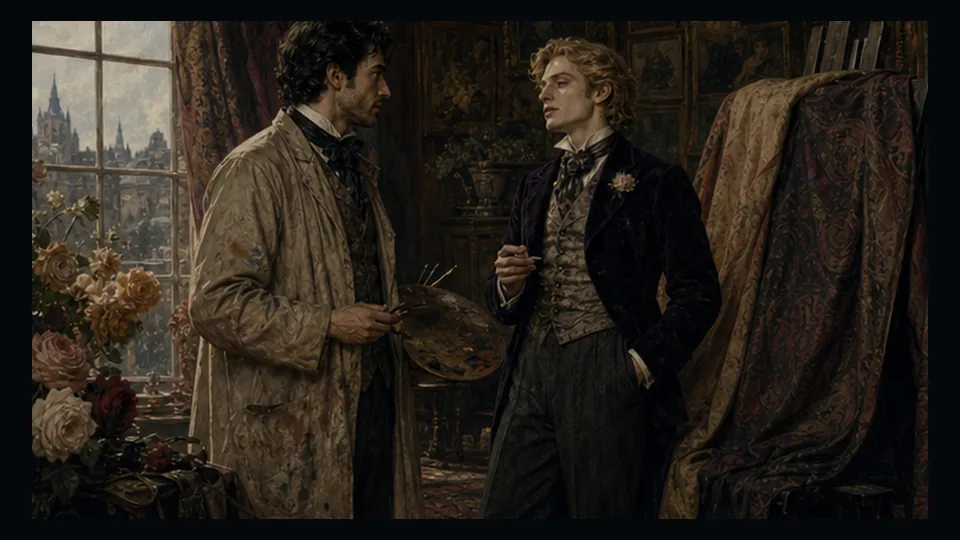
From this reading Lord Henry stroked his pointed brown beard and tapped the toe of his patent-leather boot with a tasselled ebony cane.
bootnounUS /buːt/
footwear that covers the whole foot and lower leg
From this reading Lord Henry stroked his pointed brown beard and tapped the toe of his patent-leather boot with a tasselled ebony cane.
an orange of low brightness and saturation
From this reading Lord Henry stroked his pointed brown beard and tapped the toe of his patent-leather boot with a tasselled ebony cane.
canenounUS /keɪn/
a stick that people can lean on to help them walk
From this reading Lord Henry stroked his pointed brown beard and tapped the toe of his patent-leather boot with a tasselled ebony cane.
-ing form of “consider” — deem to be
From this reading If one puts forward an idea to a true Englishman—always a rash thing to do—he never dreams of considering whether the idea is right or wrong.
used to form questions and negatives, and to give emphasis
From this reading If one puts forward an idea to a true Englishman—always a rash thing to do—he never dreams of considering whether the idea is right or wrong.
don't
Dictionary entry pending editorial verification. Tap Listen to hear the word.
From this reading “I don’t agree with a single word that you have said, and, what is more, Harry, I feel sure you don’t either.”
plural of “dream” — a series of mental images and emotions occurring during sleep
From this reading If one puts forward an idea to a true Englishman—always a rash thing to do—he never dreams of considering whether the idea is right or wrong.
ebonynounUS /ˈebəni/
a very dark black
From this reading Lord Henry stroked his pointed brown beard and tapped the toe of his patent-leather boot with a tasselled ebony cane.
one or the other of two
From this reading “I don’t agree with a single word that you have said, and, what is more, Harry, I feel sure you don’t either.”
an Indo-European language belonging to the West Germanic branch; the official language of Britain and the United States and most of the commonwealth countries
From this reading “How English you are Basil!
a man who is a native or inhabitant of England
From this reading If one puts forward an idea to a true Englishman—always a rash thing to do—he never dreams of considering whether the idea is right or wrong.
undergo an emotional sensation or be in a particular state of mind
From this reading “I don’t agree with a single word that you have said, and, what is more, Harry, I feel sure you don’t either.”
at or to or toward the front
From this reading If one puts forward an idea to a true Englishman—always a rash thing to do—he never dreams of considering whether the idea is right or wrong.
annoy continually or chronically
From this reading “I don’t agree with a single word that you have said, and, what is more, Harry, I feel sure you don’t either.”
haveauxiliary verbUS /hæv/
used with a past participle to form the perfect tenses
From this reading “I don’t agree with a single word that you have said, and, what is more, Harry, I feel sure you don’t either.”
a man, boy, or male animal already mentioned, as the subject
From this reading If one puts forward an idea to a true Englishman—always a rash thing to do—he never dreams of considering whether the idea is right or wrong.
a unit of inductance in which an induced electromotive force of one volt is produced when the current is varied at the rate of one ampere per second
From this reading Lord Henry stroked his pointed brown beard and tapped the toe of his patent-leather boot with a tasselled ebony cane.
belonging to a man, boy, or male animal already mentioned
From this reading Lord Henry stroked his pointed brown beard and tapped the toe of his patent-leather boot with a tasselled ebony cane.
How
Dictionary entry pending editorial verification. Tap Listen to hear the word.
From this reading “How English you are Basil!
the person speaking or writing, as the subject of the verb
From this reading “I don’t agree with a single word that you have said, and, what is more, Harry, I feel sure you don’t either.”
the content of cognition; the main thing you are thinking about
From this reading If one puts forward an idea to a true Englishman—always a rash thing to do—he never dreams of considering whether the idea is right or wrong.
on condition that; in the event that
From this reading If one puts forward an idea to a true Englishman—always a rash thing to do—he never dreams of considering whether the idea is right or wrong.
the form of “be” used with he, she, it, or a singular noun
From this reading “I don’t agree with a single word that you have said, and, what is more, Harry, I feel sure you don’t either.”
terms referring to the Judeo-Christian God
From this reading Lord Henry stroked his pointed brown beard and tapped the toe of his patent-leather boot with a tasselled ebony cane.
produced by a manufacturing process
From this reading That is the second time you have made that observation.
(comparative of “much” used with mass nouns) a quantifier meaning greater in size or amount or extent or degree
From this reading “I don’t agree with a single word that you have said, and, what is more, Harry, I feel sure you don’t either.”
not ever; at no time in the past or future
From this reading If one puts forward an idea to a true Englishman—always a rash thing to do—he never dreams of considering whether the idea is right or wrong.
the act of making and recording a measurement
From this reading That is the second time you have made that observation.
belonging to, or connected with, somebody or something
From this reading Lord Henry stroked his pointed brown beard and tapped the toe of his patent-leather boot with a tasselled ebony cane.
used to mean any person in general, including the speaker
From this reading If one puts forward an idea to a true Englishman—always a rash thing to do—he never dreams of considering whether the idea is right or wrong.
used to join alternatives or possibilities
From this reading If one puts forward an idea to a true Englishman—always a rash thing to do—he never dreams of considering whether the idea is right or wrong.
patent-leather
Dictionary entry pending editorial verification. Tap Listen to hear the word.
From this reading Lord Henry stroked his pointed brown beard and tapped the toe of his patent-leather boot with a tasselled ebony cane.
having a point
From this reading Lord Henry stroked his pointed brown beard and tapped the toe of his patent-leather boot with a tasselled ebony cane.
putsnounUS /pʊts/
plural of “put” — the option to sell a given stock (or stock index or commodity future) at a given price before a given date
From this reading If one puts forward an idea to a true Englishman—always a rash thing to do—he never dreams of considering whether the idea is right or wrong.
rashnounUS /ræʃ/
any red eruption of the skin
From this reading If one puts forward an idea to a true Englishman—always a rash thing to do—he never dreams of considering whether the idea is right or wrong.
precisely, exactly
From this reading If one puts forward an idea to a true Englishman—always a rash thing to do—he never dreams of considering whether the idea is right or wrong.
being the one previously mentioned or spoken of
From this reading “I don’t agree with a single word that you have said, and, what is more, Harry, I feel sure you don’t either.”
1/60 of a minute; the basic unit of time adopted under the Systeme International d'Unites
From this reading That is the second time you have made that observation.
being or characteristic of a single thing or person
From this reading “I don’t agree with a single word that you have said, and, what is more, Harry, I feel sure you don’t either.”
strokedverbUS /stroʊkt/
past form of “stroke” — touch lightly and repeatedly, as with brushing motions
From this reading Lord Henry stroked his pointed brown beard and tapped the toe of his patent-leather boot with a tasselled ebony cane.
having or feeling no doubt or uncertainty; confident and assured
From this reading “I don’t agree with a single word that you have said, and, what is more, Harry, I feel sure you don’t either.”
tappedadjectiveUS /tæpt/
in a condition for letting out liquid drawn out as by piercing or drawing a plug
From this reading Lord Henry stroked his pointed brown beard and tapped the toe of his patent-leather boot with a tasselled ebony cane.
tasselledadjective
fringed or adorned with tassels
From this reading Lord Henry stroked his pointed brown beard and tapped the toe of his patent-leather boot with a tasselled ebony cane.
used to introduce what somebody said, thought, or felt
From this reading “I don’t agree with a single word that you have said, and, what is more, Harry, I feel sure you don’t either.”
used before a noun that is already known, already mentioned, or the only one of its kind
From this reading Lord Henry stroked his pointed brown beard and tapped the toe of his patent-leather boot with a tasselled ebony cane.
a special situation
From this reading If one puts forward an idea to a true Englishman—always a rash thing to do—he never dreams of considering whether the idea is right or wrong.
an instance or single occasion for some event
From this reading That is the second time you have made that observation.
used before the base form of a verb to make the infinitive
From this reading If one puts forward an idea to a true Englishman—always a rash thing to do—he never dreams of considering whether the idea is right or wrong.
toenounUS /toʊ/
one of the digits of the foot
From this reading Lord Henry stroked his pointed brown beard and tapped the toe of his patent-leather boot with a tasselled ebony cane.
consistent with fact or reality; not false
From this reading If one puts forward an idea to a true Englishman—always a rash thing to do—he never dreams of considering whether the idea is right or wrong.
used to ask for information about something
From this reading “I don’t agree with a single word that you have said, and, what is more, Harry, I feel sure you don’t either.”
used to introduce two or more possibilities
From this reading If one puts forward an idea to a true Englishman—always a rash thing to do—he never dreams of considering whether the idea is right or wrong.
in the company of; together with
From this reading “I don’t agree with a single word that you have said, and, what is more, Harry, I feel sure you don’t either.”
a unit of language that native speakers can identify
From this reading “I don’t agree with a single word that you have said, and, what is more, Harry, I feel sure you don’t either.”
not correct; not in conformity with fact or truth
From this reading If one puts forward an idea to a true Englishman—always a rash thing to do—he never dreams of considering whether the idea is right or wrong.
the person or people being spoken to
From this reading “I don’t agree with a single word that you have said, and, what is more, Harry, I feel sure you don’t either.”