Complete classic literature • Five-line readings • Clear US narration
VELMORA ACADEMY
Academy of Archival Languages & Memory Studies
Menu Close
The Status Civilization

Chapter VII · Chapter 7

Chapter 7 of The Status Civilization is here in full — 438 sentences across 88 reading sections, with audio for every sentence and word.

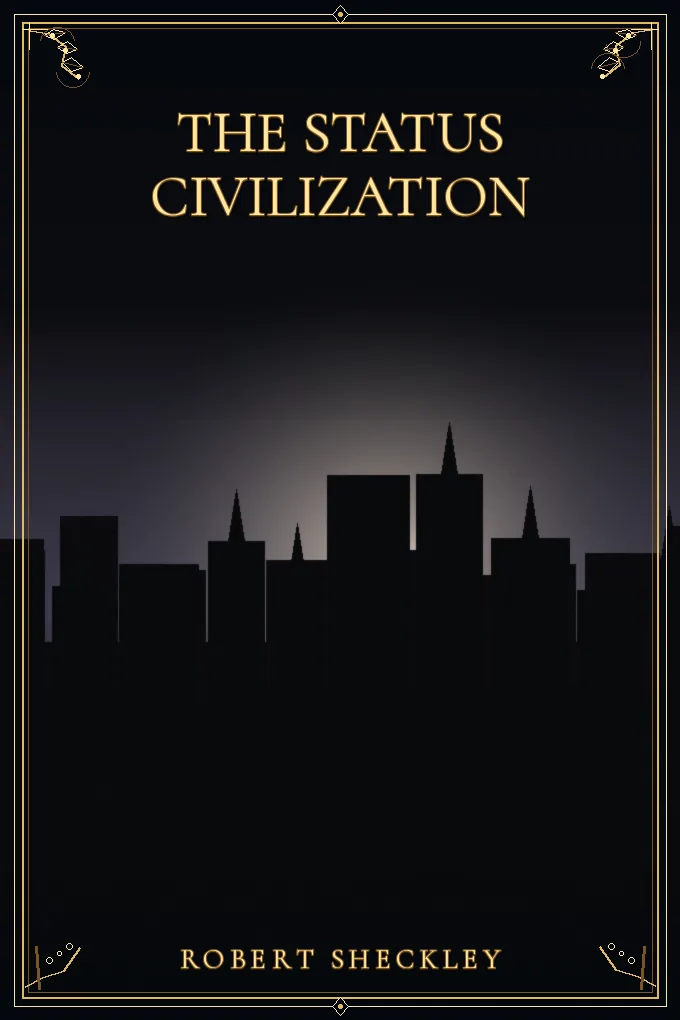
Cover illustration for The Status Civilization
Context Illustration Reading 1/87 · 5 lines
English subtitles · tap any word to listen 1 / 5
Using his sword two-handed, Barrent lopped off vines; others grew in their place.
He worked with frantic speed to keep the vines from surrounding him.
His arms were becoming tired, and the tree regenerated faster than he could cut it down.
There seemed no way of destroying it.
His only hope lay in the tree's slow movements.
0:00 / 0:00
Speed 0.75x
AI-generated narration by OpenAI · Slow US English
LEARNER DICTIONARY
Archivist
/ˈɑːrkɪvɪst/
Editorial verification pending

A keeper or guardian of historical records and memories.

The Status Civilization

Chapter VII · Chapter 7

Chapter 7 of The Status Civilization is here in full — 438 sentences across 88 reading sections, with audio for every sentence and word.

Reading 1/87 · 5 reading units · Lines 1–5

Line 1
Using his sword two-handed, Barrent lopped off vines; others grew in their place.
Line 2
He worked with frantic speed to keep the vines from surrounding him.
/hiː wɜːrkt wɪð ˈfræntɪk spiːd tuː kiːp ðə vaɪnz frʌm sərˈaʊndɪŋ hɪm/
Line 3
His arms were becoming tired, and the tree regenerated faster than he could cut it down.
/hɪz ɑːrmz wɜːr bɪˈkʌmɪŋ ˈtaɪərd ənd ðə triː riˈdʒenəreɪtɪd ˈfæstər ðæn hiː kʊd kʌt ɪt daʊn/
Line 4
There seemed no way of destroying it.
/ðer siːmd noʊ weɪ ʌv dɪˈstrɔɪɪŋ ɪt/
Line 5
His only hope lay in the tree's slow movements.

Learner Dictionary

These definitions explain words found in the current reading and keep every example grounded in its original sentence.

Oxford-style entry order: headword, part of speech, US IPA, concise definition, contextual example, and audio.

destroying verb US /dɪˈstrɔɪɪŋ/

-ing form of “destroy” — do away with, cause the destruction or undoing of

From this reading “There seemed no way of destroying it.”

faster adverb US /ˈfæstər/

more quickly

From this reading “His arms were becoming tired, and the tree regenerated faster than he could cut it down.”

frantic adjective US /ˈfræntɪk/

excessively agitated; distraught with fear or other violent emotion

From this reading “He worked with frantic speed to keep the vines from surrounding him.”

lopped verb US /lɑːpt/

inflected form of “lop” — cut off from a whole

From this reading “Using his sword two-handed, Barrent lopped off vines; others grew in their place.”

regenerated verb US /riˈdʒenəreɪtɪd/

past form of “regenerate” — reestablish on a new, usually improved, basis or make new or like new

From this reading “His arms were becoming tired, and the tree regenerated faster than he could cut it down.”

surrounding adjective US /sərˈaʊndɪŋ/

closely encircling

From this reading “He worked with frantic speed to keep the vines from surrounding him.”

Using noun US /ˈjuːzɪŋ/

an act that exploits or victimizes someone (treats them unfairly)

From this reading “Using his sword two-handed, Barrent lopped off vines; others grew in their place.”

vines noun US /vaɪnz/

plural of “vine” — a plant with a weak stem that derives support from climbing, twining, or creeping along a surface

From this reading “Using his sword two-handed, Barrent lopped off vines; others grew in their place.”

All words in this reading · 49

Every word in these five lines is listed here, and every one of them can be played on its own.

Dictionary details are shown only when verified; these are not licensed Oxford entries.

andconjunctionUS /ənd/

used to join words or parts of a sentence that go together

From this reading His arms were becoming tired, and the tree regenerated faster than he could cut it down.

armsnounUS /ɑːrmz/

weapons considered collectively

From this reading His arms were becoming tired, and the tree regenerated faster than he could cut it down.

Barrent

Dictionary entry pending editorial verification. Tap Listen to hear the word.

From this reading Using his sword two-handed, Barrent lopped off vines; others grew in their place.

becomingadjectiveUS /bɪˈkʌmɪŋ/

according with custom or propriety

From this reading His arms were becoming tired, and the tree regenerated faster than he could cut it down.

couldmodal verbUS /kʊd/

the past of “can”; used for possibility or polite requests

From this reading His arms were becoming tired, and the tree regenerated faster than he could cut it down.

cutverbUS /kʌt/

separate with or as if with an instrument

From this reading His arms were becoming tired, and the tree regenerated faster than he could cut it down.

destroyingverbUS /dɪˈstrɔɪɪŋ/

-ing form of “destroy” — do away with, cause the destruction or undoing of

From this reading There seemed no way of destroying it.

downadjectiveUS /daʊn/

being or moving lower in position or less in some value

From this reading His arms were becoming tired, and the tree regenerated faster than he could cut it down.

fasteradverbUS /ˈfæstər/

more quickly

From this reading His arms were becoming tired, and the tree regenerated faster than he could cut it down.

franticadjectiveUS /ˈfræntɪk/

excessively agitated; distraught with fear or other violent emotion

From this reading He worked with frantic speed to keep the vines from surrounding him.

fromprepositionUS /frʌm/

showing where something starts, or who sent it

From this reading He worked with frantic speed to keep the vines from surrounding him.

grewverbUS /ɡruː/

inflected form of “grow” — pass into a condition gradually, take on a specific property or attribute; become

From this reading Using his sword two-handed, Barrent lopped off vines; others grew in their place.

HepronounUS /hiː/

a man, boy, or male animal already mentioned, as the subject

From this reading He worked with frantic speed to keep the vines from surrounding him.

himpronounUS /hɪm/

the male already mentioned, as the object of a verb or preposition

From this reading He worked with frantic speed to keep the vines from surrounding him.

hisdeterminerUS /hɪz/

belonging to a man, boy, or male animal already mentioned

From this reading Using his sword two-handed, Barrent lopped off vines; others grew in their place.

hopenounUS /hoʊp/

a specific instance of feeling hopeful

From this reading His only hope lay in the tree's slow movements.

inprepositionUS /ɪn/

inside something, or within a place, period, or state

From this reading Using his sword two-handed, Barrent lopped off vines; others grew in their place.

itpronounUS /ɪt/

a thing, animal, or idea already mentioned

From this reading His arms were becoming tired, and the tree regenerated faster than he could cut it down.

keepverbUS /kiːp/

cause to continue in a certain state, position, or activity; e.g., “keep clean”

From this reading He worked with frantic speed to keep the vines from surrounding him.

layverbUS /leɪ/

put into a certain place or abstract location

From this reading His only hope lay in the tree's slow movements.

loppedverbUS /lɑːpt/

inflected form of “lop” — cut off from a whole

From this reading Using his sword two-handed, Barrent lopped off vines; others grew in their place.

movementsnounUS /ˈmuːvmənts/

plural of “movement” — a change of position that does not entail a change of location

From this reading His only hope lay in the tree's slow movements.

nodeterminerUS /noʊ/

not any; not one

From this reading There seemed no way of destroying it.

ofprepositionUS /ʌv/

belonging to, or connected with, somebody or something

From this reading There seemed no way of destroying it.

offadverbUS /ɔːf/

from a particular thing or place or position (“forth” is obsolete)

From this reading Using his sword two-handed, Barrent lopped off vines; others grew in their place.

onlyadverbUS /ˈoʊnli/

and nothing more

From this reading His only hope lay in the tree's slow movements.

others

Dictionary entry pending editorial verification. Tap Listen to hear the word.

From this reading Using his sword two-handed, Barrent lopped off vines; others grew in their place.

placenounUS /pleɪs/

a point located with respect to surface features of some region

From this reading Using his sword two-handed, Barrent lopped off vines; others grew in their place.

regeneratedverbUS /riˈdʒenəreɪtɪd/

past form of “regenerate” — reestablish on a new, usually improved, basis or make new or like new

From this reading His arms were becoming tired, and the tree regenerated faster than he could cut it down.

seemedverbUS /siːmd/

past form of “seem” — give a certain impression or have a certain outward aspect

From this reading There seemed no way of destroying it.

slowadjectiveUS /sloʊ/

not moving quickly; taking a comparatively long time

From this reading His only hope lay in the tree's slow movements.

speedverbUS /spiːd/

move hurridly

From this reading He worked with frantic speed to keep the vines from surrounding him.

surroundingadjectiveUS /sərˈaʊndɪŋ/

closely encircling

From this reading He worked with frantic speed to keep the vines from surrounding him.

swordnounUS /sɔːrd/

a cutting or thrusting weapon that has a long metal blade and a hilt with a hand guard

From this reading Using his sword two-handed, Barrent lopped off vines; others grew in their place.

thanconjunctionUS /ðæn/

used to introduce the second part of a comparison

From this reading His arms were becoming tired, and the tree regenerated faster than he could cut it down.

thedeterminerUS /ðə/

used before a noun that is already known, already mentioned, or the only one of its kind

From this reading He worked with frantic speed to keep the vines from surrounding him.

theirdeterminerUS /ðer/

belonging to the people or things already mentioned

From this reading Using his sword two-handed, Barrent lopped off vines; others grew in their place.

ThereadverbUS /ðer/

in or at that place or location

From this reading There seemed no way of destroying it.

tiredadjectiveUS /ˈtaɪərd/

depleted of strength or energy

From this reading His arms were becoming tired, and the tree regenerated faster than he could cut it down.

toparticleUS /tuː/

used before the base form of a verb to make the infinitive

From this reading He worked with frantic speed to keep the vines from surrounding him.

treenounUS /triː/

a tall perennial woody plant having a main trunk and branches forming a distinct elevated crown; includes both gymnosperms and angiosperms

From this reading His arms were becoming tired, and the tree regenerated faster than he could cut it down.

tree's

Dictionary entry pending editorial verification. Tap Listen to hear the word.

From this reading His only hope lay in the tree's slow movements.

two-handedadjective

equally skillful with each hand

From this reading Using his sword two-handed, Barrent lopped off vines; others grew in their place.

UsingnounUS /ˈjuːzɪŋ/

an act that exploits or victimizes someone (treats them unfairly)

From this reading Using his sword two-handed, Barrent lopped off vines; others grew in their place.

vinesnounUS /vaɪnz/

plural of “vine” — a plant with a weak stem that derives support from climbing, twining, or creeping along a surface

From this reading Using his sword two-handed, Barrent lopped off vines; others grew in their place.

waynounUS /weɪ/

how something is done or how it happens

From this reading There seemed no way of destroying it.

wereauxiliary verbUS /wɜːr/

the past form of “be” used with you, we, they, or a plural noun

From this reading His arms were becoming tired, and the tree regenerated faster than he could cut it down.

withprepositionUS /wɪð/

in the company of; together with

From this reading He worked with frantic speed to keep the vines from surrounding him.

workedverbUS /wɜːrkt/

past form of “work” — exert oneself by doing mental or physical work for a purpose or out of necessity

From this reading He worked with frantic speed to keep the vines from surrounding him.

Chapter 7 of The Status Civilization by Robert Sheckley holds 438 sentences, grouped into 88 reading sections of at most 5 sentences. The text is the source edition, unabridged, and the chapter records which sentences cover which part of the work so that nothing is dropped. Every word can be tapped for its pronunciation and dictionary entry.

What does chapter 7 of The Status Civilization contain?

Chapter 7 holds 438 sentences of The Status Civilization, unabridged, divided into 88 reading sections.

This page carries chapter 7 of The Status Civilization by Robert Sheckley exactly as it stands in the source edition, without abridgement. It runs to 438 sentences, grouped into 88 sections of at most 5 sentences so that a reader can take the chapter in steady, finishable pieces. The chapter also stores a coverage record mapping every one of its sentences to a part of the work, which is how the edition demonstrates that no line was dropped.

How do I study chapter 7 of The Status Civilization?

Work through the 88 sections in order, replaying any sentence and tapping unfamiliar words for their entries.

Each of the 88 sections in this chapter is short enough to read once, hear once, and then re-read with the vocabulary in view. Tapping a word plays it alone and opens its dictionary entry with IPA, part of speech and meaning, so the reader is never forced to guess a pronunciation from spelling. Working section by section keeps a long chapter from becoming an undifferentiated wall of text, which is the usual reason a reader abandons a work of this period.

Can chapter 7 be read aloud to me?

Yes — every sentence and every individual word in chapter 7 can be played aloud in United States English.

Audio covers the whole chapter: any sentence can be played, and any single word within it can be played on its own. The voice uses United States English. For a work of this period that matters, because spelling is an unreliable guide to pronunciation for vocabulary that has fallen out of daily use, and a learner who guesses wrong tends to keep the error. Hearing the word in its own sentence, and then alone, settles it.

Questions about reading The Status Civilization

Common questions about reading The Status Civilization by Robert Sheckley on this page, its source edition and its audio.

Is this the complete text of The Status Civilization?

Yes. All 4293 sentences of Project Gutenberg eBook #20919 are kept, with a record of which sentences cover which part.

Which edition of The Status Civilization is used?

Project Gutenberg eBook #20919, unabridged. The Project Gutenberg header, footer and licence are removed.

How long does The Status Civilization take to read?

About 357 minutes of reading across 859 sections of 5 sentences each, at an unhurried pace.

How to read The Status Civilization section by section

How to work through The Status Civilization section by section, using the audio and the tap-to-define vocabulary.

  1. Open a chapter

    Choose one of the 10 chapters of The Status Civilization to begin.

  2. Read one section

    Each section holds 5 sentences; read it once through.

  3. Listen and tap

    Play the section aloud, then tap any unfamiliar word for its entry.

Vocabulary met early in The Status Civilization

Words and structures a reader meets early in The Status Civilization, each tappable for pronunciation and meaning.

Three
A word that appears in the opening chapter of The Status Civilization; the reader can tap it to hear it and see its dictionary entry.
Outside
A word that appears in the opening chapter of The Status Civilization; the reader can tap it to hear it and see its dictionary entry.
Trying
A word that appears in the opening chapter of The Status Civilization; the reader can tap it to hear it and see its dictionary entry.
Quite
A word that appears in the opening chapter of The Status Civilization; the reader can tap it to hear it and see its dictionary entry.