Learn English through classic literature • Five-line readings • Clear US narration
VELMORA ACADEMY
Academy of Archival Languages & Memory Studies
Menu Close
Three Soldiers
Three Soldiers

Chapter XXV · Chapter 25

Chapter 25 of Three Soldiers is here in full — 421 sentences across 85 reading sections, with audio for every sentence and word.

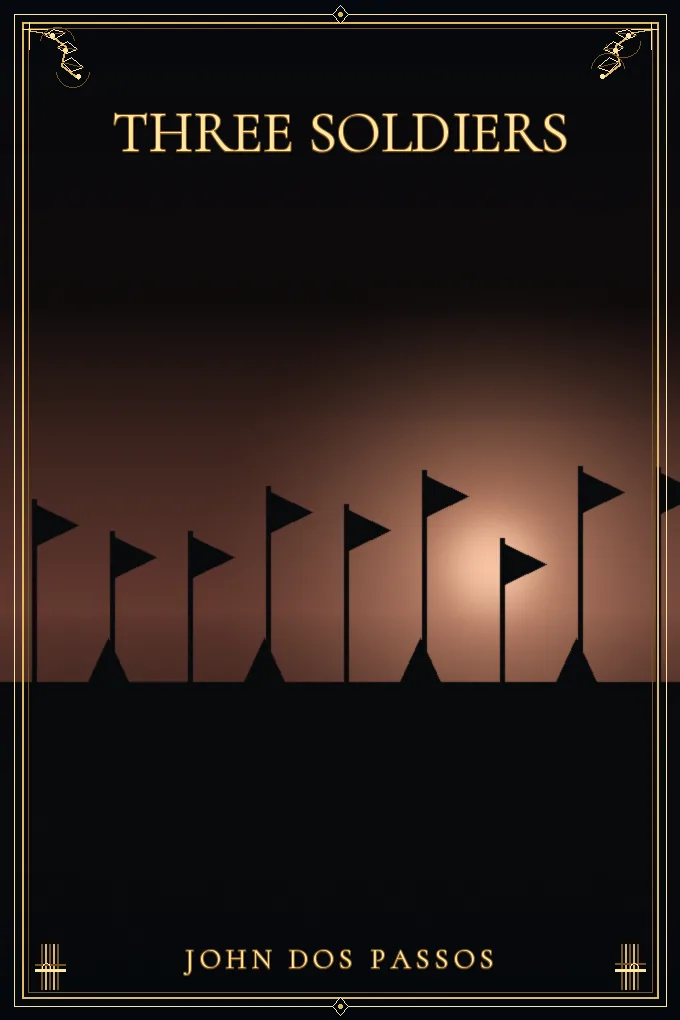
Cover illustration for Three Soldiers
Context Illustration Reading 1/84 · 5 lines
English subtitles · tap any word to listen 1 / 5
They did in Russia.”
Then we'd be free, civilians, like we all was before the draft.
But that ain't possible, Andy; that ain't possible, Andy.”
We'll see,” said Andrews, as, he opened the door to the bar.
He went up excitedly to the Chink, who sat behind the row of bottles along the bar.
0:00 / 0:00
Speed 0.75x
AI-generated narration by OpenAI · Slow US English
LEARNER DICTIONARY
Archivist
/ˈɑːrkɪvɪst/
Editorial verification pending

A keeper or guardian of historical records and memories.

Three Soldiers

Chapter XXV · Chapter 25

Chapter 25 of Three Soldiers is here in full — 421 sentences across 85 reading sections, with audio for every sentence and word.

Reading 1/84 · 5 reading units · Lines 1–5

Line 1
They did in Russia.”
/ðeɪ dɪd ɪn ˈrʌʃə/
Line 2
Then we'd be free, civilians, like we all was before the draft.
Line 3
But that ain't possible, Andy; that ain't possible, Andy.”
Line 4
We'll see,” said Andrews, as, he opened the door to the bar.
Line 5
He went up excitedly to the Chink, who sat behind the row of bottles along the bar.
/hiː went ʌp ɪkˈsaɪtədli tuː ðə tʃɪŋk huː sæt bɪˈhaɪnd ðə roʊ ʌv ˈbɑːtəlz əˈlɔːŋ ðə bɑːr/

Learner Dictionary

These definitions explain words found in the current reading and keep every example grounded in its original sentence.

Oxford-style entry order: headword, part of speech, US IPA, concise definition, contextual example, and audio.

Andrews noun US /ˈændruːz/

United States naturalist who contributed to paleontology and geology (1884-1960)

From this reading ““We'll see,” said Andrews, as, he opened the door to the bar.”

bar noun US /bɑːr/

a room or establishment where alcoholic drinks are served over a counter

From this reading ““We'll see,” said Andrews, as, he opened the door to the bar.”

bottles noun US /ˈbɑːtəlz/

plural of “bottle” — a glass or plastic vessel used for storing drinks or other liquids; typically cylindrical without handles and with a narrow neck that can be plugged or capped

From this reading “He went up excitedly to the Chink, who sat behind the row of bottles along the bar.”

Chink noun US /tʃɪŋk/

(ethnic slur) offensive term for a person of Chinese descent

From this reading “He went up excitedly to the Chink, who sat behind the row of bottles along the bar.”

civilians noun US /səˈvɪljənz/

plural of “civilian” — a nonmilitary citizen

From this reading ““Then we'd be free, civilians, like we all was before the draft.”

draft noun US /dræft/

a document ordering the payment of money; drawn by one person or bank on another

From this reading ““Then we'd be free, civilians, like we all was before the draft.”

excitedly adverb US /ɪkˈsaɪtədli/

with excitement; in an excited manner

From this reading “He went up excitedly to the Chink, who sat behind the row of bottles along the bar.”

Russia noun US /ˈrʌʃə/

a former communist country in eastern Europe and northern Asia; established in 1922; included Russia and 14 other soviet socialist republics (Ukraine and Byelorussia and others); officially dissolved 31 December 1991

From this reading ““They did in Russia.””

All words in this reading · 42

Every word in these five lines is listed here, and every one of them can be played on its own.

Dictionary details are shown only when verified; these are not licensed Oxford entries.

ain't

Dictionary entry pending editorial verification. Tap Listen to hear the word.

From this reading But that ain't possible, Andy; that ain't possible, Andy.”

alladjectiveUS /ɔːl/

(quantifier) used with either mass or count nouns to indicate the whole number or amount of or every one of a class

From this reading “Then we'd be free, civilians, like we all was before the draft.

alongprepositionUS /əˈlɔːŋ/

following the length of something from one end toward the other

From this reading He went up excitedly to the Chink, who sat behind the row of bottles along the bar.

AndrewsnounUS /ˈændruːz/

United States naturalist who contributed to paleontology and geology (1884-1960)

From this reading “We'll see,” said Andrews, as, he opened the door to the bar.

Andy

Dictionary entry pending editorial verification. Tap Listen to hear the word.

From this reading But that ain't possible, Andy; that ain't possible, Andy.”

asconjunctionUS /æz/

at the same time that; because; in the way that

From this reading “We'll see,” said Andrews, as, he opened the door to the bar.

barnounUS /bɑːr/

a room or establishment where alcoholic drinks are served over a counter

From this reading “We'll see,” said Andrews, as, he opened the door to the bar.

beauxiliary verbUS /biː/

used with a past participle to form the passive, or with -ing for continuous tenses

From this reading “Then we'd be free, civilians, like we all was before the draft.

beforeprepositionUS /bɪˈfɔːr/

earlier than; in front of

From this reading “Then we'd be free, civilians, like we all was before the draft.

behindprepositionUS /bɪˈhaɪnd/

at or toward the back of something

From this reading He went up excitedly to the Chink, who sat behind the row of bottles along the bar.

bottlesnounUS /ˈbɑːtəlz/

plural of “bottle” — a glass or plastic vessel used for storing drinks or other liquids; typically cylindrical without handles and with a narrow neck that can be plugged or capped

From this reading He went up excitedly to the Chink, who sat behind the row of bottles along the bar.

ButconjunctionUS /bʌt/

used to introduce something that contrasts with what came before

From this reading But that ain't possible, Andy; that ain't possible, Andy.”

ChinknounUS /tʃɪŋk/

(ethnic slur) offensive term for a person of Chinese descent

From this reading He went up excitedly to the Chink, who sat behind the row of bottles along the bar.

civiliansnounUS /səˈvɪljənz/

plural of “civilian” — a nonmilitary citizen

From this reading “Then we'd be free, civilians, like we all was before the draft.

didauxiliary verbUS /dɪd/

the past form of “do”, used in questions and negatives

From this reading “They did in Russia.”

doornounUS /dɔːr/

a swinging or sliding barrier that will close the entrance to a room or building or vehicle

From this reading “We'll see,” said Andrews, as, he opened the door to the bar.

draftnounUS /dræft/

a document ordering the payment of money; drawn by one person or bank on another

From this reading “Then we'd be free, civilians, like we all was before the draft.

excitedlyadverbUS /ɪkˈsaɪtədli/

with excitement; in an excited manner

From this reading He went up excitedly to the Chink, who sat behind the row of bottles along the bar.

freeverbUS /friː/

grant freedom to; free from confinement

From this reading “Then we'd be free, civilians, like we all was before the draft.

hepronounUS /hiː/

a man, boy, or male animal already mentioned, as the subject

From this reading “We'll see,” said Andrews, as, he opened the door to the bar.

inprepositionUS /ɪn/

inside something, or within a place, period, or state

From this reading “They did in Russia.”

likeverbUS /laɪk/

prefer or wish to do something

From this reading “Then we'd be free, civilians, like we all was before the draft.

ofprepositionUS /ʌv/

belonging to, or connected with, somebody or something

From this reading He went up excitedly to the Chink, who sat behind the row of bottles along the bar.

openedadjectiveUS /ˈoʊpənd/

used of mouth or eyes

From this reading “We'll see,” said Andrews, as, he opened the door to the bar.

possibleadjectiveUS /ˈpɑːsəbəl/

capable of happening or existing

From this reading But that ain't possible, Andy; that ain't possible, Andy.”

rownounUS /roʊ/

an arrangement of objects or people side by side in a line

From this reading He went up excitedly to the Chink, who sat behind the row of bottles along the bar.

RussianounUS /ˈrʌʃə/

a former communist country in eastern Europe and northern Asia; established in 1922; included Russia and 14 other soviet socialist republics (Ukraine and Byelorussia and others); officially dissolved 31 December 1991

From this reading “They did in Russia.”

saidadjectiveUS /sed/

being the one previously mentioned or spoken of

From this reading “We'll see,” said Andrews, as, he opened the door to the bar.

satnounUS /sæt/

the seventh and last day of the week; observed as the Sabbath by Jews and some Christians

From this reading He went up excitedly to the Chink, who sat behind the row of bottles along the bar.

seeverbUS /siː/

perceive by sight or have the power to perceive by sight

From this reading “We'll see,” said Andrews, as, he opened the door to the bar.

thatconjunctionUS /ðæt/

used to introduce what somebody said, thought, or felt

From this reading But that ain't possible, Andy; that ain't possible, Andy.”

thedeterminerUS /ðə/

used before a noun that is already known, already mentioned, or the only one of its kind

From this reading “Then we'd be free, civilians, like we all was before the draft.

ThenadverbUS /ðen/

subsequently or soon afterward (often used as sentence connectors)

From this reading “Then we'd be free, civilians, like we all was before the draft.

TheypronounUS /ðeɪ/

the people, animals, or things already mentioned, as the subject

From this reading “They did in Russia.”

toparticleUS /tuː/

used before the base form of a verb to make the infinitive

From this reading “We'll see,” said Andrews, as, he opened the door to the bar.

upadjectiveUS /ʌp/

being or moving higher in position or greater in some value; being above a former position or level

From this reading He went up excitedly to the Chink, who sat behind the row of bottles along the bar.

wasauxiliary verbUS /wɑːz/

the past form of “be” used with I, he, she, it, or a singular noun

From this reading “Then we'd be free, civilians, like we all was before the draft.

wepronounUS /wiː/

the speaker together with one or more other people

From this reading “Then we'd be free, civilians, like we all was before the draft.

we'd

Dictionary entry pending editorial verification. Tap Listen to hear the word.

From this reading “Then we'd be free, civilians, like we all was before the draft.

We'll

Dictionary entry pending editorial verification. Tap Listen to hear the word.

From this reading “We'll see,” said Andrews, as, he opened the door to the bar.

wentverbUS /went/

inflected form of “go” — change location; move, travel, or proceed, also metaphorically

From this reading He went up excitedly to the Chink, who sat behind the row of bottles along the bar.

whopronounUS /huː/

which person or people

From this reading He went up excitedly to the Chink, who sat behind the row of bottles along the bar.

Chapter 25 of Three Soldiers by John Dos Passos holds 421 sentences, grouped into 85 reading sections of at most 5 sentences. The text is the public-domain source, unabridged, and the chapter records which sentences cover which part of the work so that nothing is dropped. Every word can be tapped for its pronunciation and dictionary entry.

What does chapter 25 of Three Soldiers contain?

Chapter 25 holds 421 sentences of Three Soldiers, unabridged, divided into 85 reading sections.

This page carries chapter 25 of Three Soldiers by John Dos Passos exactly as it stands in the public-domain source edition, without abridgement. It runs to 421 sentences, grouped into 85 sections of at most 5 sentences so that a reader can take the chapter in steady, finishable pieces. The chapter also stores a coverage record mapping every one of its sentences to a part of the work, which is how the edition demonstrates that no line was dropped.

How do I study chapter 25 of Three Soldiers?

Work through the 85 sections in order, replaying any sentence and tapping unfamiliar words for their entries.

Each of the 85 sections in this chapter is short enough to read once, hear once, and then re-read with the vocabulary in view. Tapping a word plays it alone and opens its dictionary entry with IPA, part of speech and meaning, so the reader is never forced to guess a pronunciation from spelling. Working section by section keeps a long chapter from becoming an undifferentiated wall of text, which is the usual reason a reader abandons a work of this period.

Can chapter 25 be read aloud to me?

Yes — every sentence and every individual word in chapter 25 can be played aloud in United States English.

Audio covers the whole chapter: any sentence can be played, and any single word within it can be played on its own. The voice uses United States English. For a work of this period that matters, because spelling is an unreliable guide to pronunciation for vocabulary that has fallen out of daily use, and a learner who guesses wrong tends to keep the error. Hearing the word in its own sentence, and then alone, settles it.

Questions about reading Three Soldiers

Common questions about reading Three Soldiers by John Dos Passos on this page, its source edition and its audio.

Is this the complete text of Three Soldiers?

Yes. All 10744 sentences of Project Gutenberg eBook #6362 are kept, with a record of which sentences cover which part.

Which edition of Three Soldiers is used?

Project Gutenberg eBook #6362, a public-domain edition. The Project Gutenberg header, footer and licence are removed.

How long does Three Soldiers take to read?

About 600 minutes of reading across 2149 sections of 5 sentences each, at an unhurried pace.

How to read Three Soldiers section by section

How to work through Three Soldiers section by section, using the audio and the tap-to-define vocabulary.

  1. Open a chapter

    Choose one of the 26 chapters of Three Soldiers to begin.

  2. Read one section

    Each section holds 5 sentences; read it once through.

  3. Listen and tap

    Play the section aloud, then tap any unfamiliar word for its entry.

Vocabulary met early in Three Soldiers

Words and structures a reader meets early in Three Soldiers, each tappable for pronunciation and meaning.

Contemporains
A word that appears in the opening chapter of Three Soldiers; the reader can tap it to hear it and see its dictionary entry.
Souffrent
A word that appears in the opening chapter of Three Soldiers; the reader can tap it to hear it and see its dictionary entry.
Certaines
A word that appears in the opening chapter of Three Soldiers; the reader can tap it to hear it and see its dictionary entry.
Choses
A word that appears in the opening chapter of Three Soldiers; the reader can tap it to hear it and see its dictionary entry.