Complete classic literature • Five-line readings • Clear US narration
VELMORA ACADEMY
Academy of Archival Languages & Memory Studies
Menu Close
Tom, Dick and Harry
Tom, Dick and Harry

Chapter II · Chapter 2

Chapter 2 of Tom, Dick and Harry is here in full — 434 sentences across 87 reading sections, with audio for every sentence and word.

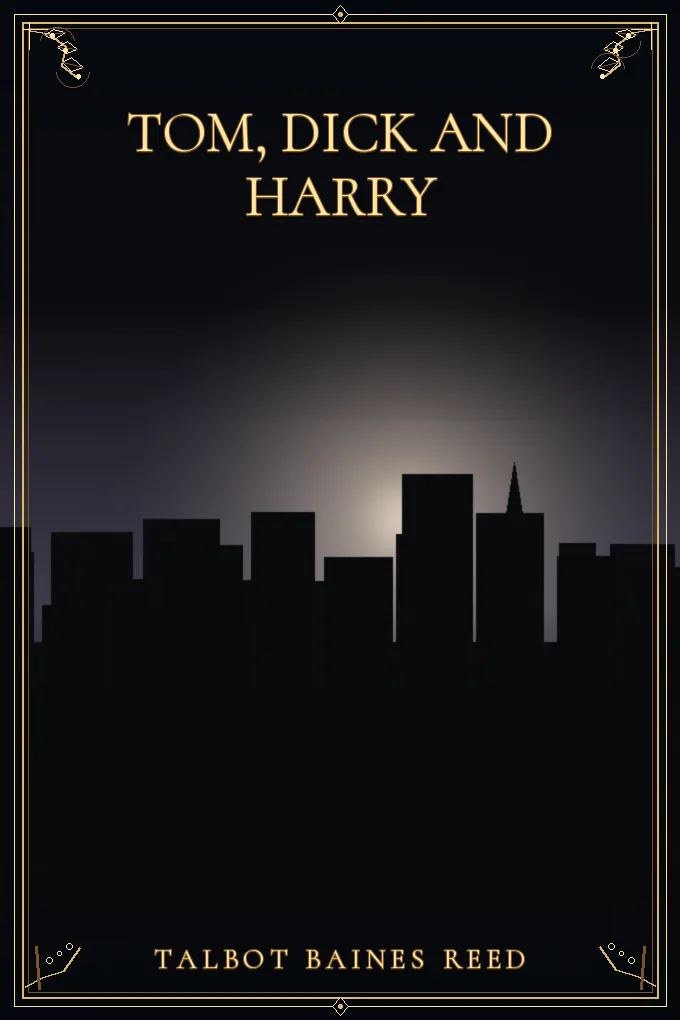
Cover illustration for Tom, Dick and Harry
Context Illustration Reading 1/86 · 5 lines
English subtitles · tap any word to listen 1 / 5
The bell began to ring before we had well completed the task.
"That ought to keep any more from running out," said Dicky.
"If we're lucky, the water will come in on its own hook at the other end."
The theory was not exactly scientific, for scientific men do not believe in luck.
Still, it was the best we could think of as we turned to go.
0:00 / 0:00
Speed 0.75x
AI-generated narration by OpenAI · Slow US English
LEARNER DICTIONARY
Archivist
/ˈɑːrkɪvɪst/
Editorial verification pending

A keeper or guardian of historical records and memories.

Tom, Dick and Harry

Chapter II · Chapter 2

Chapter 2 of Tom, Dick and Harry is here in full — 434 sentences across 87 reading sections, with audio for every sentence and word.

Reading 1/86 · 5 reading units · Lines 1–5

Line 1
The bell began to ring before we had well completed the task.
/ðə bel bɪˈɡæn tuː rɪŋ bɪˈfɔːr wiː hæd wel kəmˈpliːtəd ðə tæsk/
Line 2
"That ought to keep any more from running out," said Dicky.
/ðæt ɔːt tuː kiːp ˈeni mɔːr frʌm ˈrʌnɪŋ aʊt sed ˈdɪki/
Line 3
"If we're lucky, the water will come in on its own hook at the other end."
Line 4
The theory was not exactly scientific, for scientific men do not believe in luck.
/ðə ˈθɪri wɑːz nɑːt ɪɡˈzæktli ˌsaɪənˈtɪfɪk fɔːr ˌsaɪənˈtɪfɪk men duː nɑːt bɪˈliːv ɪn lʌk/
Line 5
Still, it was the best we could think of as we turned to go.
/stɪl ɪt wɑːz ðə best wiː kʊd θɪŋk ʌv æz wiː tɜːrnd tuː ɡoʊ/

Learner Dictionary

These definitions explain words found in the current reading and keep every example grounded in its original sentence.

Oxford-style entry order: headword, part of speech, US IPA, concise definition, contextual example, and audio.

completed adjective US /kəmˈpliːtəd/

successfully completed or brought to an end

From this reading “The bell began to ring before we had well completed the task.”

Dicky noun US /ˈdɪki/

a small third seat in the back of an old-fashioned two-seater

From this reading “"That ought to keep any more from running out," said Dicky.”

hook verb US /hʊk/

fasten with a hook

From this reading “"If we're lucky, the water will come in on its own hook at the other end."”

luck noun US /lʌk/

your overall circumstances or condition in life (including everything that happens to you)

From this reading “The theory was not exactly scientific, for scientific men do not believe in luck.”

lucky adjective US /ˈlʌki/

occurring by chance

From this reading “"If we're lucky, the water will come in on its own hook at the other end."”

scientific adjective US /ˌsaɪənˈtɪfɪk/

of or relating to the practice of science

From this reading “The theory was not exactly scientific, for scientific men do not believe in luck.”

task noun US /tæsk/

any piece of work that is undertaken or attempted

From this reading “The bell began to ring before we had well completed the task.”

theory noun US /ˈθɪri/

a well-substantiated explanation of some aspect of the natural world; an organized system of accepted knowledge that applies in a variety of circumstances to explain a specific set of phenomena

From this reading “The theory was not exactly scientific, for scientific men do not believe in luck.”

All words in this reading · 54

Every word in these five lines is listed here, and every one of them can be played on its own.

Dictionary details are shown only when verified; these are not licensed Oxford entries.

anyadjectiveUS /ˈeni/

one or some or every or all without specification

From this reading "That ought to keep any more from running out," said Dicky.

asconjunctionUS /æz/

at the same time that; because; in the way that

From this reading Still, it was the best we could think of as we turned to go.

atprepositionUS /æt/

in or near a particular place or position

From this reading "If we're lucky, the water will come in on its own hook at the other end."

beforeprepositionUS /bɪˈfɔːr/

earlier than; in front of

From this reading The bell began to ring before we had well completed the task.

beganverbUS /bɪˈɡæn/

inflected form of “begin” — take the first step or steps in carrying out an action

From this reading The bell began to ring before we had well completed the task.

believeverbUS /bɪˈliːv/

accept as true; take to be true

From this reading The theory was not exactly scientific, for scientific men do not believe in luck.

bellnounUS /bel/

a hollow device made of metal that makes a ringing sound when struck

From this reading The bell began to ring before we had well completed the task.

bestnounUS /best/

the supreme effort one can make

From this reading Still, it was the best we could think of as we turned to go.

comeverbUS /kʌm/

move toward, travel toward something or somebody or approach something or somebody

From this reading "If we're lucky, the water will come in on its own hook at the other end."

completedadjectiveUS /kəmˈpliːtəd/

successfully completed or brought to an end

From this reading The bell began to ring before we had well completed the task.

couldmodal verbUS /kʊd/

the past of “can”; used for possibility or polite requests

From this reading Still, it was the best we could think of as we turned to go.

DickynounUS /ˈdɪki/

a small third seat in the back of an old-fashioned two-seater

From this reading "That ought to keep any more from running out," said Dicky.

doauxiliary verbUS /duː/

used to form questions and negatives, and to give emphasis

From this reading The theory was not exactly scientific, for scientific men do not believe in luck.

endnounUS /end/

either extremity of something that has length

From this reading "If we're lucky, the water will come in on its own hook at the other end."

exactlyadverbUS /ɪɡˈzæktli/

indicating exactness or preciseness

From this reading The theory was not exactly scientific, for scientific men do not believe in luck.

forprepositionUS /fɔːr/

intended to be given to, or used by, somebody

From this reading The theory was not exactly scientific, for scientific men do not believe in luck.

fromprepositionUS /frʌm/

showing where something starts, or who sent it

From this reading "That ought to keep any more from running out," said Dicky.

goverbUS /ɡoʊ/

change location; move, travel, or proceed, also metaphorically

From this reading Still, it was the best we could think of as we turned to go.

hadauxiliary verbUS /hæd/

the past form of “have”, used to form the past perfect

From this reading The bell began to ring before we had well completed the task.

hookverbUS /hʊk/

fasten with a hook

From this reading "If we're lucky, the water will come in on its own hook at the other end."

IfconjunctionUS /ɪf/

on condition that; in the event that

From this reading "If we're lucky, the water will come in on its own hook at the other end."

inprepositionUS /ɪn/

inside something, or within a place, period, or state

From this reading "If we're lucky, the water will come in on its own hook at the other end."

itpronounUS /ɪt/

a thing, animal, or idea already mentioned

From this reading Still, it was the best we could think of as we turned to go.

itsdeterminerUS /ɪts/

belonging to the thing or animal already mentioned

From this reading "If we're lucky, the water will come in on its own hook at the other end."

keepverbUS /kiːp/

cause to continue in a certain state, position, or activity; e.g., “keep clean”

From this reading "That ought to keep any more from running out," said Dicky.

lucknounUS /lʌk/

your overall circumstances or condition in life (including everything that happens to you)

From this reading The theory was not exactly scientific, for scientific men do not believe in luck.

luckyadjectiveUS /ˈlʌki/

occurring by chance

From this reading "If we're lucky, the water will come in on its own hook at the other end."

mennounUS /men/

the force of workers available

From this reading The theory was not exactly scientific, for scientific men do not believe in luck.

moreadjectiveUS /mɔːr/

(comparative of “much” used with mass nouns) a quantifier meaning greater in size or amount or extent or degree

From this reading "That ought to keep any more from running out," said Dicky.

notadverbUS /nɑːt/

used to make a word, phrase, or sentence negative

From this reading The theory was not exactly scientific, for scientific men do not believe in luck.

ofprepositionUS /ʌv/

belonging to, or connected with, somebody or something

From this reading Still, it was the best we could think of as we turned to go.

onprepositionUS /ɑːn/

touching and supported by a surface

From this reading "If we're lucky, the water will come in on its own hook at the other end."

otheradjectiveUS /ˈʌðər/

not the same one or ones already mentioned or implied

From this reading "If we're lucky, the water will come in on its own hook at the other end."

oughtmodal verbUS /ɔːt/

used with “to” to say what is right or advisable

From this reading "That ought to keep any more from running out," said Dicky.

outadjectiveUS /aʊt/

not allowed to continue to bat or run

From this reading "That ought to keep any more from running out," said Dicky.

ownverbUS /oʊn/

have ownership or possession of

From this reading "If we're lucky, the water will come in on its own hook at the other end."

ringverbUS /rɪŋ/

sound loudly and sonorously

From this reading The bell began to ring before we had well completed the task.

runningadjectiveUS /ˈrʌnɪŋ/

(of fluids) moving or issuing in a stream

From this reading "That ought to keep any more from running out," said Dicky.

saidadjectiveUS /sed/

being the one previously mentioned or spoken of

From this reading "That ought to keep any more from running out," said Dicky.

scientificadjectiveUS /ˌsaɪənˈtɪfɪk/

of or relating to the practice of science

From this reading The theory was not exactly scientific, for scientific men do not believe in luck.

StilladjectiveUS /stɪl/

not in physical motion

From this reading Still, it was the best we could think of as we turned to go.

tasknounUS /tæsk/

any piece of work that is undertaken or attempted

From this reading The bell began to ring before we had well completed the task.

ThatconjunctionUS /ðæt/

used to introduce what somebody said, thought, or felt

From this reading "That ought to keep any more from running out," said Dicky.

ThedeterminerUS /ðə/

used before a noun that is already known, already mentioned, or the only one of its kind

From this reading The bell began to ring before we had well completed the task.

theorynounUS /ˈθɪri/

a well-substantiated explanation of some aspect of the natural world; an organized system of accepted knowledge that applies in a variety of circumstances to explain a specific set of phenomena

From this reading The theory was not exactly scientific, for scientific men do not believe in luck.

thinkverbUS /θɪŋk/

judge or regard; look upon; judge

From this reading Still, it was the best we could think of as we turned to go.

toparticleUS /tuː/

used before the base form of a verb to make the infinitive

From this reading The bell began to ring before we had well completed the task.

turnedadjectiveUS /tɜːrnd/

moved around an axis or center

From this reading Still, it was the best we could think of as we turned to go.

wasauxiliary verbUS /wɑːz/

the past form of “be” used with I, he, she, it, or a singular noun

From this reading The theory was not exactly scientific, for scientific men do not believe in luck.

waternounUS /ˈwɔːtər/

binary compound that occurs at room temperature as a clear colorless odorless tasteless liquid; freezes into ice below 0 degrees centigrade and boils above 100 degrees centigrade; widely used as a solvent

From this reading "If we're lucky, the water will come in on its own hook at the other end."

wepronounUS /wiː/

the speaker together with one or more other people

From this reading The bell began to ring before we had well completed the task.

we're

Dictionary entry pending editorial verification. Tap Listen to hear the word.

From this reading "If we're lucky, the water will come in on its own hook at the other end."

welladverbUS /wel/

(often used as a combining form) in a good or proper or satisfactory manner or to a high standard (“good” is a nonstandard dialectal variant for “well”)

From this reading The bell began to ring before we had well completed the task.

willmodal verbUS /wɪl/

used to talk about the future, or about willingness

From this reading "If we're lucky, the water will come in on its own hook at the other end."

Chapter 2 of Tom, Dick and Harry by Talbot Baines Reed holds 434 sentences, grouped into 87 reading sections of at most 5 sentences. The text is the source edition, unabridged, and the chapter records which sentences cover which part of the work so that nothing is dropped. Every word can be tapped for its pronunciation and dictionary entry.

What does chapter 2 of Tom, Dick and Harry contain?

Chapter 2 holds 434 sentences of Tom, Dick and Harry, unabridged, divided into 87 reading sections.

This page carries chapter 2 of Tom, Dick and Harry by Talbot Baines Reed exactly as it stands in the source edition, without abridgement. It runs to 434 sentences, grouped into 87 sections of at most 5 sentences so that a reader can take the chapter in steady, finishable pieces. The chapter also stores a coverage record mapping every one of its sentences to a part of the work, which is how the edition demonstrates that no line was dropped.

How do I study chapter 2 of Tom, Dick and Harry?

Work through the 87 sections in order, replaying any sentence and tapping unfamiliar words for their entries.

Each of the 87 sections in this chapter is short enough to read once, hear once, and then re-read with the vocabulary in view. Tapping a word plays it alone and opens its dictionary entry with IPA, part of speech and meaning, so the reader is never forced to guess a pronunciation from spelling. Working section by section keeps a long chapter from becoming an undifferentiated wall of text, which is the usual reason a reader abandons a work of this period.

Can chapter 2 be read aloud to me?

Yes — every sentence and every individual word in chapter 2 can be played aloud in United States English.

Audio covers the whole chapter: any sentence can be played, and any single word within it can be played on its own. The voice uses United States English. For a work of this period that matters, because spelling is an unreliable guide to pronunciation for vocabulary that has fallen out of daily use, and a learner who guesses wrong tends to keep the error. Hearing the word in its own sentence, and then alone, settles it.

Questions about reading Tom, Dick and Harry

Common questions about reading Tom, Dick and Harry by Talbot Baines Reed on this page, its source edition and its audio.

Is this the complete text of Tom, Dick and Harry?

Yes. All 5920 sentences of Project Gutenberg eBook #20992 are kept, with a record of which sentences cover which part.

Which edition of Tom, Dick and Harry is used?

Project Gutenberg eBook #20992, unabridged. The Project Gutenberg header, footer and licence are removed.

How long does Tom, Dick and Harry take to read?

About 493 minutes of reading across 1184 sections of 5 sentences each, at an unhurried pace.

How to read Tom, Dick and Harry section by section

How to work through Tom, Dick and Harry section by section, using the audio and the tap-to-define vocabulary.

  1. Open a chapter

    Choose one of the 14 chapters of Tom, Dick and Harry to begin.

  2. Read one section

    Each section holds 5 sentences; read it once through.

  3. Listen and tap

    Play the section aloud, then tap any unfamiliar word for its entry.

Vocabulary met early in Tom, Dick and Harry

Words and structures a reader meets early in Tom, Dick and Harry, each tappable for pronunciation and meaning.

Talbot
A word that appears in the opening chapter of Tom, Dick and Harry; the reader can tap it to hear it and see its dictionary entry.
Baines
A word that appears in the opening chapter of Tom, Dick and Harry; the reader can tap it to hear it and see its dictionary entry.
Another
A word that appears in the opening chapter of Tom, Dick and Harry; the reader can tap it to hear it and see its dictionary entry.
Author's
A word that appears in the opening chapter of Tom, Dick and Harry; the reader can tap it to hear it and see its dictionary entry.