Complete classic literature • Five-line readings • Clear US narration
VELMORA ACADEMY
Academy of Archival Languages & Memory Studies
Menu Close
Tomaso's Fortune and Other Stories

Chapter I · Chapter 1

Chapter 1 of Tomaso's Fortune and Other Stories is here in full — 436 sentences across 88 reading sections, with audio for every sentence and word.

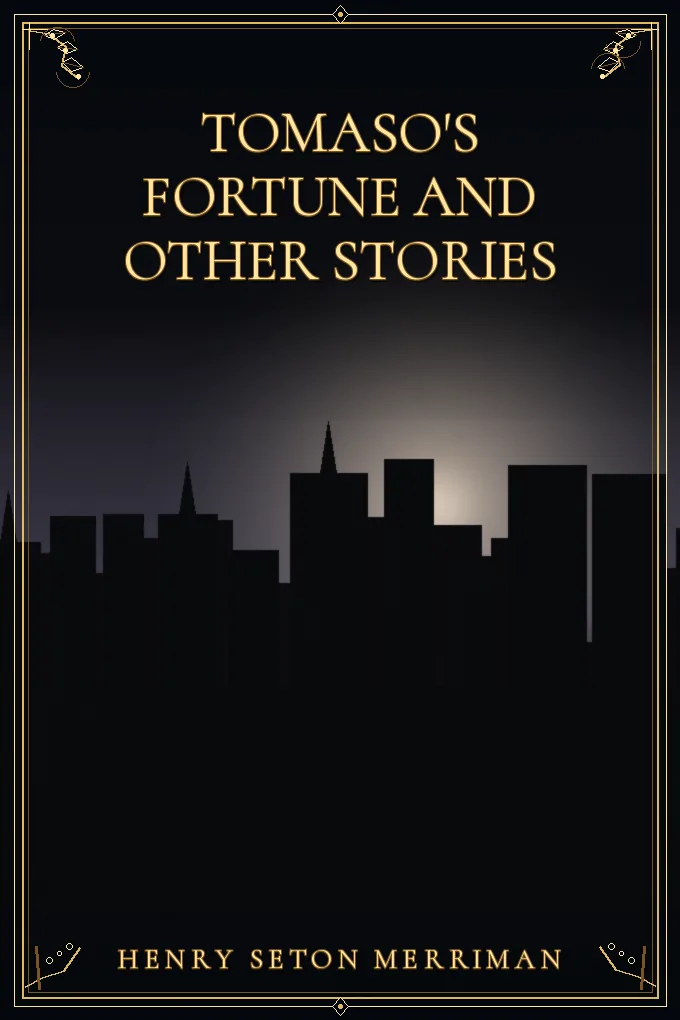
Cover illustration for Tomaso's Fortune and Other Stories
Context Illustration Reading 1/87 · 5 lines
English subtitles · tap any word to listen 1 / 5
By Henry Seton Merriman.
The common problem, yours, mine, every one's, Is--not to fancy what were fair in life Provided it could be,--but, finding first What may be, then find how to make it fair....”

LIST OF CONTENTS.
SISTER.
A SMALL WORLD.
0:00 / 0:00
Speed 0.75x
AI-generated narration by OpenAI · Slow US English
LEARNER DICTIONARY
Archivist
/ˈɑːrkɪvɪst/
Editorial verification pending

A keeper or guardian of historical records and memories.

Tomaso's Fortune and Other Stories

Chapter I · Chapter 1

Chapter 1 of Tomaso's Fortune and Other Stories is here in full — 436 sentences across 88 reading sections, with audio for every sentence and word.

Reading 1/87 · 5 reading units · Lines 1–5

Line 1
By Henry Seton Merriman.
Line 2
The common problem, yours, mine, every one's, Is--not to fancy what were fair in life Provided it could be,--but, finding first What may be, then find how to make it fair....”
Line 3
LIST OF CONTENTS.
/lɪst ʌv ˈkɑːntents/
Line 4
SISTER.
/ˈsɪstər/
Line 5
A SMALL WORLD.
/ə smɔːl wɜːrld/

Learner Dictionary

These definitions explain words found in the current reading and keep every example grounded in its original sentence.

Oxford-style entry order: headword, part of speech, US IPA, concise definition, contextual example, and audio.

contents noun US /ˈkɑːntents/

(usually plural) everything that is included in a collection and that is held or included in something

From this reading “LIST OF CONTENTS.”

fancy noun US /ˈfænsi/

something many people believe that is false

From this reading ““The common problem, yours, mine, every one's, Is--not to fancy what were fair in life Provided it could be,--but, finding first What may be, then find how to make it fair....””

finding noun US /ˈfaɪndɪŋ/

the act of determining the properties of something, usually by research or calculation

From this reading ““The common problem, yours, mine, every one's, Is--not to fancy what were fair in life Provided it could be,--but, finding first What may be, then find how to make it fair....””

Henry noun US /ˈhenri/

a unit of inductance in which an induced electromotive force of one volt is produced when the current is varied at the rate of one ampere per second

From this reading “By Henry Seton Merriman.”

list verb US /lɪst/

give or make a list of; name individually; give the names of

From this reading “LIST OF CONTENTS.”

problem noun US /ˈprɑːbləm/

a state of difficulty that needs to be resolved

From this reading ““The common problem, yours, mine, every one's, Is--not to fancy what were fair in life Provided it could be,--but, finding first What may be, then find how to make it fair....””

Provided verb US /prəˈvaɪdɪd/

past form of “provide” — give something useful or necessary to

From this reading ““The common problem, yours, mine, every one's, Is--not to fancy what were fair in life Provided it could be,--but, finding first What may be, then find how to make it fair....””

Seton noun US /ˈsiːtən/

United States religious leader who was the first person born in the United States to be canonized (1774-1821)

From this reading “By Henry Seton Merriman.”

All words in this reading · 39

Every word in these five lines is listed here, and every one of them can be played on its own.

Dictionary details are shown only when verified; these are not licensed Oxford entries.

AdeterminerUS /ə/

used before a singular noun to mean one of a group, when it is not a particular one

From this reading A SMALL WORLD.

beauxiliary verbUS /biː/

used with a past participle to form the passive, or with -ing for continuous tenses

From this reading “The common problem, yours, mine, every one's, Is--not to fancy what were fair in life Provided it could be,--but, finding first What may be, then find how to make it fair....”

butconjunctionUS /bʌt/

used to introduce something that contrasts with what came before

From this reading “The common problem, yours, mine, every one's, Is--not to fancy what were fair in life Provided it could be,--but, finding first What may be, then find how to make it fair....”

ByprepositionUS /baɪ/

showing who or what does the action

From this reading By Henry Seton Merriman.

commonadjectiveUS /ˈkɑːmən/

belonging to or participated in by a community as a whole; public

From this reading “The common problem, yours, mine, every one's, Is--not to fancy what were fair in life Provided it could be,--but, finding first What may be, then find how to make it fair....”

CONTENTSnounUS /ˈkɑːntents/

(usually plural) everything that is included in a collection and that is held or included in something

From this reading LIST OF CONTENTS.

couldmodal verbUS /kʊd/

the past of “can”; used for possibility or polite requests

From this reading “The common problem, yours, mine, every one's, Is--not to fancy what were fair in life Provided it could be,--but, finding first What may be, then find how to make it fair....”

everydeterminerUS /ˈevəri/

all the members of a group, with none left out

From this reading “The common problem, yours, mine, every one's, Is--not to fancy what were fair in life Provided it could be,--but, finding first What may be, then find how to make it fair....”

fairadjectiveUS /fer/

free from favoritism or self-interest or bias or deception; conforming with established standards or rules

From this reading “The common problem, yours, mine, every one's, Is--not to fancy what were fair in life Provided it could be,--but, finding first What may be, then find how to make it fair....”

fancynounUS /ˈfænsi/

something many people believe that is false

From this reading “The common problem, yours, mine, every one's, Is--not to fancy what were fair in life Provided it could be,--but, finding first What may be, then find how to make it fair....”

findverbUS /faɪnd/

come upon, as if by accident; meet with

From this reading “The common problem, yours, mine, every one's, Is--not to fancy what were fair in life Provided it could be,--but, finding first What may be, then find how to make it fair....”

findingnounUS /ˈfaɪndɪŋ/

the act of determining the properties of something, usually by research or calculation

From this reading “The common problem, yours, mine, every one's, Is--not to fancy what were fair in life Provided it could be,--but, finding first What may be, then find how to make it fair....”

firstadjectiveUS /fɜːrst/

preceding all others in time or space or degree

From this reading “The common problem, yours, mine, every one's, Is--not to fancy what were fair in life Provided it could be,--but, finding first What may be, then find how to make it fair....”

HenrynounUS /ˈhenri/

a unit of inductance in which an induced electromotive force of one volt is produced when the current is varied at the rate of one ampere per second

From this reading By Henry Seton Merriman.

how

Dictionary entry pending editorial verification. Tap Listen to hear the word.

From this reading “The common problem, yours, mine, every one's, Is--not to fancy what were fair in life Provided it could be,--but, finding first What may be, then find how to make it fair....”

inprepositionUS /ɪn/

inside something, or within a place, period, or state

From this reading “The common problem, yours, mine, every one's, Is--not to fancy what were fair in life Provided it could be,--but, finding first What may be, then find how to make it fair....”

Isauxiliary verbUS /ɪz/

the form of “be” used with he, she, it, or a singular noun

From this reading “The common problem, yours, mine, every one's, Is--not to fancy what were fair in life Provided it could be,--but, finding first What may be, then find how to make it fair....”

itpronounUS /ɪt/

a thing, animal, or idea already mentioned

From this reading “The common problem, yours, mine, every one's, Is--not to fancy what were fair in life Provided it could be,--but, finding first What may be, then find how to make it fair....”

lifenounUS /laɪf/

a characteristic state or mode of living

From this reading “The common problem, yours, mine, every one's, Is--not to fancy what were fair in life Provided it could be,--but, finding first What may be, then find how to make it fair....”

LISTverbUS /lɪst/

give or make a list of; name individually; give the names of

From this reading LIST OF CONTENTS.

makeverbUS /meɪk/

engage in

From this reading “The common problem, yours, mine, every one's, Is--not to fancy what were fair in life Provided it could be,--but, finding first What may be, then find how to make it fair....”

maymodal verbUS /meɪ/

used to say something is possible, or to give permission

From this reading “The common problem, yours, mine, every one's, Is--not to fancy what were fair in life Provided it could be,--but, finding first What may be, then find how to make it fair....”

Merriman

Dictionary entry pending editorial verification. Tap Listen to hear the word.

From this reading By Henry Seton Merriman.

minepronounUS /maɪn/

the one or ones belonging to the person speaking

From this reading “The common problem, yours, mine, every one's, Is--not to fancy what were fair in life Provided it could be,--but, finding first What may be, then find how to make it fair....”

notadverbUS /nɑːt/

used to make a word, phrase, or sentence negative

From this reading “The common problem, yours, mine, every one's, Is--not to fancy what were fair in life Provided it could be,--but, finding first What may be, then find how to make it fair....”

OFprepositionUS /ʌv/

belonging to, or connected with, somebody or something

From this reading LIST OF CONTENTS.

one's

Dictionary entry pending editorial verification. Tap Listen to hear the word.

From this reading “The common problem, yours, mine, every one's, Is--not to fancy what were fair in life Provided it could be,--but, finding first What may be, then find how to make it fair....”

problemnounUS /ˈprɑːbləm/

a state of difficulty that needs to be resolved

From this reading “The common problem, yours, mine, every one's, Is--not to fancy what were fair in life Provided it could be,--but, finding first What may be, then find how to make it fair....”

ProvidedverbUS /prəˈvaɪdɪd/

past form of “provide” — give something useful or necessary to

From this reading “The common problem, yours, mine, every one's, Is--not to fancy what were fair in life Provided it could be,--but, finding first What may be, then find how to make it fair....”

SetonnounUS /ˈsiːtən/

United States religious leader who was the first person born in the United States to be canonized (1774-1821)

From this reading By Henry Seton Merriman.

SISTERnounUS /ˈsɪstər/

a female person who has the same parents as another person

From this reading SISTER.

SMALLadjectiveUS /smɔːl/

limited or below average in number or quantity or magnitude or extent

From this reading A SMALL WORLD.

ThedeterminerUS /ðə/

used before a noun that is already known, already mentioned, or the only one of its kind

From this reading “The common problem, yours, mine, every one's, Is--not to fancy what were fair in life Provided it could be,--but, finding first What may be, then find how to make it fair....”

thenadverbUS /ðen/

subsequently or soon afterward (often used as sentence connectors)

From this reading “The common problem, yours, mine, every one's, Is--not to fancy what were fair in life Provided it could be,--but, finding first What may be, then find how to make it fair....”

toparticleUS /tuː/

used before the base form of a verb to make the infinitive

From this reading “The common problem, yours, mine, every one's, Is--not to fancy what were fair in life Provided it could be,--but, finding first What may be, then find how to make it fair....”

wereauxiliary verbUS /wɜːr/

the past form of “be” used with you, we, they, or a plural noun

From this reading “The common problem, yours, mine, every one's, Is--not to fancy what were fair in life Provided it could be,--but, finding first What may be, then find how to make it fair....”

whatpronounUS /wʌt/

used to ask for information about something

From this reading “The common problem, yours, mine, every one's, Is--not to fancy what were fair in life Provided it could be,--but, finding first What may be, then find how to make it fair....”

WORLDnounUS /wɜːrld/

everything that exists anywhere

From this reading A SMALL WORLD.

yourspronounUS /jʊrz/

the one or ones belonging to the person spoken to

From this reading “The common problem, yours, mine, every one's, Is--not to fancy what were fair in life Provided it could be,--but, finding first What may be, then find how to make it fair....”

Chapter 1 of Tomaso's Fortune and Other Stories by Henry Seton Merriman holds 436 sentences, grouped into 88 reading sections of at most 5 sentences. The text is the source edition, unabridged, and the chapter records which sentences cover which part of the work so that nothing is dropped. Every word can be tapped for its pronunciation and dictionary entry.

What does chapter 1 of Tomaso's Fortune and Other Stories contain?

Chapter 1 holds 436 sentences of Tomaso's Fortune and Other Stories, unabridged, divided into 88 reading sections.

This page carries chapter 1 of Tomaso's Fortune and Other Stories by Henry Seton Merriman exactly as it stands in the source edition, without abridgement. It runs to 436 sentences, grouped into 88 sections of at most 5 sentences so that a reader can take the chapter in steady, finishable pieces. The chapter also stores a coverage record mapping every one of its sentences to a part of the work, which is how the edition demonstrates that no line was dropped.

How do I study chapter 1 of Tomaso's Fortune and Other Stories?

Work through the 88 sections in order, replaying any sentence and tapping unfamiliar words for their entries.

Each of the 88 sections in this chapter is short enough to read once, hear once, and then re-read with the vocabulary in view. Tapping a word plays it alone and opens its dictionary entry with IPA, part of speech and meaning, so the reader is never forced to guess a pronunciation from spelling. Working section by section keeps a long chapter from becoming an undifferentiated wall of text, which is the usual reason a reader abandons a work of this period.

Can chapter 1 be read aloud to me?

Yes — every sentence and every individual word in chapter 1 can be played aloud in United States English.

Audio covers the whole chapter: any sentence can be played, and any single word within it can be played on its own. The voice uses United States English. For a work of this period that matters, because spelling is an unreliable guide to pronunciation for vocabulary that has fallen out of daily use, and a learner who guesses wrong tends to keep the error. Hearing the word in its own sentence, and then alone, settles it.

Questions about reading Tomaso's Fortune and Other Stories

Common questions about reading Tomaso's Fortune and Other Stories by Henry Seton Merriman on this page, its source edition and its audio.

Is this the complete text of Tomaso's Fortune and Other Stories?

Yes. All 4279 sentences of Project Gutenberg eBook #6974 are kept, with a record of which sentences cover which part.

Which edition of Tomaso's Fortune and Other Stories is used?

Project Gutenberg eBook #6974, unabridged. The Project Gutenberg header, footer and licence are removed.

How long does Tomaso's Fortune and Other Stories take to read?

About 356 minutes of reading across 856 sections of 5 sentences each, at an unhurried pace.

How to read Tomaso's Fortune and Other Stories section by section

How to work through Tomaso's Fortune and Other Stories section by section, using the audio and the tap-to-define vocabulary.

  1. Open a chapter

    Choose one of the 10 chapters of Tomaso's Fortune and Other Stories to begin.

  2. Read one section

    Each section holds 5 sentences; read it once through.

  3. Listen and tap

    Play the section aloud, then tap any unfamiliar word for its entry.

Vocabulary met early in Tomaso's Fortune and Other Stories

Words and structures a reader meets early in Tomaso's Fortune and Other Stories, each tappable for pronunciation and meaning.

Henry
A word that appears in the opening chapter of Tomaso's Fortune and Other Stories; the reader can tap it to hear it and see its dictionary entry.
Seton
A word that appears in the opening chapter of Tomaso's Fortune and Other Stories; the reader can tap it to hear it and see its dictionary entry.
Merriman
A word that appears in the opening chapter of Tomaso's Fortune and Other Stories; the reader can tap it to hear it and see its dictionary entry.
Common
A word that appears in the opening chapter of Tomaso's Fortune and Other Stories; the reader can tap it to hear it and see its dictionary entry.