Complete classic literature • Five-line readings • Clear US narration
VELMORA ACADEMY
Academy of Archival Languages & Memory Studies
Menu Close
Young Hunters in Porto Rico

Chapter IX · Fighting the Flames

Chapter IX of Young Hunters in Porto Rico, “Fighting the Flames,” is here in full — 99 sentences across 20 reading sections, with audio for every sentence and word.

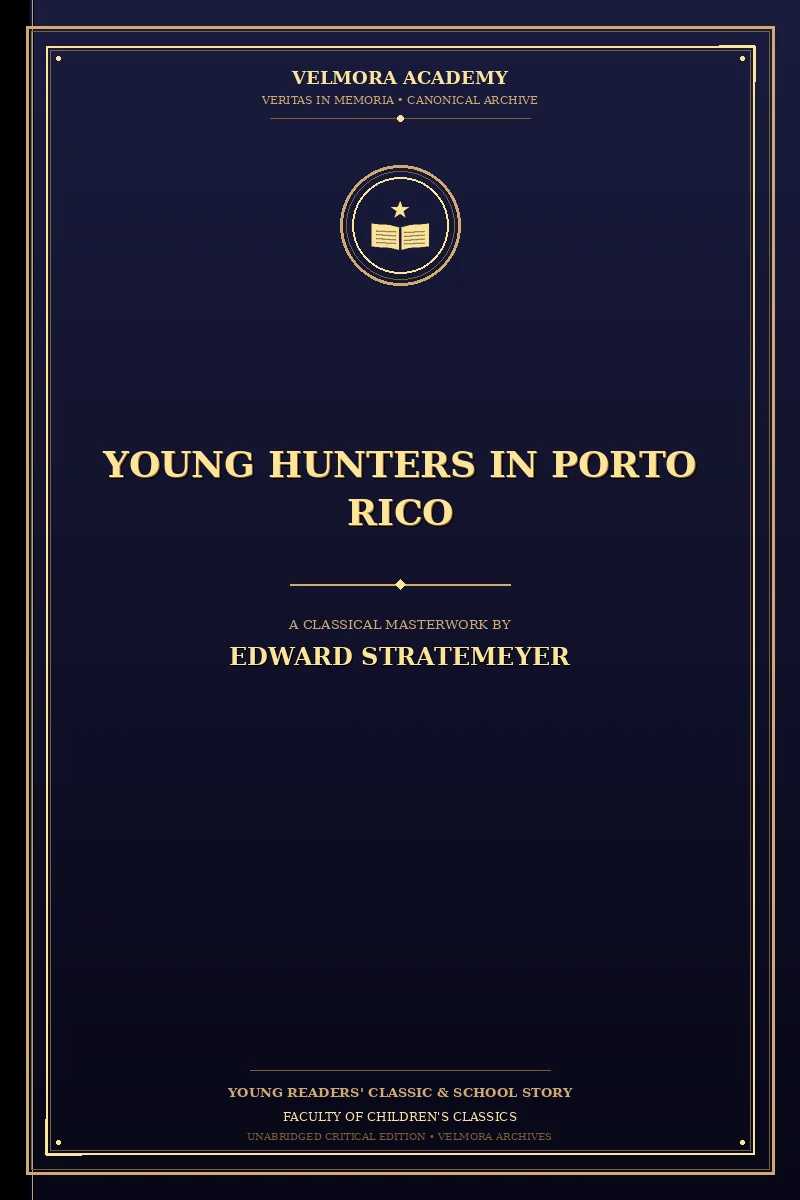
Cover illustration for Young Hunters in Porto Rico
Context Illustration Reading 1/19 · 5 lines
English subtitles · tap any word to listen 1 / 5
Old Jacob's loud cries soon aroused everybody.
The first person to come up from below was Don, who looked as pale as a sheet.
"Is the yacht afire?" he gasped.
"The galley is," returned the old tar.
"We've got to work lively if we want to save the Dashaway.
0:00 / 0:00
Speed 0.75x
AI-generated narration by OpenAI · Slow US English
LEARNER DICTIONARY
Archivist
/ˈɑːrkɪvɪst/
Editorial verification pending

A keeper or guardian of historical records and memories.

Young Hunters in Porto Rico

Chapter IX · Fighting the Flames

Chapter IX of Young Hunters in Porto Rico, “Fighting the Flames,” is here in full — 99 sentences across 20 reading sections, with audio for every sentence and word.

Reading 1/19 · 5 reading units · Lines 1–5

Line 1
Old Jacob's loud cries soon aroused everybody.
/oʊld ˈdʒeɪkəbz laʊd kraɪz suːn ərˈaʊzd ˈevribɑːdi/
Line 2
The first person to come up from below was Don, who looked as pale as a sheet.
/ðə fɜːrst ˈpɜːrsən tuː kʌm ʌp frʌm bɪˈloʊ wɑːz dɑːn huː lʊkt æz peɪl æz ə ʃiːt/
Line 3
"Is the yacht afire?" he gasped.
/ɪz ðə jɑːt əˈfaɪr hiː ɡæspt/
Line 4
"The galley is," returned the old tar.
/ðə ˈɡæli ɪz rɪˈtɜːrnd ðə oʊld tɑːr/
Line 5
"We've got to work lively if we want to save the Dashaway.

Learner Dictionary

These definitions explain words found in the current reading and keep every example grounded in its original sentence.

Oxford-style entry order: headword, part of speech, US IPA, concise definition, contextual example, and audio.

afire adjective US /əˈfaɪr/

lighted up by or as by fire or flame

From this reading “"Is the yacht afire?" he gasped.”

aroused adjective US /ərˈaʊzd/

aroused to action

From this reading “Old Jacob's loud cries soon aroused everybody.”

galley noun US /ˈɡæli/

a large medieval vessel with a single deck propelled by sails and oars with guns at stern and prow; a complement of 1,000 men; used mainly in the Mediterranean for war and trading

From this reading “"The galley is," returned the old tar.”

Jacob's noun US /ˈdʒeɪkəbz/

possessive form of “jacob” — French biochemist who (with Jacques Monod) studied regulatory processes in cells (born in 1920)

From this reading “Old Jacob's loud cries soon aroused everybody.”

lively adjective US /ˈlaɪvli/

full of life and energy

From this reading “"We've got to work lively if we want to save the Dashaway.”

sheet noun US /ʃiːt/

any broad thin expanse or surface

From this reading “The first person to come up from below was Don, who looked as pale as a sheet.”

tar noun US /tɑːr/

any of various dark heavy viscid substances obtained as a residue

From this reading “"The galley is," returned the old tar.”

yacht noun US /jɑːt/

an expensive vessel propelled by sail or power and used for cruising or racing

From this reading “"Is the yacht afire?" he gasped.”

Word partnerships in these lines

English keeps certain words together, and knowing the pair is worth more than knowing each word alone. Every partnership below was counted across our whole published library, and earns its place by appearing far more often than two unrelated words of the same frequency would.

Shown as this reading writes them, with the form the library counts, what kind of pairing it is, and how often it occurs.

old tar adjective + noun

In this reading “"The galley is," returned the old tar.”

come up verb + adjective

bring forth, usually something desirable

In this reading “The first person to come up from below was Don, who looked as pale as a sheet.”

first person adjective + noun

pronouns and verbs used to refer to the speaker or writer of the language in which they occur

In this reading “The first person to come up from below was Don, who looked as pale as a sheet.”

All words in this reading · 40

Every word in these five lines is listed here, and every one of them can be played on its own.

Dictionary details are shown only when verified; these are not licensed Oxford entries.

adeterminerUS /ə/

used before a singular noun to mean one of a group, when it is not a particular one

From this reading The first person to come up from below was Don, who looked as pale as a sheet.

afireadjectiveUS /əˈfaɪr/

lighted up by or as by fire or flame

From this reading "Is the yacht afire?" he gasped.

arousedadjectiveUS /ərˈaʊzd/

aroused to action

From this reading Old Jacob's loud cries soon aroused everybody.

asconjunctionUS /æz/

at the same time that; because; in the way that

From this reading The first person to come up from below was Don, who looked as pale as a sheet.

belowprepositionUS /bɪˈloʊ/

at or to a lower level than something

From this reading The first person to come up from below was Don, who looked as pale as a sheet.

comeverbUS /kʌm/

move toward, travel toward something or somebody or approach something or somebody

From this reading The first person to come up from below was Don, who looked as pale as a sheet.

criesnounUS /kraɪz/

plural of “cry” — a loud utterance; often in protest or opposition

From this reading Old Jacob's loud cries soon aroused everybody.

Dashaway

Dictionary entry pending editorial verification. Tap Listen to hear the word.

From this reading "We've got to work lively if we want to save the Dashaway.

DonnounUS /dɑːn/

a Spanish gentleman or nobleman

From this reading The first person to come up from below was Don, who looked as pale as a sheet.

everybodypronounUS /ˈevribɑːdi/

every person

From this reading Old Jacob's loud cries soon aroused everybody.

firstadjectiveUS /fɜːrst/

preceding all others in time or space or degree

From this reading The first person to come up from below was Don, who looked as pale as a sheet.

fromprepositionUS /frʌm/

showing where something starts, or who sent it

From this reading The first person to come up from below was Don, who looked as pale as a sheet.

galleynounUS /ˈɡæli/

a large medieval vessel with a single deck propelled by sails and oars with guns at stern and prow; a complement of 1,000 men; used mainly in the Mediterranean for war and trading

From this reading "The galley is," returned the old tar.

gaspedverbUS /ɡæspt/

past form of “gasp” — breathe noisily, as when one is exhausted

From this reading "Is the yacht afire?" he gasped.

gotverbUS /ɡɑːt/

inflected form of “get” — come into the possession of something concrete or abstract

From this reading "We've got to work lively if we want to save the Dashaway.

hepronounUS /hiː/

a man, boy, or male animal already mentioned, as the subject

From this reading "Is the yacht afire?" he gasped.

ifconjunctionUS /ɪf/

on condition that; in the event that

From this reading "We've got to work lively if we want to save the Dashaway.

Isauxiliary verbUS /ɪz/

the form of “be” used with he, she, it, or a singular noun

From this reading "Is the yacht afire?" he gasped.

Jacob'snounUS /ˈdʒeɪkəbz/

possessive form of “jacob” — French biochemist who (with Jacques Monod) studied regulatory processes in cells (born in 1920)

From this reading Old Jacob's loud cries soon aroused everybody.

livelyadjectiveUS /ˈlaɪvli/

full of life and energy

From this reading "We've got to work lively if we want to save the Dashaway.

lookedverbUS /lʊkt/

past form of “look” — perceive with attention; direct one's gaze towards

From this reading The first person to come up from below was Don, who looked as pale as a sheet.

loudadjectiveUS /laʊd/

characterized by or producing sound of great volume or intensity

From this reading Old Jacob's loud cries soon aroused everybody.

OldadjectiveUS /oʊld/

(used especially of persons) having lived for a relatively long time or attained a specific age

From this reading Old Jacob's loud cries soon aroused everybody.

paleadjectiveUS /peɪl/

very light colored; highly diluted with white

From this reading The first person to come up from below was Don, who looked as pale as a sheet.

personnounUS /ˈpɜːrsən/

a human being

From this reading The first person to come up from below was Don, who looked as pale as a sheet.

returnedverbUS /rɪˈtɜːrnd/

past form of “return” — go or come back to place, condition, or activity where one has been before

From this reading "The galley is," returned the old tar.

saveprepositionUS /seɪv/

except for; apart from

From this reading "We've got to work lively if we want to save the Dashaway.

sheetnounUS /ʃiːt/

any broad thin expanse or surface

From this reading The first person to come up from below was Don, who looked as pale as a sheet.

soonadverbUS /suːn/

in the near future

From this reading Old Jacob's loud cries soon aroused everybody.

tarnounUS /tɑːr/

any of various dark heavy viscid substances obtained as a residue

From this reading "The galley is," returned the old tar.

ThedeterminerUS /ðə/

used before a noun that is already known, already mentioned, or the only one of its kind

From this reading The first person to come up from below was Don, who looked as pale as a sheet.

toparticleUS /tuː/

used before the base form of a verb to make the infinitive

From this reading The first person to come up from below was Don, who looked as pale as a sheet.

upadjectiveUS /ʌp/

being or moving higher in position or greater in some value; being above a former position or level

From this reading The first person to come up from below was Don, who looked as pale as a sheet.

wantverbUS /wɑːnt/

feel or have a desire for; want strongly

From this reading "We've got to work lively if we want to save the Dashaway.

wasauxiliary verbUS /wɑːz/

the past form of “be” used with I, he, she, it, or a singular noun

From this reading The first person to come up from below was Don, who looked as pale as a sheet.

wepronounUS /wiː/

the speaker together with one or more other people

From this reading "We've got to work lively if we want to save the Dashaway.

We've

Dictionary entry pending editorial verification. Tap Listen to hear the word.

From this reading "We've got to work lively if we want to save the Dashaway.

whopronounUS /huː/

which person or people

From this reading The first person to come up from below was Don, who looked as pale as a sheet.

workverbUS /wɜːrk/

exert oneself by doing mental or physical work for a purpose or out of necessity

From this reading "We've got to work lively if we want to save the Dashaway.

yachtnounUS /jɑːt/

an expensive vessel propelled by sail or power and used for cruising or racing

From this reading "Is the yacht afire?" he gasped.

Chapter 9 of Young Hunters in Porto Rico by Edward Stratemeyer holds 99 sentences, grouped into 20 reading sections of at most 5 sentences. The text is the source edition, unabridged, and the chapter records which sentences cover which part of the work so that nothing is dropped. Every word can be tapped for its pronunciation and dictionary entry.

What does chapter 9 of Young Hunters in Porto Rico contain?

Chapter 9 holds 99 sentences of Young Hunters in Porto Rico, unabridged, divided into 20 reading sections.

This page carries chapter 9 of Young Hunters in Porto Rico by Edward Stratemeyer exactly as it stands in the source edition, without abridgement. It runs to 99 sentences, grouped into 20 sections of at most 5 sentences so that a reader can take the chapter in steady, finishable pieces. The chapter also stores a coverage record mapping every one of its sentences to a part of the work, which is how the edition demonstrates that no line was dropped.

How do I study chapter 9 of Young Hunters in Porto Rico?

Work through the 20 sections in order, replaying any sentence and tapping unfamiliar words for their entries.

Each of the 20 sections in this chapter is short enough to read once, hear once, and then re-read with the vocabulary in view. Tapping a word plays it alone and opens its dictionary entry with IPA, part of speech and meaning, so the reader is never forced to guess a pronunciation from spelling. Working section by section keeps a long chapter from becoming an undifferentiated wall of text, which is the usual reason a reader abandons a work of this period.

Can chapter 9 be read aloud to me?

Yes — every sentence and every individual word in chapter 9 can be played aloud in United States English.

Audio covers the whole chapter: any sentence can be played, and any single word within it can be played on its own. The voice uses United States English. For a work of this period that matters, because spelling is an unreliable guide to pronunciation for vocabulary that has fallen out of daily use, and a learner who guesses wrong tends to keep the error. Hearing the word in its own sentence, and then alone, settles it.

Questions about reading Young Hunters in Porto Rico

Common questions about reading Young Hunters in Porto Rico by Edward Stratemeyer on this page, its source edition and its audio.

Is this the complete text of Young Hunters in Porto Rico?

Yes. All 3575 sentences of Project Gutenberg eBook #52217 are kept, with a record of which sentences cover which part.

Which edition of Young Hunters in Porto Rico is used?

Project Gutenberg eBook #52217, unabridged. The Project Gutenberg header, footer and licence are removed.

How long does Young Hunters in Porto Rico take to read?

About 297 minutes of reading across 715 sections of 5 sentences each, at an unhurried pace.

How to read Young Hunters in Porto Rico section by section

How to work through Young Hunters in Porto Rico section by section, using the audio and the tap-to-define vocabulary.

  1. Open a chapter

    Choose one of the 33 chapters of Young Hunters in Porto Rico to begin.

  2. Read one section

    Each section holds 5 sentences; read it once through.

  3. Listen and tap

    Play the section aloud, then tap any unfamiliar word for its entry.

Vocabulary met early in Young Hunters in Porto Rico

Words and structures a reader meets early in Young Hunters in Porto Rico, each tappable for pronunciation and meaning.

Young
A word that appears in the opening chapter of Young Hunters in Porto Rico; the reader can tap it to hear it and see its dictionary entry.
Hunters
A word that appears in the opening chapter of Young Hunters in Porto Rico; the reader can tap it to hear it and see its dictionary entry.
Porto
A word that appears in the opening chapter of Young Hunters in Porto Rico; the reader can tap it to hear it and see its dictionary entry.
Search
A word that appears in the opening chapter of Young Hunters in Porto Rico; the reader can tap it to hear it and see its dictionary entry.